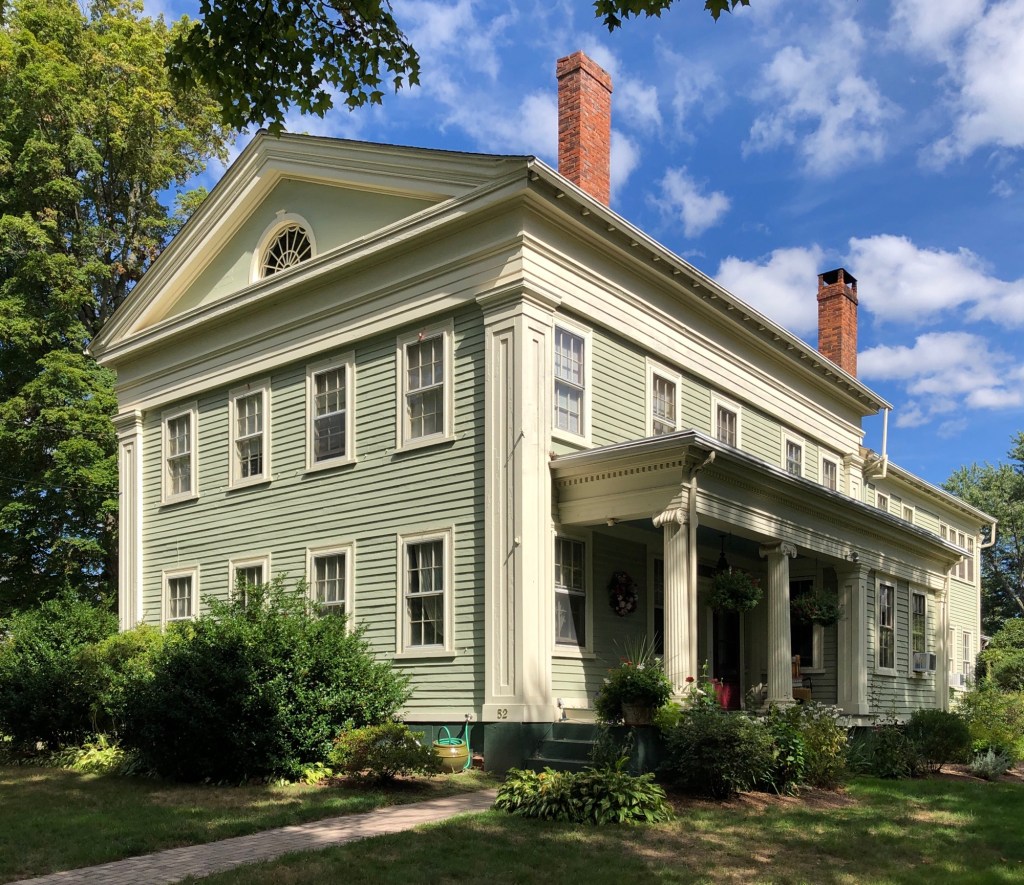
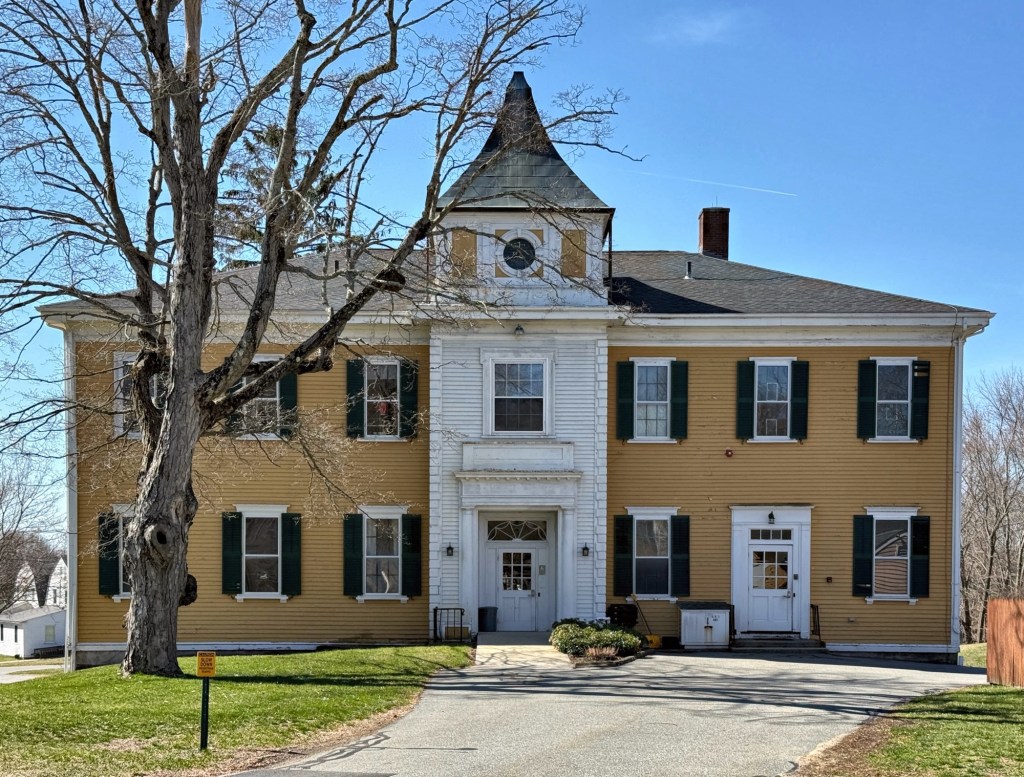
Dr. Asaph Bissell was born into the wealthy Bissell family which started here when John Bissell, the progenitor of the family in America, came from Somerset, England, and landed in Plymouth, Massachusetts, in 1628. He became one of the settlers of Windsor, CT. His descendant, Asaph Bissell (1791-1850) became one of Yale’s earliest medical graduates and built this stately Greek Revival style home on Main Street in Suffield, Connecticut, where he practiced medicine. Dr. Bissell often made house calls from his home right on Main Street until his death in 1850, after which, it was inherited by his eldest son, Charles Bissell. The house is Greek Revival in style with its entrance on the side elevation sheltered by a Classical porch, all facing southwards. The street-facing facade is four bays with large corner pilasters, a massive entablature, and pedimented gable-end with fanlight set within it.
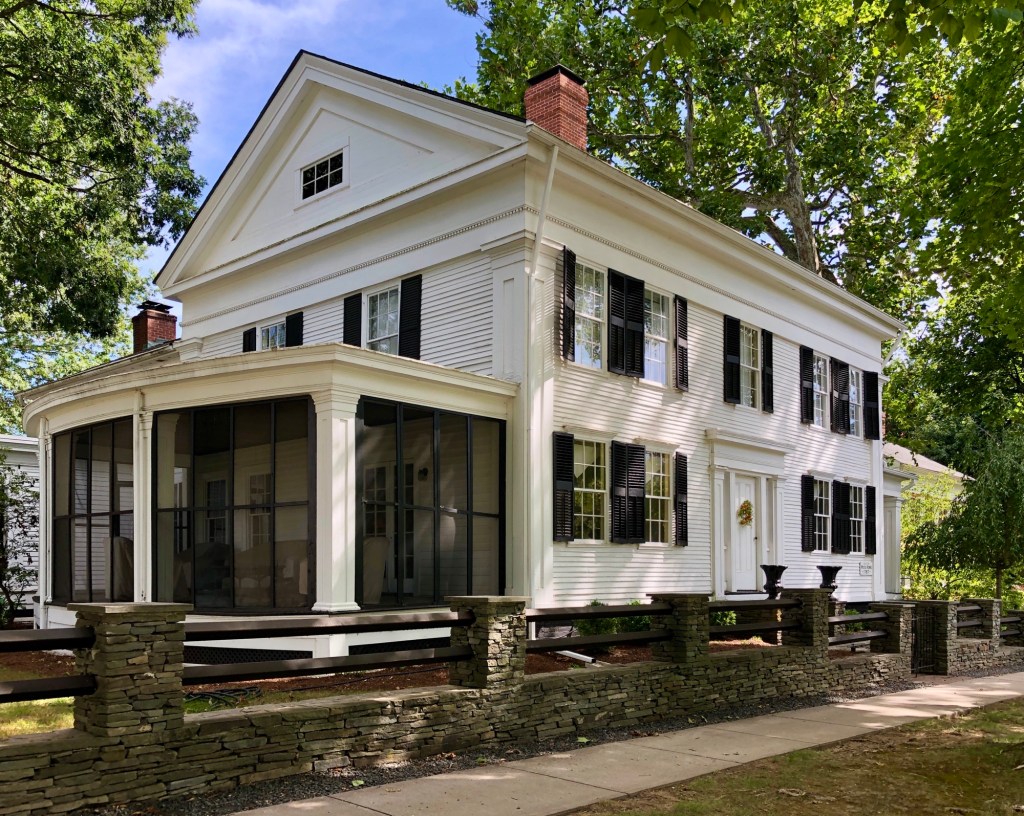
One of the older homes on Main Street in Suffield, Connecticut, the Moses Rowe House was built in 1767 was later “modernized” to its present appearance. The house was constructed as a two-story Georgian home with minimal detailing, as the family home of Moses Rowe (1733-1799), his wife, and nine children. According to historical maps of the area, the home appears to have been purchased by Horace Sheldon, who in the 1830s, modified the home in the Greek Revival style, increasing the height of the home, adding side porches and the entablature at the roofline.
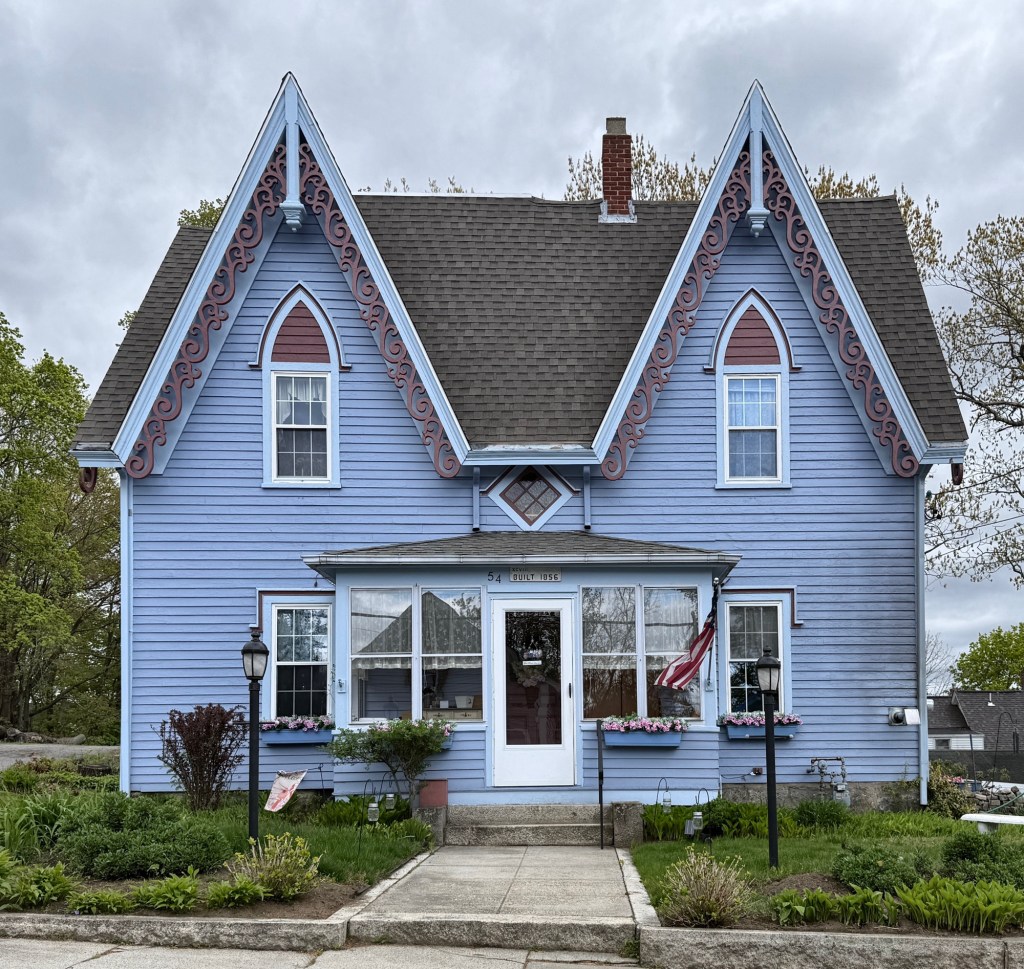
The finest Gothic Revival style residence in Milford, Massachusetts, can be found tucked away on Claflin Street, and it features the iconic hallmarks of the style. With its steeply pitched roof, blind lancet windows, drip moulds at the windows, and intricate barge boards with hanging pendants, the Nash-Wood House does not disappoint! The residence was built in 1858 and owned at different times by men who worked in the local shoe and boot manufacturing companies in Milford; William Nash and Peleg E. Wood. The property, with its playful paint colors, has been lovingly preserved my subsequent owners.
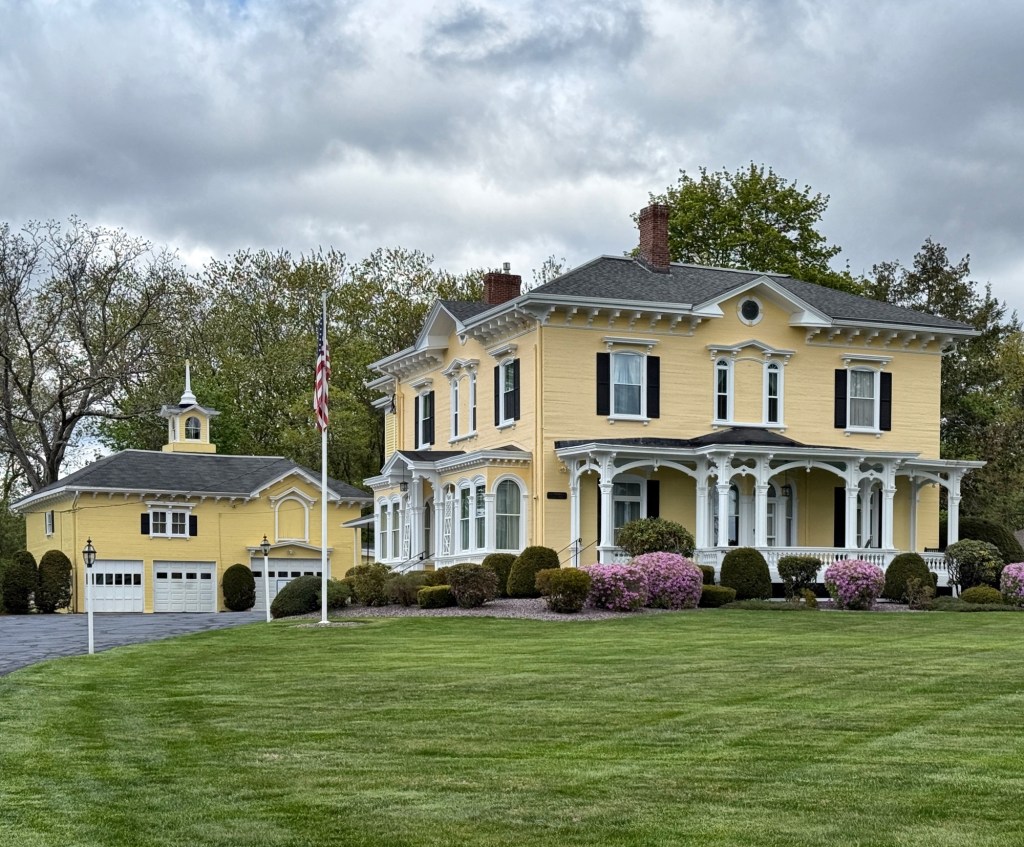
Benjamin Davenport Godfrey (1813-1888) was a wealthy boot and shoe manufacturer and inventor who built this stately mansion and detached stable in Milford, Massachusetts. The residence was built in 1854 in the Italianate style and was once one of the largest properties in the community, a true show of his success and wealth. Benjamin Godfrey would eventually retire and move to Newton, selling the property to Frank Harvey, a medical doctor, who resided here and operated a private hospital next door. The property would sell again in 1944 and has operated as a funeral home ever-since. The stately residence and stable echo similar architectural similarities, including the boxy forms, hipped roof, flushboard siding, and bracketed cornice and windows.
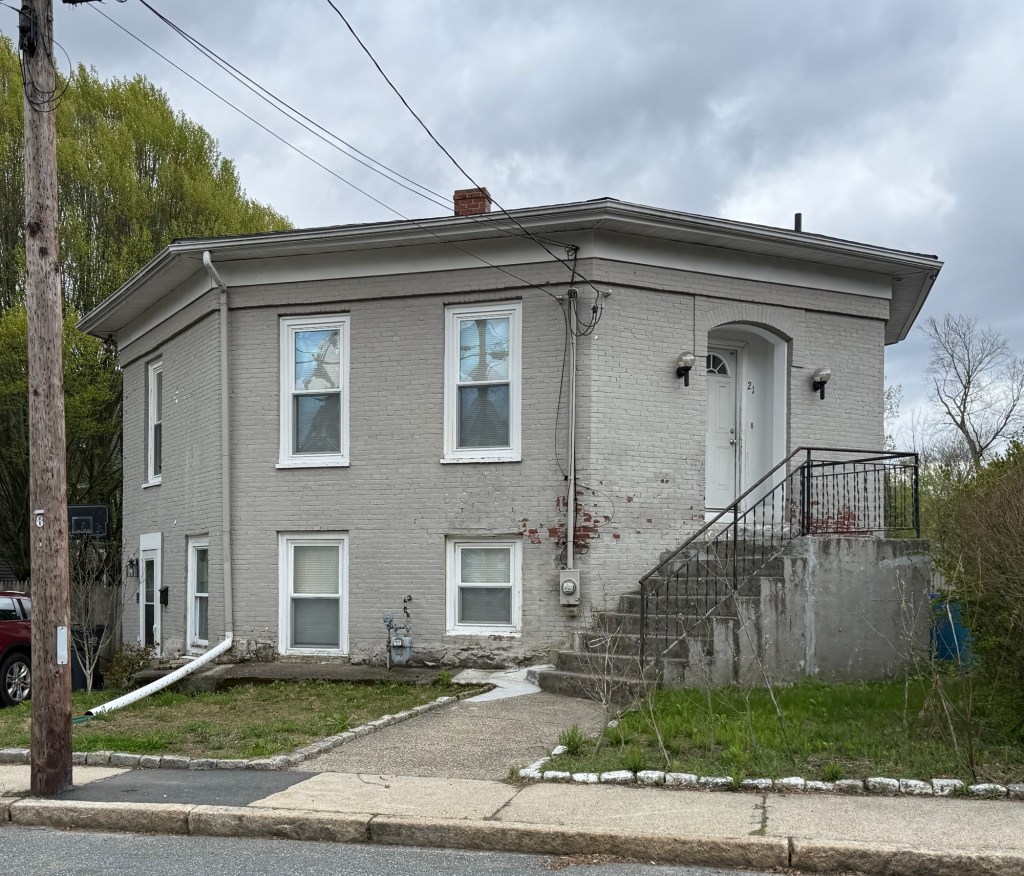
One of the rare examples of an intact Octagon house in New England, the Joel Chapin House in Milford, Massachusetts, is the only of its kind in the town. The octagonal brick residence was built for Joel Chapin (1822-1864), a produce and meat dealer in town, who resided here until his death. By the end of the 19th century, the house was owned by Anna Jourdain, who married James E. Reed, an early African-American photographer based in New Bedford They resided in the octagon house and their family members owned the property for nearly 100 years.
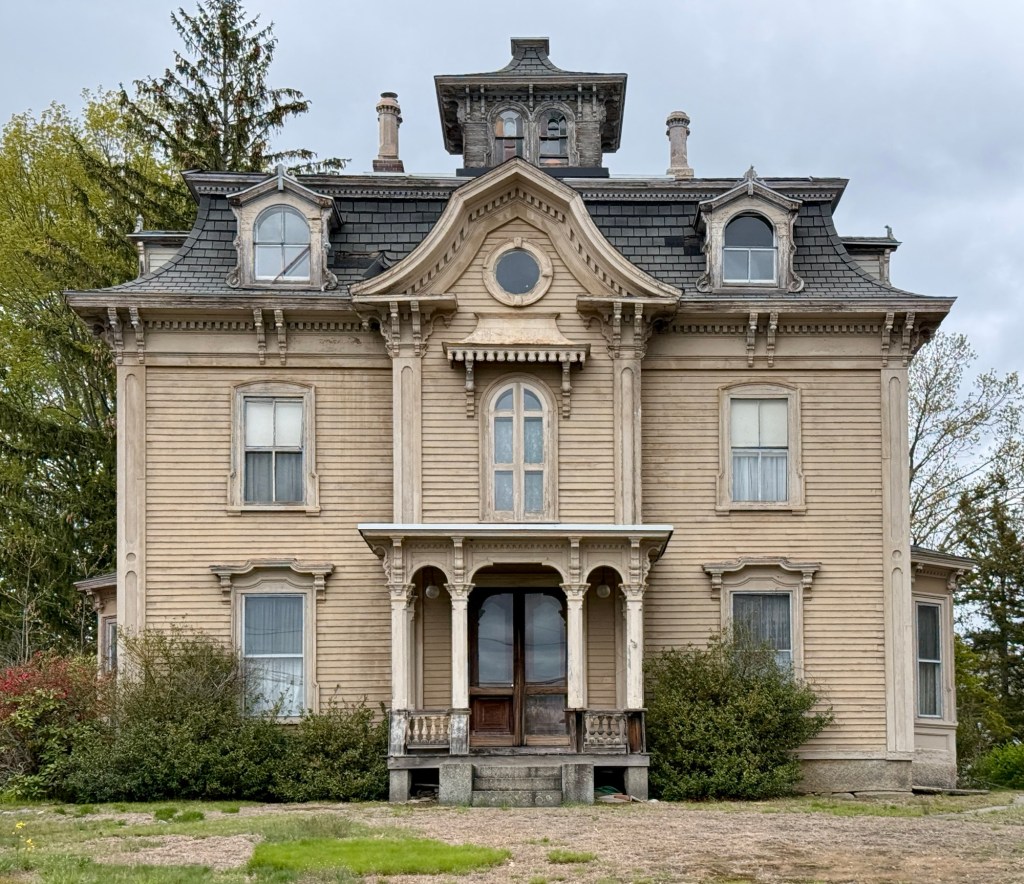
The Henry E. Fales Mansion sits prominently on Walnut Street in Milford, Massachusetts, as an intact Second Empire style residence with symmetrical facade and form. The house was built in 1866 and owned by Henry E. Fales (1837-1897) an attorney and state legislator who was heavily engaged in town affairs. Before the home was completed, Henry’s wife, Violet, died unexpectedly and he remained here until his second marriage to Clara Hayward. The Fales Mansion has a notable mansard roof with belvedere, front gambrel gable with ocular window, and window hoods. The property is in need of some work, but retains nearly all of its original detailing.
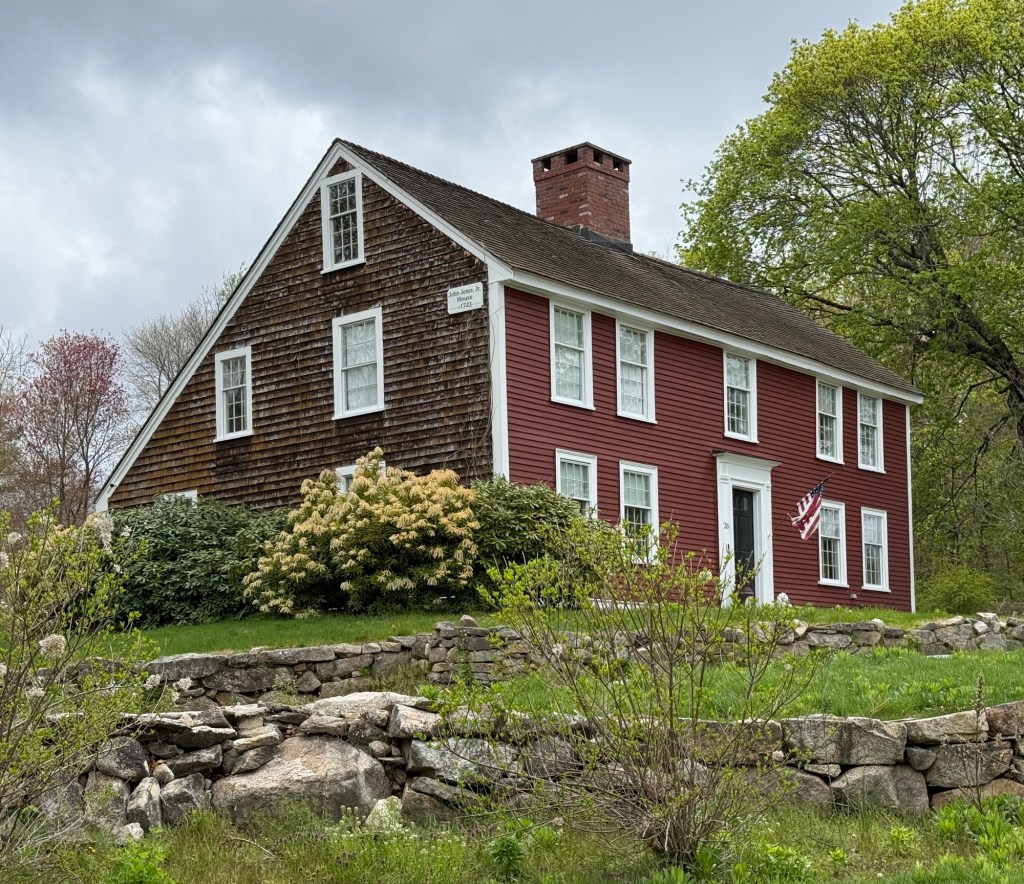
Possibly the oldest extant building in the town of Milford, Massachusetts, the Jones-Corbett Farmhouse stands as a well-preserved example of a rural, First Period residence for early settlers to the area. The Jones Family first arrived in present-day Milford in 1703, when Elder John Jones (1669-1753) settled in the area from Hull, and raised his family in the first wood-frame dwelling in the area, which was still occupied by the Nipmuc Tribe. Elder John Jones raised six children from their home (demolished in 1874), including John Jones Jr., who built this house. John Jones built this house by 1723 but after a few years, traded properties with his brother-in-law, Daniel Corbett, and sister, Sarah. The house was likely added onto with the saltbox roof as the family grew in size and prosperity, and a barn was built on the estate to house horses and other livestock. When Daniel Corbett died in 1753, among his listed property included “a negro boy, his bed and hoe”, with his enslaved young man likely residing in this home and working the property. The residence is an important piece of Milford history that tells the full story of early America.
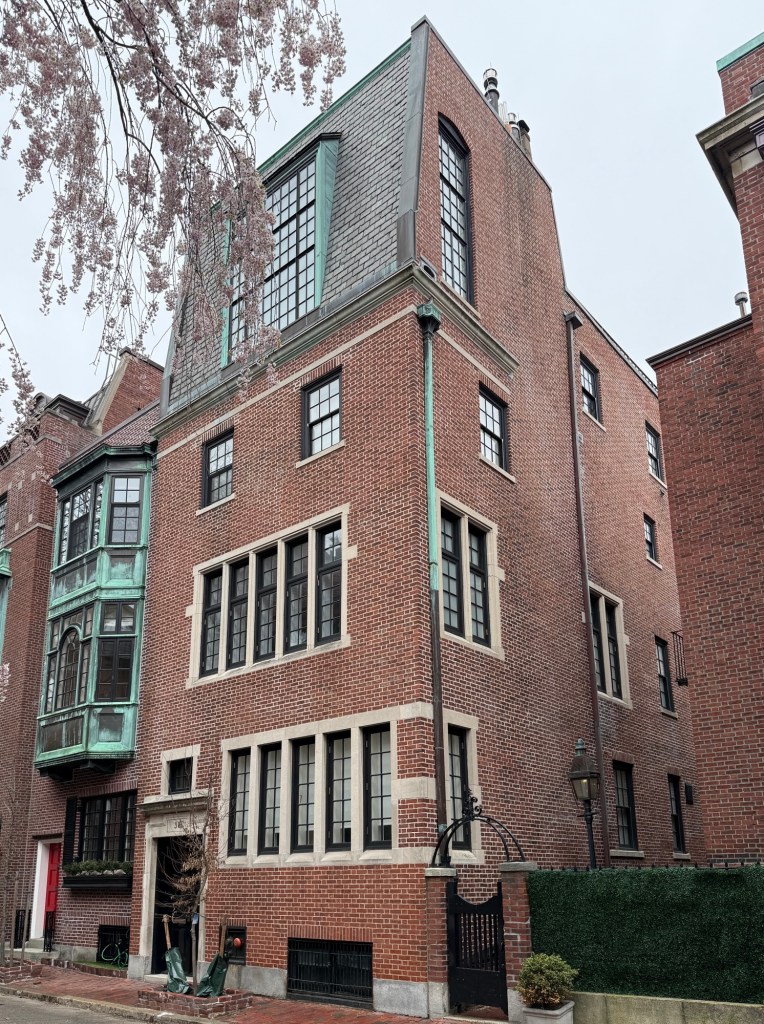
One of the most amazing townhouses in Beacon Hill can be found here on Lime Street, where an oversized mansard roof addition with multi-light dormer, dominates the facade. The townhouse was built in 1912 from plans by architect Richard Arnold Fisher, who lived a few houses away, replacing a livery stable formerly on the lot. The site was developed on speculation by the Brimmer Street Trust, a real estate firm run by Gerald G. E. Street and William Coombs Codman, who sought to develop the area into high-end residences and art studios, protecting the area from unsympathetic developments. A few years after the house was built, it was owned by Frederick Shepherd Converse, a composer who also taught at the New England Conservatory of Music. By 1927, the house was owned by a young Waldo Hayward Brown, who at 32-years-old, occupied the house with his wife, Frances, three young children and four servants. The year he purchased the property, he hired the original architect, Richard Arnold Fisher, to add a In 1927 Brown filed a permit application to build a tall new room over an existing roof terrace at the front of the house, where the architect designed it as a mansard addition, which is of a large scale and broken up by the massive studio window. The blending of Tudor Revival and the later mansard roof surprisingly work here to create the unique composition we see today.
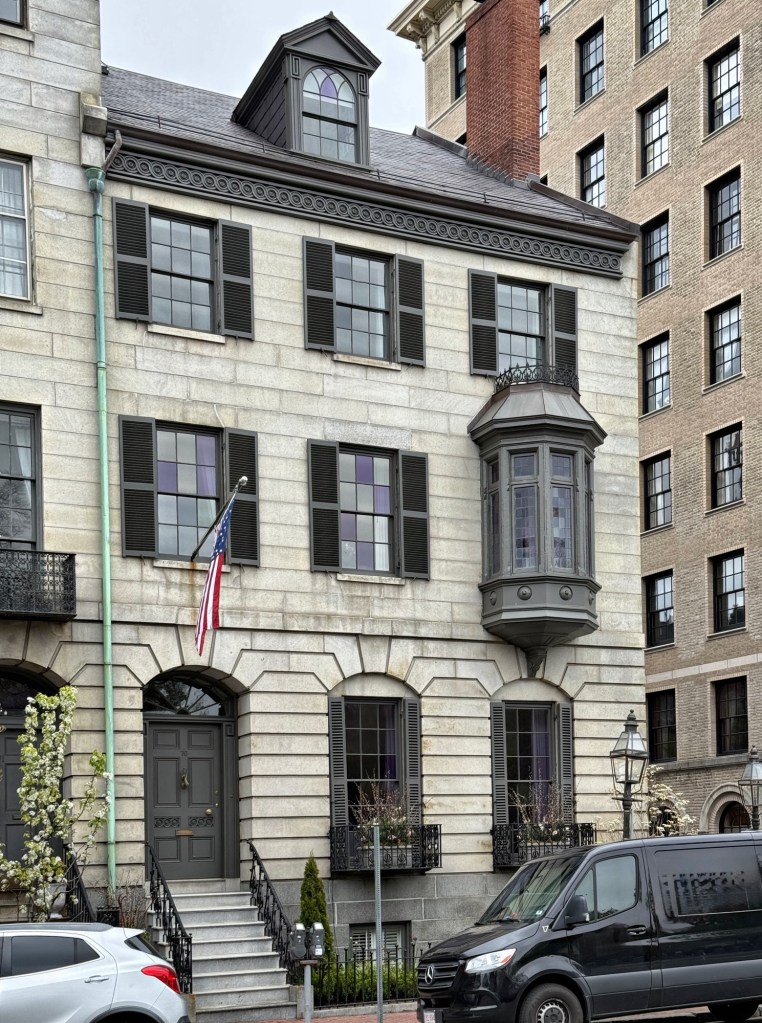
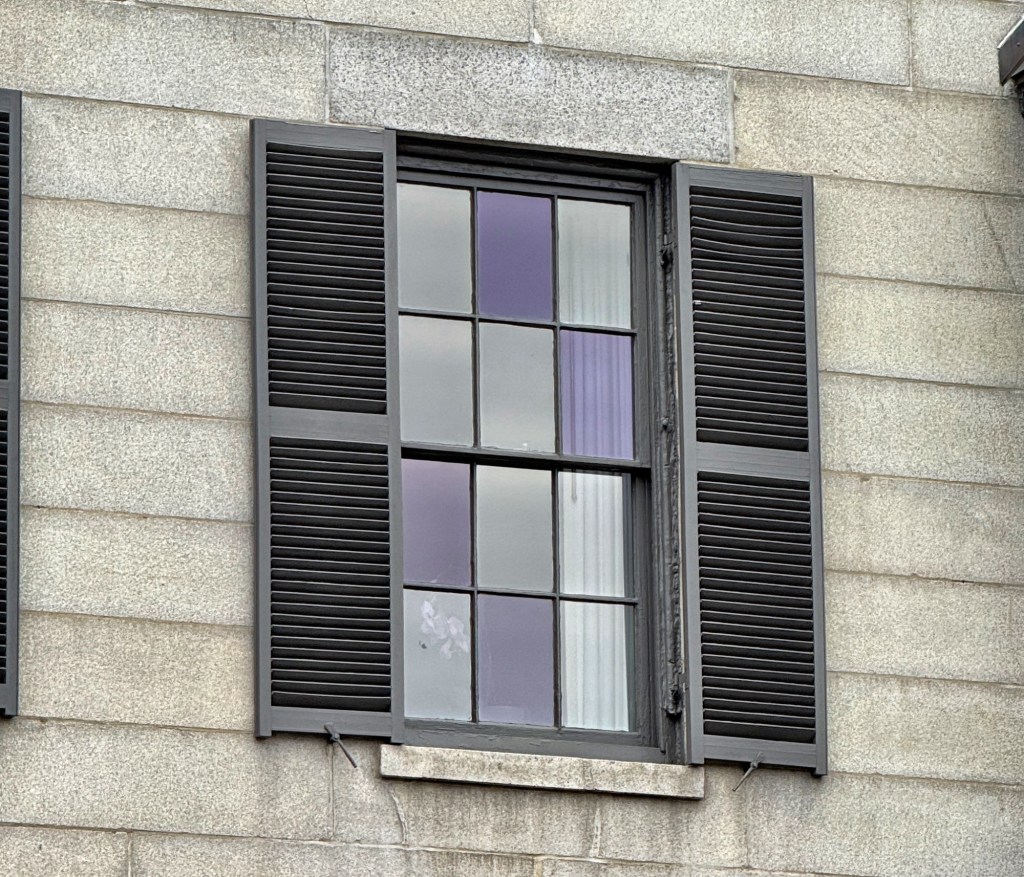
One of six attached houses townhouses between 70-75 Beacon Street, this stately granite-faced residence was built concurrently with its neighbors in 1828 on speculation for the Mount Vernon Proprietors, a group of wealthy Boston businessmen who helped develop Beacon Hill into the posh, architecturally significant neighborhood it is today. The Mount Vernon Proprietors knew how important Beacon Street was as the entry into the neighborhood, and thus, hired Boston’s premier architect, Asher Benjamin, to design the row. When completed, all of the houses were identical, but throughout the 19th and 20th centuries, they all deviated from the original design, some gaining additional floors, others adding bay windows, but all together form a cohesive and architecturally significant span of houses. Completed in 1829, the corner dwelling is known as the Greenough-Dwight House and it retains its original three-story rusticated granite façade with segmental arch openings. The major change to the exterior of the Greenough-Dwight House is the addition of the ornate wood oriel window with iron cresting in 1874, the oriel and facade feature the iconic purple windows, which became a status symbol in the 20th century. The story goes, that between 1818 and 1824, an English company sent shipments of glass that contained too much manganese oxide into Boston Harbor. After being exposed to sunlight for an extended period of time, the manganese oxide in the glass began to turn purple creating the colored panes we love today. Over time, many panes broke or were replaced, creating the checkerboard appearance on so many windows, but many owners in the 20th century had imitation purple glass installed as a marker of wealth and prestige, like in this house and bay, which were built after the period that the glass was brought over from England. My favorite in the row, the Greenough-Dwight House shines with its granite facade and brick end wall, with panes reflecting the sun off her violet glass windowpanes.
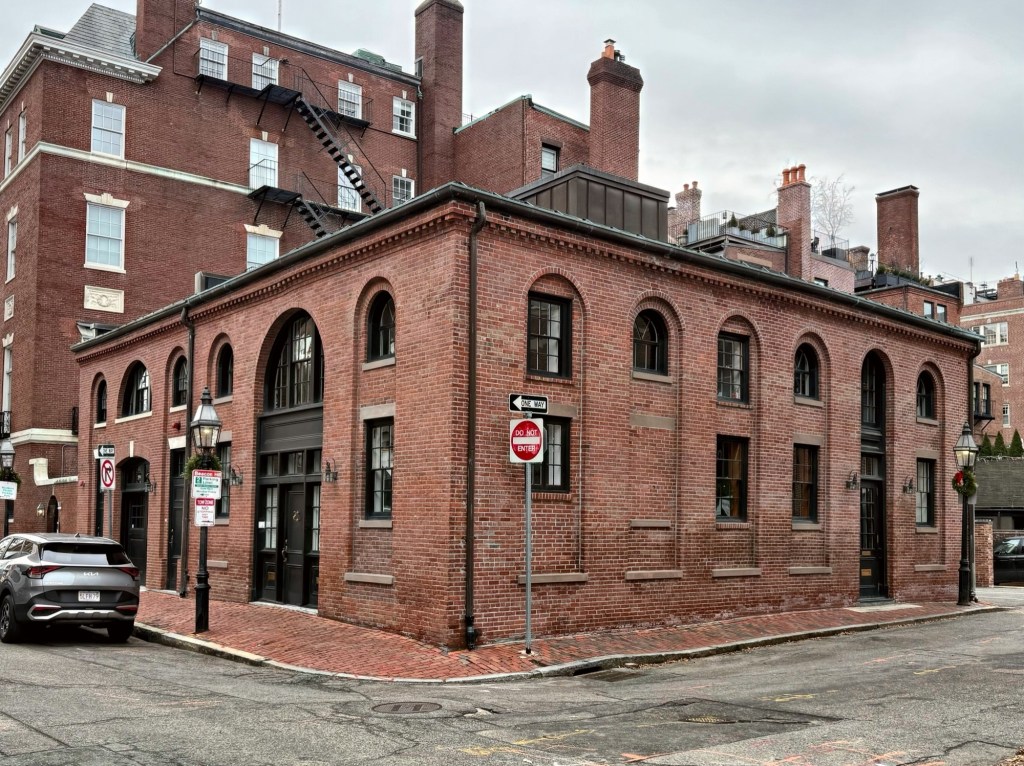
Located behind the David Sears Mansion (now Greek Consulate) on Beacon Street, this handsome utilitarian structure fronts Brimmer Street in Beacon Hill and predates the building it adjoins. The two stables and attached caretaker’s residence was built around 1856 for David Sears, who lived farther down Beacon Street, but also owned other buildings on the street which fronted the Public Garden. He built this stable in the Flat of Beacon Hill, an area west of Charles Street in what Samuel Eliot Morrison coined, “the horsey end of town” for its prevalence of stables and carriage houses. The architect is not known, but the handsome structure features bays of shallow, recessed brick arches and brick dentil courses, showing the importance of good design even for uses such as a stable. The building later became space for furniture storage and an ancillary apartment to the adjacent mansion, until 1957, when the it was acquired by the Vincent Club, a women’s organization with the mission of raising money for the Vincent Memorial Hospital whose mission was to treat the “diseases of women.” Even though the Vincent Hospital merged with Mass. General Hospital in 1988, the Vincent Club remains in this former stable as its home-base and continues to carry out its mission to advance the field of women’s healthcare.
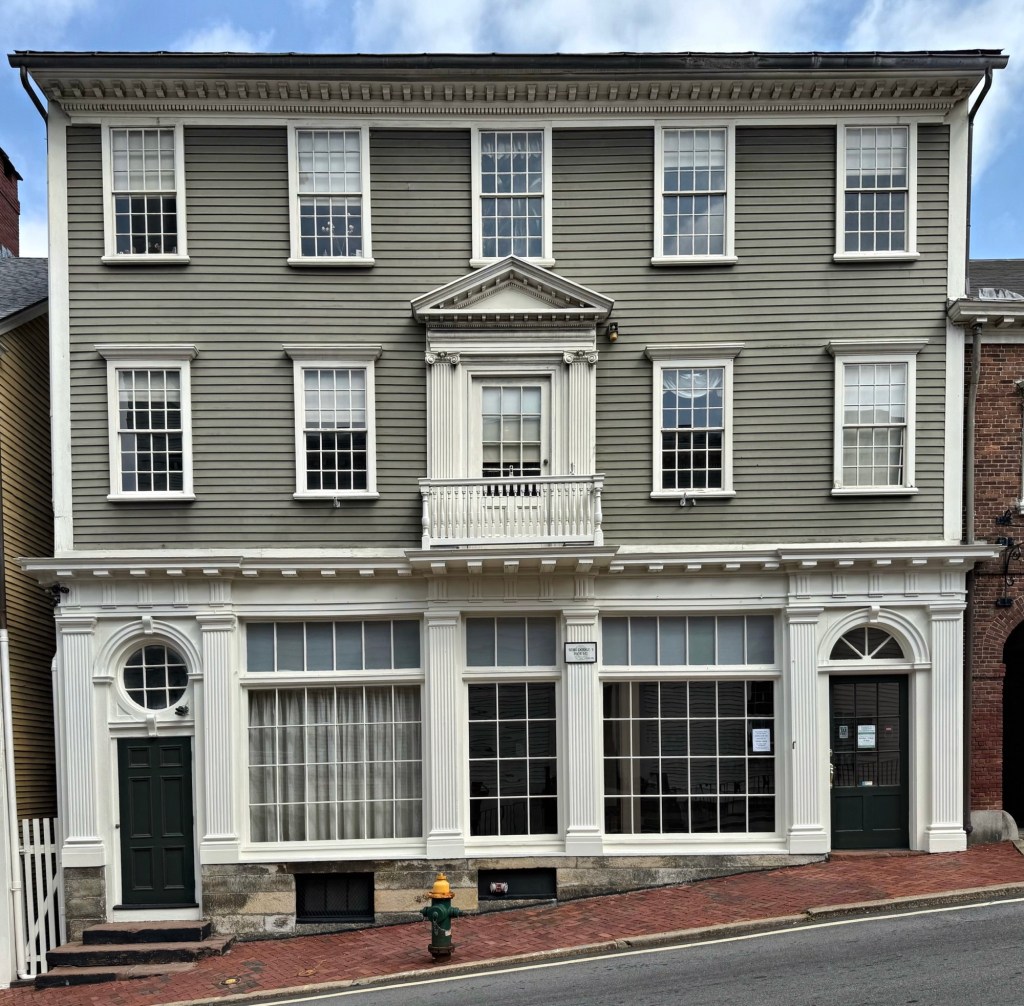
The Dodge-Brown House on Thomas Street in Providence, Rhode Island, was built in 1786 by Seril Dodge (1759-1802), a silversmith and clockmaker. Seril Dodge was a middle-class resident who did well in Providence circles, as an artisan and shop keeper. The house was originally a two-story residence with central entrance that was raised up in the early 20th century to facilitate a new storefront. Seril Dodge and his family only lived here briefly before moving to a brick house next door. Dodge sold the property to Nicholas Brown II (1769-1841) who rented the home to his stepmother, Avis Binney Brown, who became the widow of one of Providence’s richest men, Nicholas Sr. It continued to stay in Brown family hands through the nineteenth century, but only as an investment. The house was raised one story above street level in 1906, when the handsome Colonial revival storefront was installed from plans by the firm of Stone, Carpenter and Willson. The original front door with elaborate pedimented and pilastered enframement is now a door to a small second floor balcony. Since 1919, the Providence Art Club has owned the building, who for years had the ground retail space occupied as an art store, but now contains a club gallery.
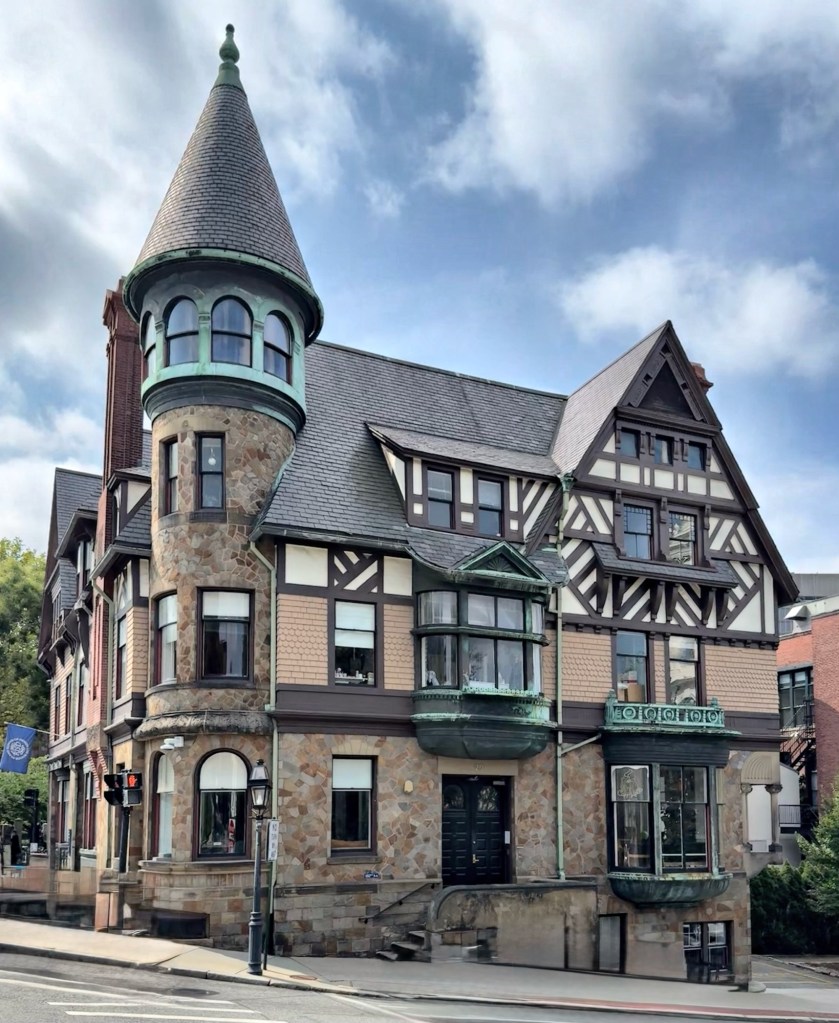
Perched on College Hill in Providence, Rhode Island, the Dr. George W. Carr Mansion at the corner of Benefit and Waterman streets, stands as one of the most attractive and interesting interpretations of the Queen Anne style in New England. The stately home was built in 1885 for George Wheaton Carr (1834-1907) a medical doctor who served as a surgeon during the Civil War and later as head surgeon for multiple Providence-area hospitals. For his Providence home, Dr. Carr hired architect, Edward I. Nickerson, to furnish plans, which resulted in this mansion with irregular plan, four-story corner corner capped with a conical roof, varied materials in stone, wood shingles, half-timbering, and copper bays. The Carr Mansion was purchased by the Rhode Island School of Design (RISD) in 1916, and has served a variety of roles for the school including as student housing and a cafe/lounge.
This house on Gardner’s Neck Road in Swansea, Massachusetts, was designed in 1903 by Fall River-based architect, Edward I. Marvell, for Francis L. Gardner, a descendant of the Gardners for whom Gardner’s Neck is named. Francis Gardner’s father, Leland, was a successful market gardner who farmed locally with the use of greenhouses, shipping fresh produce and other goods to Fall River and transportation to other nearby cities. This business continued under his sons, Francis and Chester until about 1925, when they began selling land on Gardner’s Neck for development. Francis’ house is an excellent early 20th century residence that blends multiple styles popular at the turn of the 20th century in a square form.
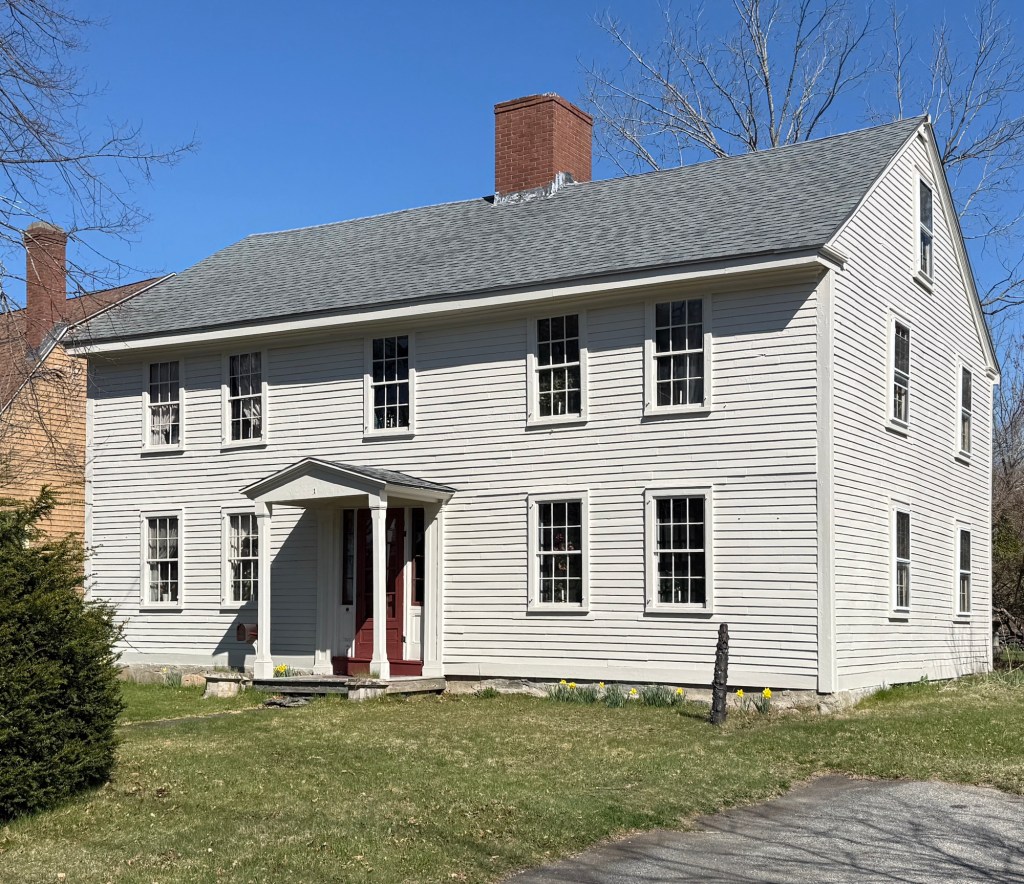
This modified First Period house on Main Street in Swansea, Massachusetts, dates to about 1720 and is a New England Colonial in all the best ways. The residence was built for Jonathan Hill (1684-1737) who purchased what was once a seventy-acre farm on the site in 1720 from Ebenezer Eddy, a local blacksmith. Jonathan Hill farmed the land nearby until his death in 1737, and in his will, the property passed to his widow, Elizabeth which was mentioned as “my new house built for the bringing up of my children.” The large colonial home is a center-hall form with a central stair surrounded by four rooms on each floor. Subsequent owners for over 300 years have lovingly maintained and preserved this important early house.
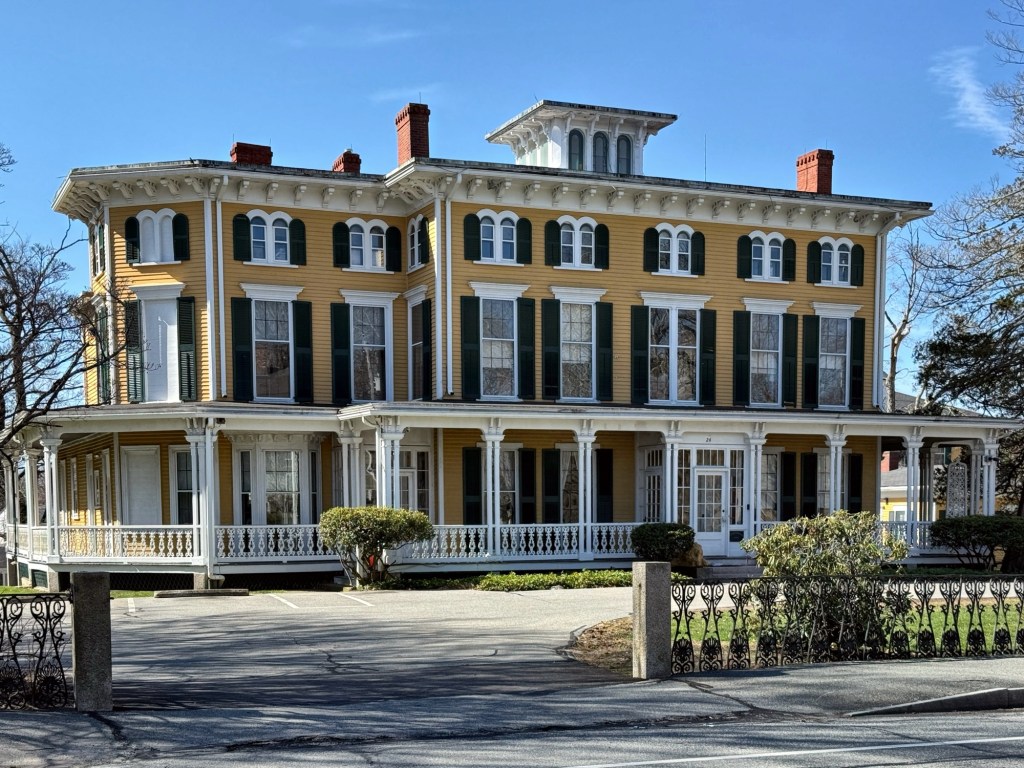
Built in 1855, the Birch-Stevens Mansion of Swansea, Massachusetts, is a grand Italianate style residence distinguished by its low hipped roof with belvedere, broad overhanging eaves with brackets, paired arched windows, and expansive wrap-around porch, all of a scale not commonly found in such a small community. The residence was built for James Birch and overseen by his new bride, Julia Chace. Before construction on the home, James Birch (1828-1857), not a wealthy man, worked as a stagecoach driver in Providence. His bride-to-be desired a large mansion in her native Swansea, equipped with servants and all the finer things of life. Since this dream was not attainable in his present circumstances, Birch, an enterprising 21 year old, decided to join the Gold Rush in California to make his fortune. In California, James became a stagecoach line entrepreneur and founder of the California Stage Company, the largest stage line in California in the 1850s. James made a fortune and returned to his wife in Swansea bringing money for her to begin constructing their grand mansion. James left again, this time establishing the San Antonio -San Diego Mail Line, the first transcontinental mail route in the United States. In 1857, while heading home, James sailed from San Francisco to Panama, took a train across the Isthmus, and sailed for New York on the steamer SS Central America. During the voyage, his ship was struck by a hurricane and later sunk. Many survivors clung to pieces of the ship’s wreckage for days with many dying to exposure or were swept away to their deaths, like James. He was just 28 years old. Back in Swansea, Julia was heartbroken but remarried her late-husband’s business partner, Frank Shaw Stevens, an equally successful businessman. Julia died in 1871, and Frank married a younger Elizabeth Case. The couple resided in this mansion for decades and donated substantially to their community, including funding the Town Hall, Public Library, Episcopal Church, and local public schools. In her will, Elizabeth Case Stevens bequeathed the large mansion in 1837 to the Frank S. Stevens Home for Boys which began as a boy’s orphanage. The organization remains to this day with an expanded mission, and maintain the sprawling estate and its various outbuildings, including the historic stable and farm structures.