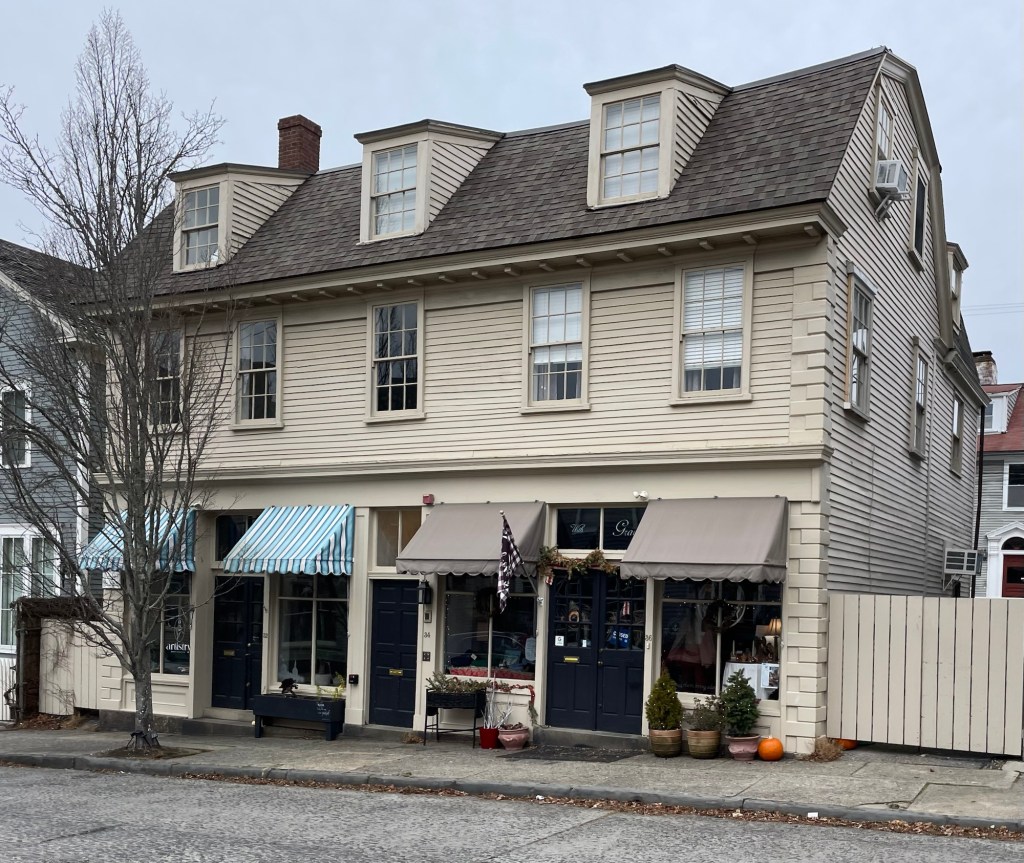
In Newport, Rhode Island, you can find that even the more regular-looking historic buildings often hold an interesting (and sometimes troubling) past. Little information was available on this Georgian-era house, but I did some digging and turned up a lot. Rhode Island and Newport specifically had been a hub of trade going back to its founding by white settlers. Even though it was the smallest of the colonies, the great majority of slave ships leaving British North America came from Rhode Island ports. Historian Christy Clark-Pujara, in her book Dark Work, The Business of Slavery in Rhode Island, indicates that during “the colonial period in total, Rhode Island sent 514 slave ships to the coast of West Africa, while the rest of the colonies sent just 189.” Captain Caleb Godfrey, who owned this home on Franklin Street in Newport, was a sea captain and hired by wealthy merchants to pick up slaves in West Africa and bring them back to the British colonies. In 1754, Samuel and William Vernon of Newport hired Caleb to take their ship, “Hare“, taking captives from Sierra Leone and embarking them from South Carolina. Godfrey left Sierra Leone with 84 slaves aboard, but 16 died on the 10-week voyage or soon after the ship arrived in Charleston, their bodies were dumped at night into the sea. In South Carolina, a prominent slave dealer named Henry Laurens handled the sale of African captives from the Hare, placing an advertisement to attract the attention of local rice planters. Godfrey’s Newport home is a visual reminder on New England’s direct ties to the enslavement of African people and how the colonies benefited financially from this terrible trade.
 Buildings of New England
The Anti-Federalist Paper entitled “Rhode Island is Right” which was published after the new constitution was written but before it was ratified is a great example of how things can change.
LikeLiked by 1 person