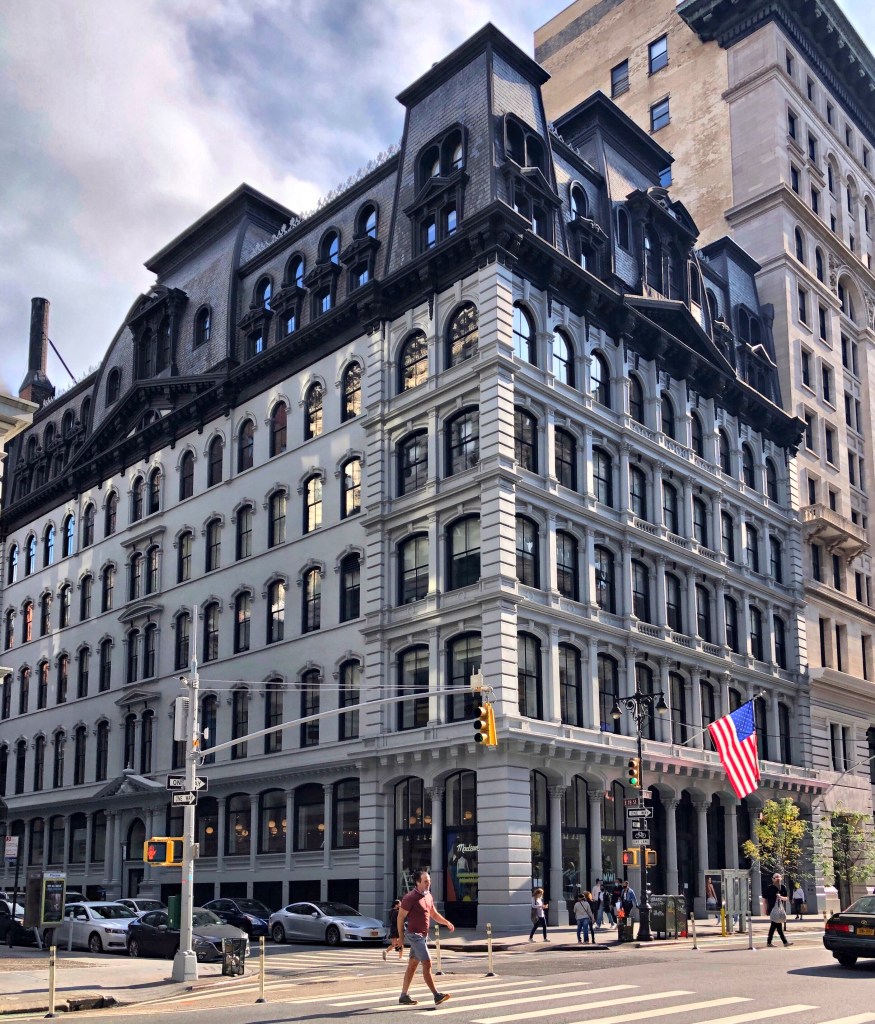
Arnold Constable & Co. Building // 1868

This seven-story department store building was designed by (extremely underrated) architect Griffith Thomas in 1868 for the prominent dry-goods company of Arnold Constable & Company. ‘The Palace of Trade’ as it became known as, is located at the corner of 5th Ave and 19th Street in Manhattan, the stunning Second Empire building is faced in marble, brick, and cast-iron, features stacked arch orders and a prominent, two-story, pavilioned mansard roof. Arnold Constable & Co. was founded by Aaron Arnold, an immigrant from the Isle of Wight, who opened a small dry goods store in the city in 1825. As the business prospered he moved into larger quarters numerous times. In 1842, James Constable, an employee, married Arnold’s daughter Henrietta and was subsequently made a partner. From this, the company was renamed Arnold Constable & Co. In its heyday, Arnold Constable & Co. was the largest dealer to the elite in New York City, supplying the latest fashions to a clientele that included the leading families in the city. The company continued expansion through the 20th century but struggled later with its suburban model. The building was sold and operated as a New York Public Library Branch for some years.
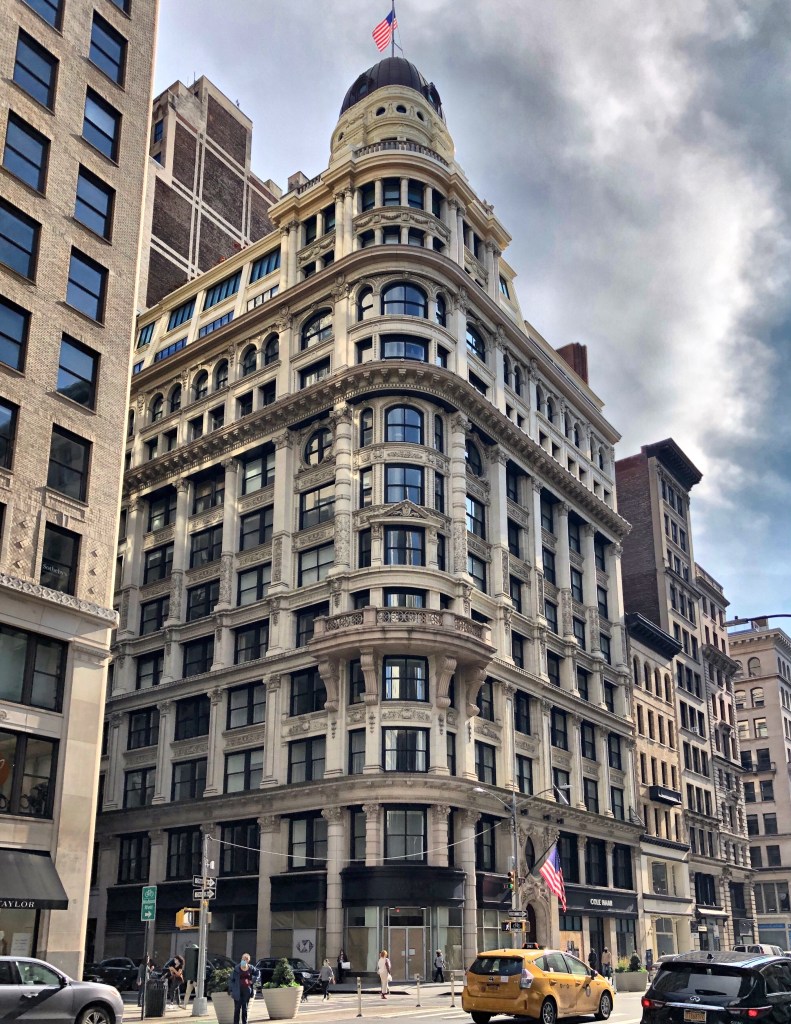
141-147 5th Avenue // 1896 & 1900

This stunning Beaux-Arts store and loft structure, is located on a
prominent corner site at 5th Ave and 21st Street in Manhattan. The structure is faced in limestone and terra cotta and was constructed in two phases. The original three southern bays (on the right side of the image) on 5th Avenue were designed by prominent architect Robert Maynicke for real estate developer Henry Corn. In 1899, two years after its completion, architect Henry Edwards Ficken designed an addition to the north wrapping around and running along 21st Street. The addition continued the richly embellished facade and supplemented it with a twelve-story, curved corner bay which is crowned by a dome. The building appears to have been constructed without a major tenant, and many companies utilized the iconic space including: the Merchant Bank of New York, Park & Tilford’s, a fancy grocer, and lace companies. In the mid 20th century the building suffered from deferred maintenance until 2005 when the building was restored and converted to 38 apartments (including one utilizing the dome)!

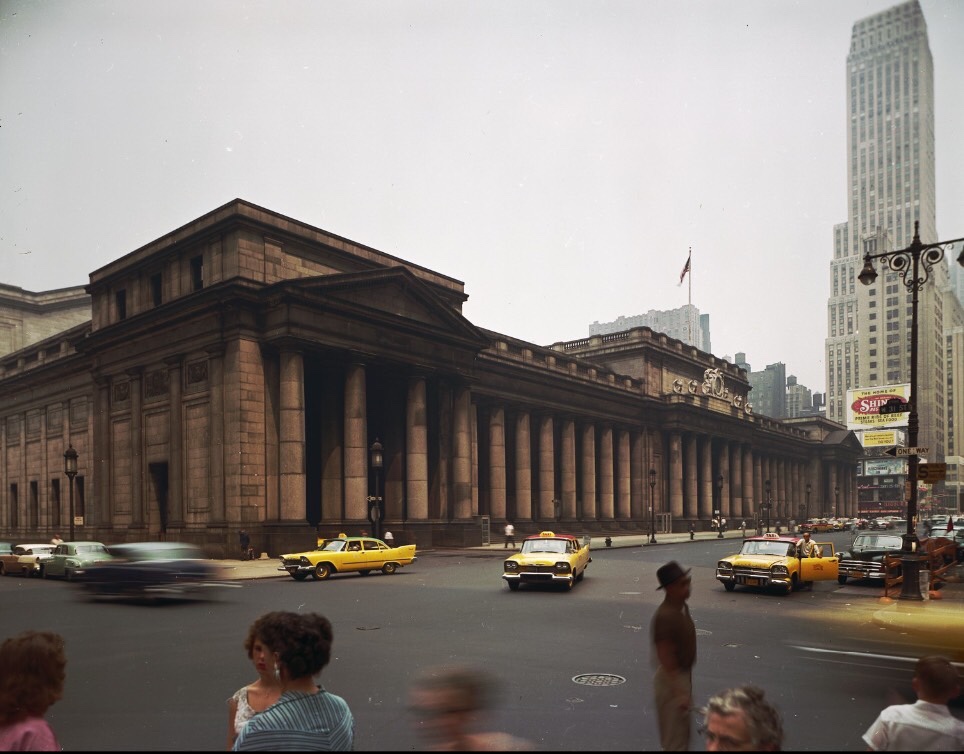
Old Penn. Station // 1910-1963

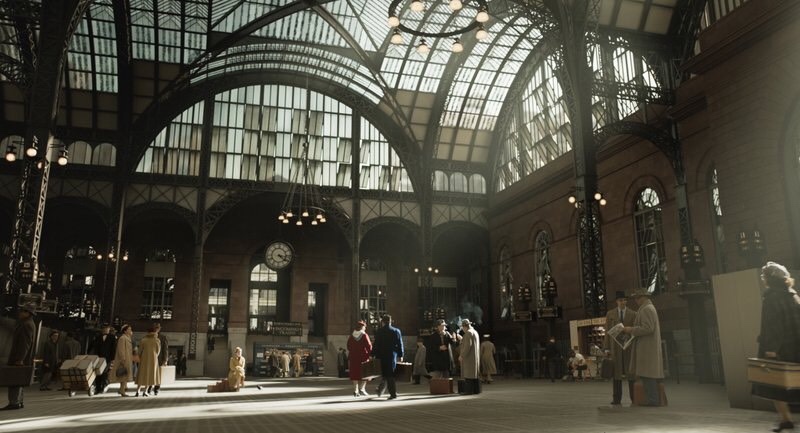
Pennsylvania Station in Manhattan was opened in 1910, and its sheer scale immediately evoked a sense of awe. At the time it was completed, it was the largest building ever built occupying two entire city blocks, and boasted the biggest waiting room in history. Over 500 buildings were demolished for the station to make way for the Charles McKim-designed station, an icon in the Beaux-Arts style. The structure had “nine acres of travertine and granite, 84 Doric columns, a vaulted concourse of extravagant, weighty grandeur, classical splendor modeled after royal Roman baths, rich detail in solid stone, and an architectural quality in precious materials that set the stamp of excellence on a city.” Sadly, being one of the most beloved architectural gems in the city did not constitute its maintenance nor preservation.

In 1961, after numerous plans for redevelopment, air-rights were sold on the building and in 1963, Penn Station was razed. The former grand station was replaced by Madison Square Garden and Pennsylvania Plaza, an office skyscraper, all with a modernized station below. When the building was destroyed, art historian Vincent Scully famously said, “One entered the city like a god. One scuttles in now like a rat.” In 1965, two years after Penn Station’s demolition commenced, the city passed a landmarks preservation act, thereby creating the New York City Landmarks Preservation Commission. Additionally, Grand Central Station was proposed to be demolished later in the decade, but was saved thanks to preservation efforts.