Hotel Manger // 1930-1983

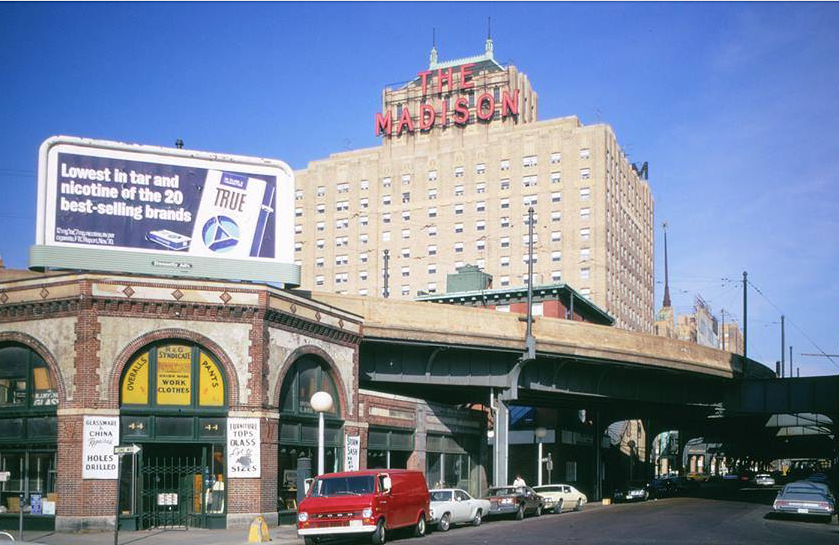
Built on the site of the former Boston & Lowell Train Station the Hotel Manger (later renamed the Madison Hotel in 1959) was part of the first redevelopment of North Station in Boston. When the Boston & Maine Railroad announced that plans had been finalized for the construction of a new North Station facility, which would include a sports arena, hotel, office building, and distributing terminal, Manger Hotels, a national hotel chain, and the Boston & Maine Railroad announced that the two parties had signed a contract for the construction of the hotel on the site with each party holding a 50% stock in the building. Designed by the architectural firm of Funk & Wilcox in the Art Deco style, the 17-story hotel was completed in 1930 and contained 500 rooms and at the time of its opening, the hotel was said to have had proportionately more marble than any other building in New England! As railroad traffic declined, the neighborhood surrounding North Station lost its importance as a commuter center and the hotel began to suffer financially, leading the hotel to close in 1976. Plans to convert the old hotel into elderly housing fell through, and in March 1983, the Boston Redevelopment Authority purchased the hotel and demolished it as part of their urban renewal plan for the area. The site is now occupied by the mundane Thomas P. O’Neill Jr. Federal Building.
North Station & Boston Garden // 1928-1998

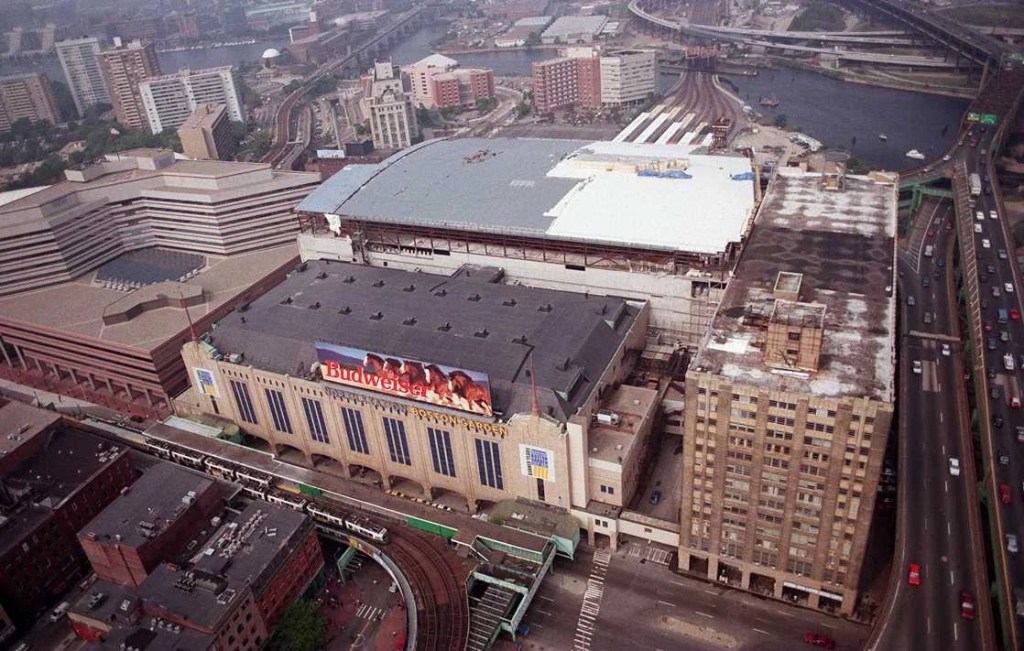
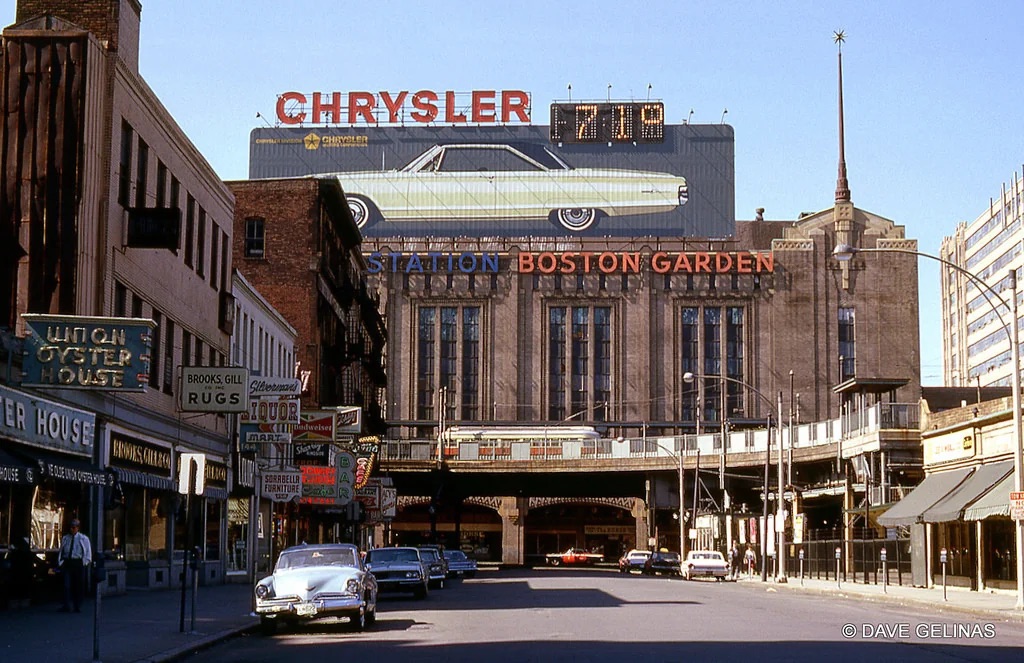
In the 1920s, plans began to build a contemporary train station that tied in both the Boston subway and regional train lines. The complex would replace the former North Union Station and help propel Boston as a more contemporary city. Seeing the opportunity, Boston real estate developer James Walsh realized the potential of adding a sporting stadium atop the station. Walsh had also contacted New York boxing promoter Tex Rickard, who built the third iteration of New York’s Madison Square Garden, and was eyeing boston as a location for a second Madison Square Garden. The duo hired the New York firm of Fellheimer and Wagner (designers of New York Grand Central Station) to design the exterior of the building in the Art Deco style. The building opened in November 1928 as the Boston Madison Square Garden, later shortened to the Boston Garden. The arena was built specifically with boxing in mind, with Rickard believing every seat should be close enough to see the “sweat on the boxers’ brows”. Due to this layout, fans for decades later were much closer to the players during Bruins and Celtics games than in most arenas, leading to a distinct hometown advantage. Storied franchises became dynasties and the grit and determination of Boston sports was fostered under this roof. The small size of the Boston Garden, paired with electrical issues and lack of air-conditioning, led to its demise. The present Boston Garden opened in 1995, behind the old Garden and was known as the Fleet Center, later renamed the TD Garden. The 1920s Garden sat vacant for three years before it was demolished in 1998. The site where the building once stood is currently a commercial development called The Hub on Causeway.