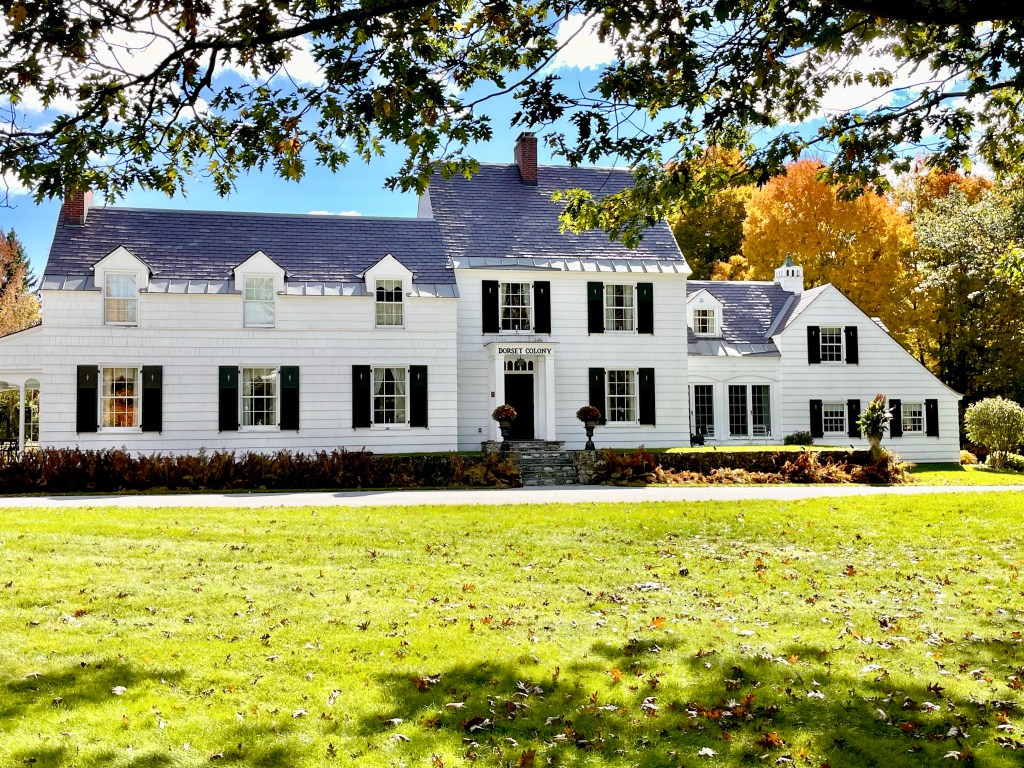
Colonial Revival perfection! This building on the Dorset Town Green was originally constructed around 1885 for Allan Bourn, the purchasing agent of the New York Central Railroad. When Bourn was told by a trusted associate that a railroad stop was going to be built near Dorset, he made the decision to acquire eight acres of pristine land just west of the Dorset Green on Church Street. Bourn, a resident of Westchester, New York, decided to build a vacation home there for his family. The house was named “Maplebourn,” after a large maple tree on the property. Annie Bourn Sheldon, Allan’s daughter, inherited his property after his death in 1925. She and her husband then added two large additional wings onto the house, just at the time that Dorset’s local theater scene was beginning to take-off. After Annie’s husband Harry died in 1942, she began to rent out rooms of her home to visiting actors to the nearby Dorset Playhouse (last post). Actor and playwright, John Nassivera purchased the property and renamed it the Dorset Colony House, converting it to a residency hall. The building has since been purchased by Adele and Herman Raspé, who lovingly have maintained and enhanced the historically and architecturally significant property.
 Buildings of New England