Coleman House // c.1750

In 1802, a young sea captain, Laban Coleman purchased this house on Orange Street on Nantucket within a year of his marriage to Jane Carman. Historians estimate the date of construction of the house to be from sometime between 1729 and 1750, but it could date closer to the time that Coleman purchased the house from a joiner, Elisha Raymond, who possibly built the house. I particularly love the simple door with transom above and the narrow, second-story stairhall window. What do you like the most about this Nantucket home?

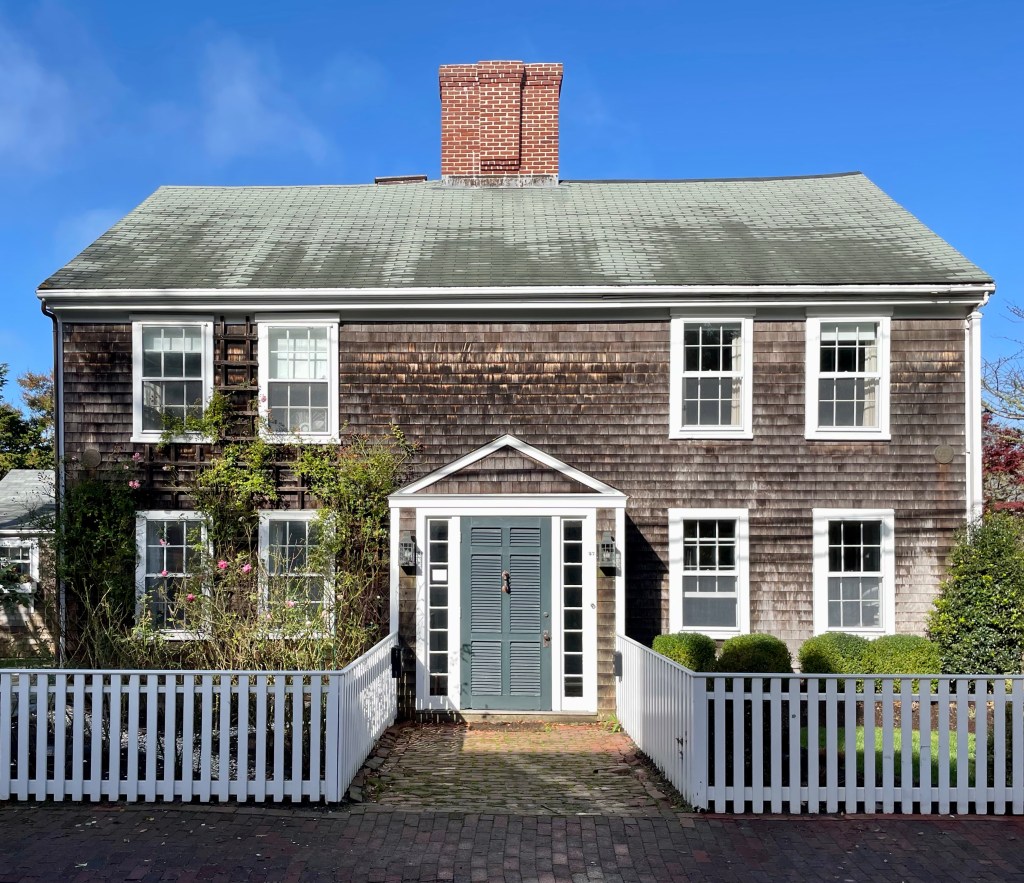
Joshua Coffin House // 1756

Nantucket in the off season is just as magical as the peak of summer. Quiet streets, gray shingled buildings, and the smell of the ocean is the perfect medicine! This is the historic Joshua Coffin House on the island of Nantucket. The house is one of the best examples of a mid-18th century sea captain’s residence on the island and it is in a great state of preservation. The dwelling was built in 1756 for newlyweds Joshua Coffin and Beulah Gardner on land given to them by Beulah’s father as a wedding present. The couple raised their children here until Joshua died at sea in a hurricane while on a whaling trip in the West Indies. The house remained in the family since at least 1971 and has been lovingly maintained by its stewards.

Fosdick-Calder Double House // c.1745

This 2 ½-story, five-bay house was built for Benjamin Fosdick (1713-1801) and his family on Nantucket. After Benjamin died in 1801, the house was inherited by two of his surviving sons and they divided the house into two, creating a double-house for them and their own families. The symmetrical home was divided down the middle at the central chimney, and two front doors provided access to the two dwellings. The right section was once the home of Capt. William Calder, who escaped shipwreck at Cape Horn
on his first voyage at age 13. He later was captured by the British during the War of 1812, and escaped from Dartmoor Prison in England, making his way back to Nantucket. The double house has retained much of its original design since 1801 until the 1960s when the projecting entrance porch was added.