Old Brant Point Lighthouse // 1856

Located nearby the present Brant Point Lighthouse on Nantucket, the old lighthouse remains as a significant piece of island history preserved. In the 1740s, Nantucket’s whaling industry was growing fast, so at a town meeting in 1746, it was determined that a lighthouse at Brant Point was to be built, to mark the point around which all vessels passed as they entered the island’s inner harbor. On or near this site, nine lighthouses stood, guiding ships into and out of the harbor. This brick tower and attached keeper’s house were constructed in 1856. The tower itself was brick, topped by sandstone, which supported the lantern. The cast-iron lantern had twelve windows. A circular iron staircase led to the lantern, situated forty-seven feet above the ground. By the 1850s, Nantucket faced a sudden decline after the invention of kerosene, cut the need for whale oil and a growing sandbar blocked the harbor. The shifting sands would eventually require a new lighthouse built nearby, the present 1901 wooden lighthouse. The 1856 tower was retained ever since and is an important historical artifact for Nantucket’s maritime history.

Brant Point Lighthouse // 1901

The Brant Point Lighthouse located on Nantucket Island was first established in 1746 to guide ships to the main harbor. At a town meeting at Nantucket on January 24, 1746, the sea captains of the island spoke out for a lighthouse and the sum of 200 pounds was voted, the wood 1746 lighthouse tower burned in 1758. It was replaced eight more times until 1901, when the present lighthouse was erected. While small, the lighthouse oozes charm and remains active and automated since 1965.

Rotch Counting House // c.1775

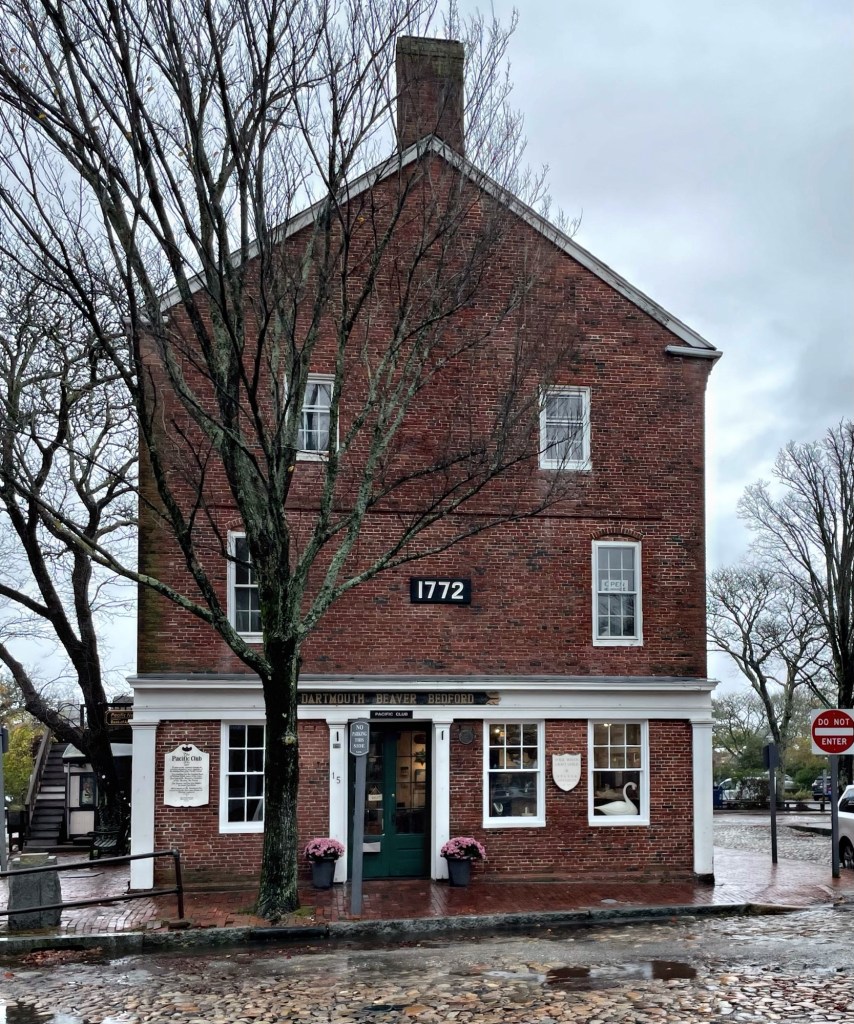
Members of the Rotch family dominated Nantucket business and politics across three generations. The rise of this family was linked to the rise of the island as a whaling center. The well-connected family owned two of the three ships involved in the Boston Tea Party on December 16, 1773. According to the Nantucket Historical Association, this warehouse and counting house building was in fact, built in 1775, not 1772, as erroneously stated on the wood plaque mounted on the outside of the building, for William Rotch, one of the pre-eminent figures in Nantucket’s whaling industry. The handsome brick building served as the Rotch Counting House. William Rotch subsequently moved his business to New Bedford. In 1861, the building was purchased by a group of former whaling masters who formed the organization known as the Pacific Club, and the building has been known by its eponymous name and is still owned by the members of the Pacific Club, who are invited into membership on a referral basis and are responsible for its maintenance.

Folger House // 1831

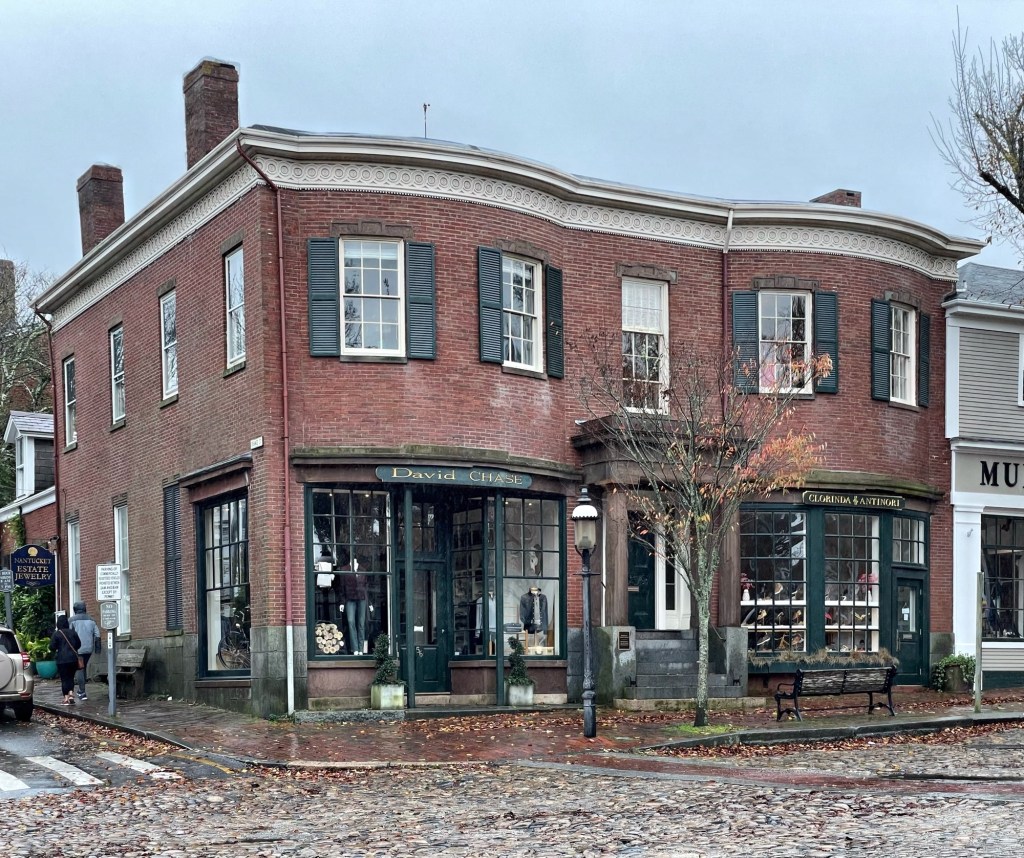
Located in the middle of the commercial Main Street on Nantucket, the 1831 Folger House stands as a fully developed example of the Federal style in masonry construction. The house’s double bow front, brownstone lintels and Ionic portico, guilloche frieze, and cast-iron railings are the finest of their type in the community. Although the house was turned into commercial use in the mid-19th century with the addition of storefronts and the removal of its original hip roof, it retains substantial architectural elements of a more decorated design than was customary even among Nantucket’s wealthiest merchants in this period. The house was built for Philip H. Folger, a merchant and it was inherited by his son upon Philip’s death in 1865.

Old Gaol – Old Nantucket Jail // 1805

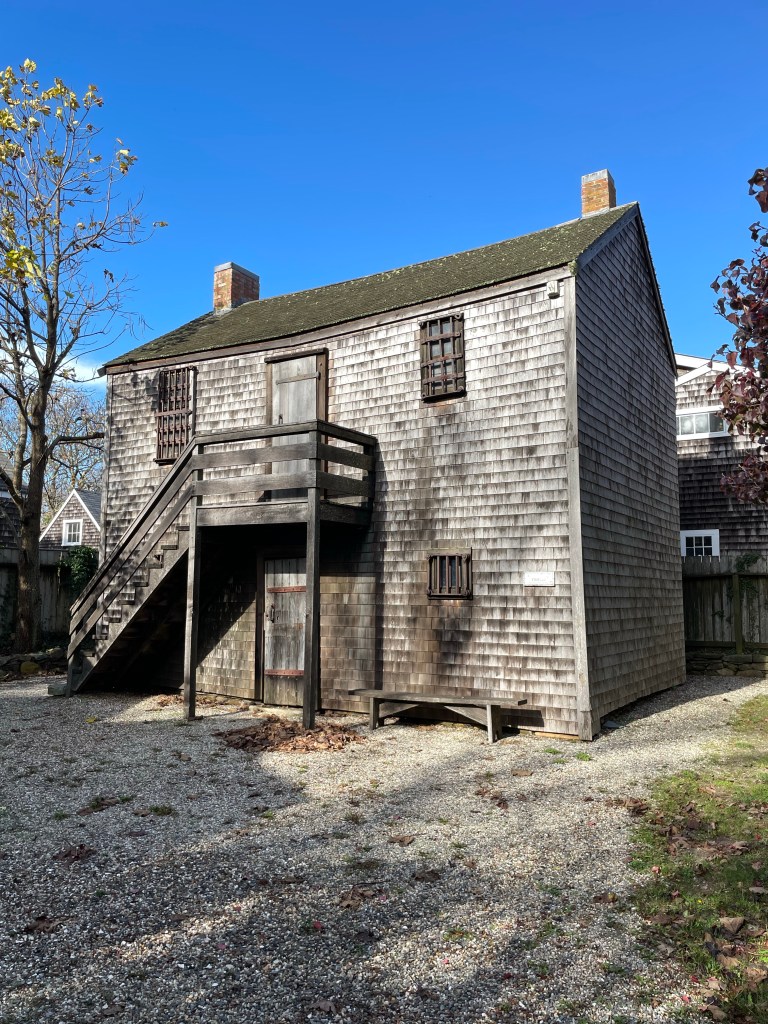
Nantucket built its first jail in 1696 on Vestal Street, which was at the time, far from a lot of the houses and businesses on the island. In 1805, taxpayers decided to spend $2,090 (roughly the cost of building a whaleship at the time) to build a new, sturdier jail nearby the original structure. Opened in 1805 and dubbed the “New Gaol,” the wooden structure represents colonial-era architecture with exceptional reinforcements, as to keep the prisoners inside those small four walls. The Gaol was constructed using massive oak timbers with iron bolts running the length of the walls, iron rods across the windows and heavy wooden doors reinforced with iron. The small structure saw a new neighbor when in 1855, the House of Corrections was moved from the Quaise Asylum and situated next to the Old Gaol. The House of Corrections was used for debtors, habitual drunkards, mentally ill, and juvenile prisoners—also used as a workhouse where debtors could ply their trades to pay their bills. It was no longer needed by 1933 and dismantled in 1954. Like with the old House of Corrections, the old jail saw its last prisoner in 1933, and sat underutilized (but surviving) until it was acquired by the Nantucket Historical Association in the 1940s and restored in 2013.