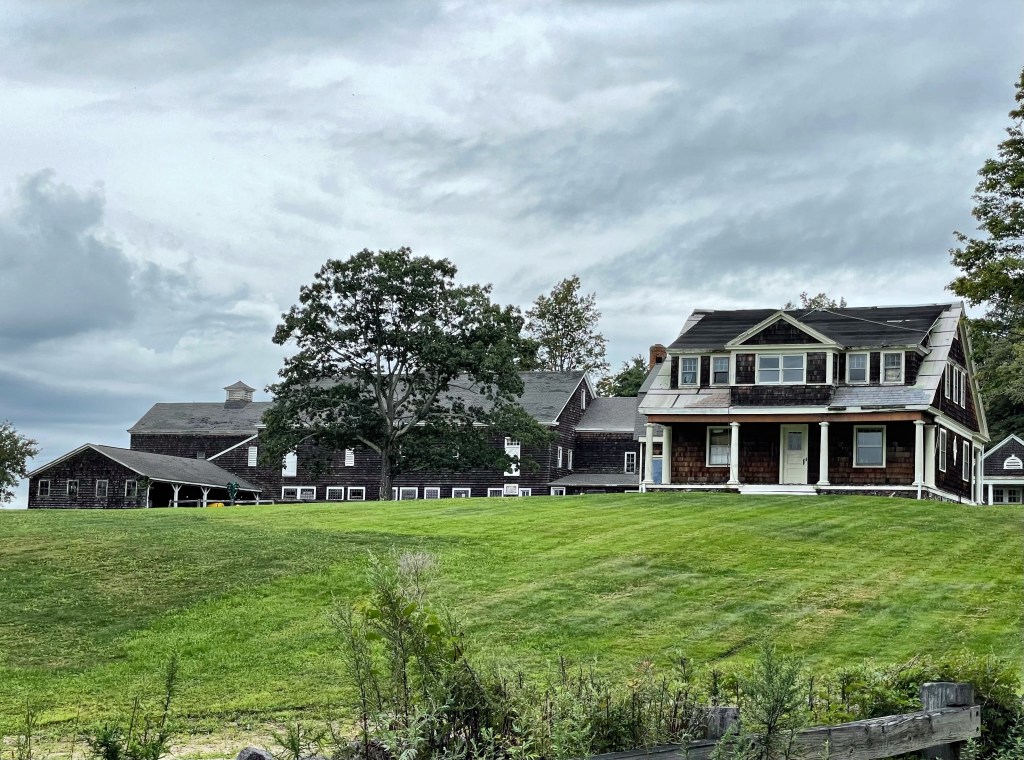
Tranquility Farm – Superintendent’s Cottage and Creamery // 1894

Any good gentleman’s farm needs a superintendent to actually oversee all the labor being done to harvest crops and take care of the livestock (because a millionaire owner cannot be burdened to deal with such mundane matters…) When John Howard Whittemore, a successful industrial-era businessman purchased an old farm in Middlebury, Connecticut to spend summers and time out of industrial malaise, he knew that along with a summer home for his family, he would need to build other structures on the 300-acres of rolling hills. The famed architectural firm of McKim, Mead & White was hired by Whittemore to design many of the buildings on the grounds, from the main house, to the superintendent’s cottage to a boathouse. The firm designed this superintendent’s cottage (which currently looks to be getting a new roof) and the creamery in the rear. Both are great examples of the Shingle style in modest, agricultural structures.

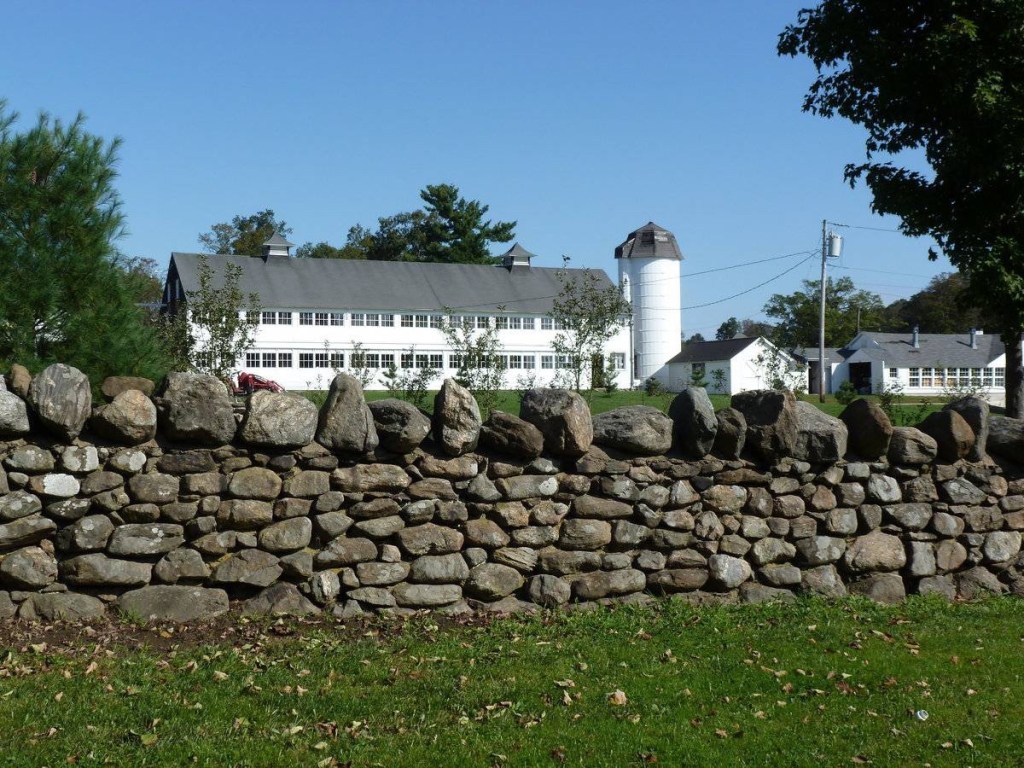
Tranquility Farm – Farmhouse and Barn // c.1840

Tranquillity Farm, spanning the rolling hills around Lake Quassapaug in Middlebury Connecticut, was originally a 303-acre model/gentleman’s farm developed by John Howard Whittemore, a successful industrial-era businessman in Naugatuck, and his wife Julia Spencer Whittemore. Whittemore was a major figure in Naugatuck, sponsoring a series of commissions of McKim, Mead & White for buildings in the city center. For his country farm estate, he again commissioned McKim, Mead & White to design a new country house, a farm superintendent’s house, boat house on the lake, and other outbuildings for a working farm. An older farm was purchased, which included a modest Greek Revival style farmhouse dating to the early-mid 19th century (seen here) and a large wooden barn. Both of these were kept and incorporated into the estate near the southern entrance to the property, possibly to harken visitors back to the charm of rural living. The sweeping landscape, featuring miles of distinctive stone walls lining the roads and crisscrossing the fields, was designed by Charles Eliot and completed by Warren H. Manning – both protégée of Olmsted.