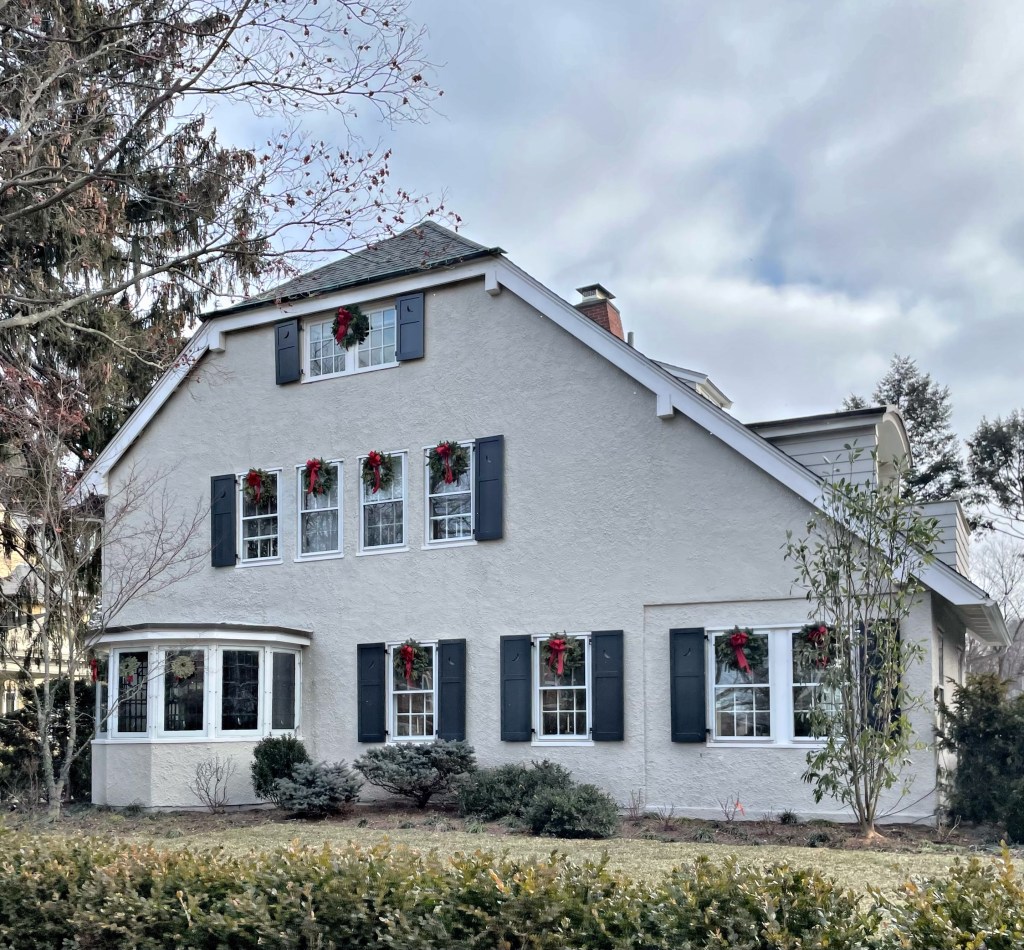
In 1875, William C. Strong, a nurseryman from Brighton, MA, purchased the 93-acre Staples-Craft farm in Newton. He established a large nursery on the grounds and promoted construction of the Circuit Railroad, which connected the rural section of Newton to the Boston and Albany rail line in 1886, thus establishing the village of Waban. Due in great measure to the efforts of Strong and other developers, Newton’s youngest village grew rapidly as the once isolated farm area gave way to a vibrant suburban community. He built commercial structures and people began to flock to the village, for the new housing and easy-access into Boston by rail. Strong had a house built by architect Herbert Langford Warren in 1896 and lived there for years before having this house built in 1907, when William was 83 years old. The house was occupied by Strong for just a couple years until he moved away to Manhattan. The Arts and Crafts style home was purchased by Esther Saville Davis.
 Buildings of New England