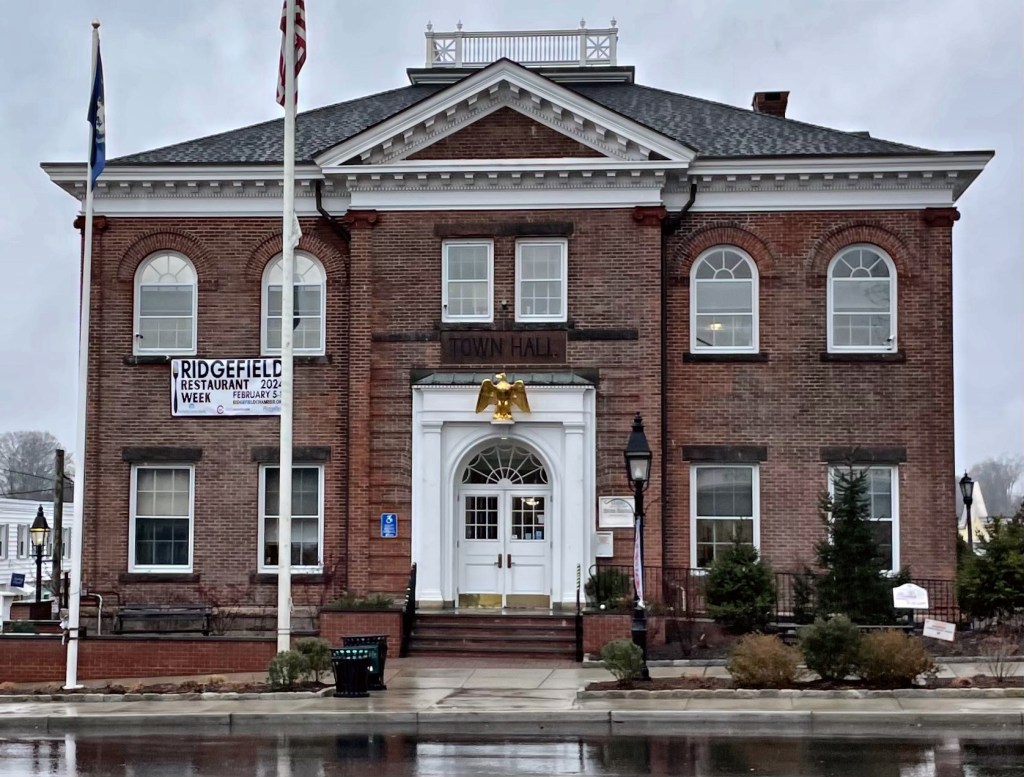
Ridgefield, Connecticut was settled in 1708 when 24 families from Long Island purchased land from Chief Catoonah of the Ramapo tribe. The Fundamental Orders adopted by Connecticut in 1639 directed would-be settlers, able to support a minister, to establish a settlement, build a Congregational church and farm the land. This is exactly what was done in Ridgefield, beginning in 1708. The original 24 proprietors received 7½-acre home lots drawn by lottery, with a 25th reserved for the minister. The lots were located up and down Main Street from a Common where a Meeting House was built. The town grew and for much of its three centuries, was primarily comprised of old farms. By the late 19th century, spurred by the connection of the railroad, Ridgefield was “discovered” by wealthy New York residents, who assembled large estates in town, a trend that has only picked up in the 21st century! Population growth and a large fire on the town’s Main Street in 1895 necessitated a new Town Hall building. The present Town Hall building was constructed in 1896 from plans by architect Philip Sunderland. Colonial Revival and Romanesque in style, the two-story brick building features a pedimented central bay also containing the entrance with fan light transom, round arched windows, brownstone trim, and narrow pilasters of brick. The building houses town offices today.
 Buildings of New England