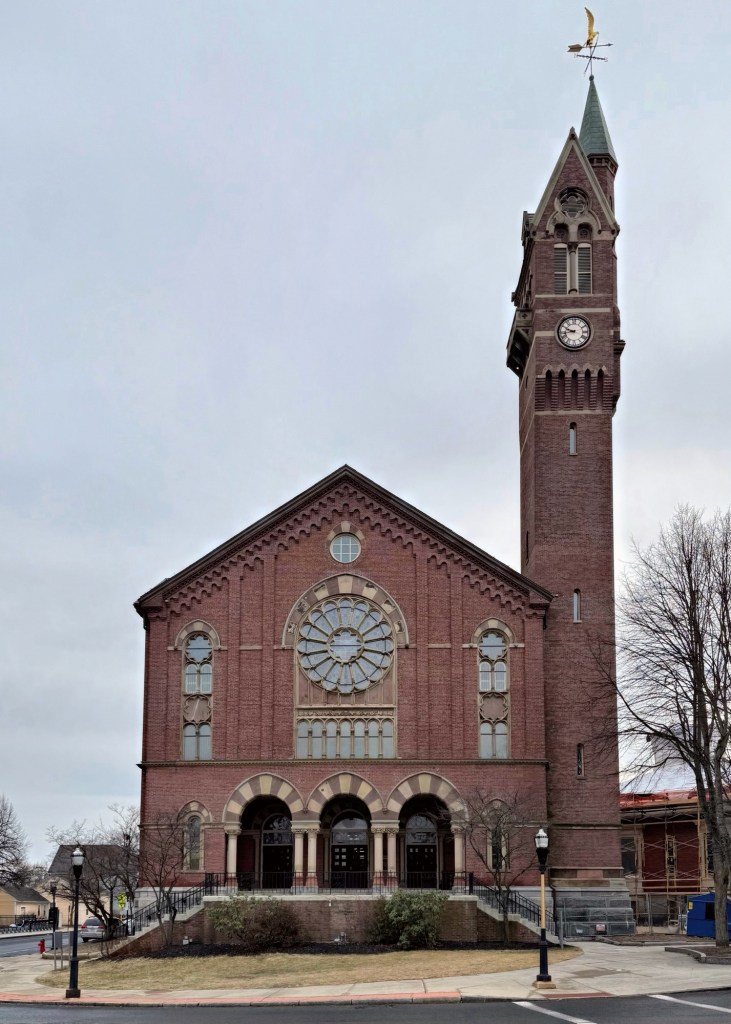
Chicopee City Hall // 1871

Chicopee, Massachusetts, was first settled in the early 17th century and incorporated as a town in 1848. Originally part of Springfield, Chicopee grew rapidly in the 19th century, fueled by industrialization and following immigrants arriving to the city to work in factories there. Many of these ethnic groups established cultural centers and built churches, creating the diverse and architecturally unique city we see today. Sadly, like many other 19th century industrial cities, many of the factories closed or relocated in the mid-late 20th century. While the loss of industry harmed the local economy, Chicopee is poised for growth and rebirth as the second largest city in Western Massachusetts, and anchored by its great architecture. The Chicopee City Hall, built in 1871, is one of the region’s finest buildings and one of a handful built in the Romanesque Revival style. The present building was constructed on land the City purchased in 1869 from the Ames Manufacturing Company, a major employer in town with mill buildings nearby along the river. Architect, Charles E. Parker of Boston, was hired to design the new building which is said to have been loosely modelled after the Palazzo Vecchio, the historic town hall of Florence, Italy. The City of Chicopee have been great stewards to their historic City Hall, undergoing numerous restoration projects in the past decades.
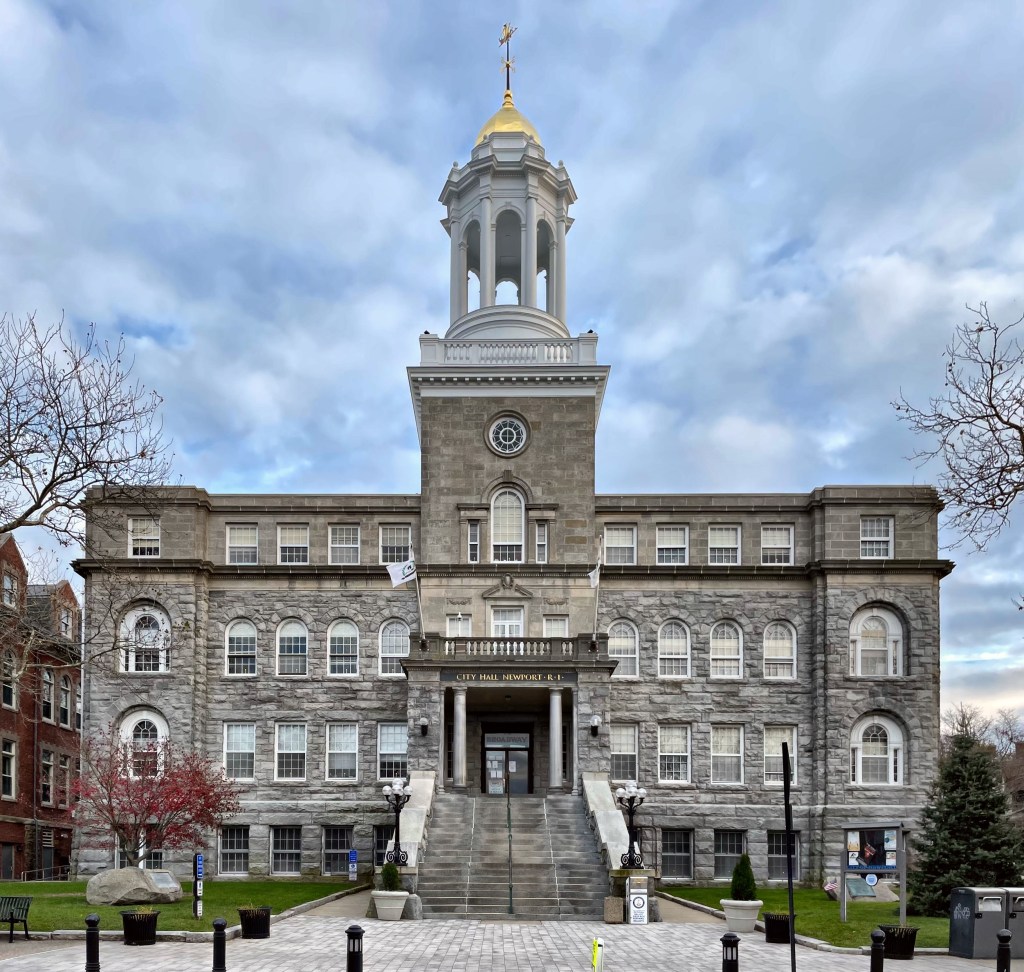
Newport City Hall // 1900

Newport, Rhode Island was settled in 1639 from colonists, who took land from the Narragansett people, who had lived on the land for generations. Newport eventually grew to be the largest of the original settlements that later became the Colony of Rhode Island and Providence Plantations. Newport served as the seat of Rhode Island’s government until the current Rhode Island State House in Providence was completed in 1904. Newport was a major center of the slave trade in colonial and early America, active in the “triangle trade” in which slave-produced sugar and molasses from the Caribbean were carried to Rhode Island and distilled into rum that was then carried to West Africa and exchanged for captives. In all, about 60% of slave-trading voyages launched from North America – in some years more than 90% departed from the tiny state, many of which left from Newport. Beginning in the mid-nineteenth century, wealthy southern planters seeking to escape the heat began to build summer cottages. By the end of the 19th century, a large number of America’s elite would build summer “cottages” in the town, transforming much of it to the Gilded Age splendor we see today. Stay tuned for a sampling of Newport buildings.

Newport City Hall was completed in 1900 from Newport-based architect and builder John Dixon Johnston. The massive Beaux-Arts style building was constructed of granite block and capped with a mansard roof with iron cresting. Tragically, a fire destroyed much of the interior and the roof in 1925, leading to a re-imagining of City Hall. In the 1920s, Colonial design prevailed in New England, and architect William Cornell Appleton envisioned the building with more Colonial features. Palladian windows and a boxed-off fourth floor were added, along with a towering cupola.