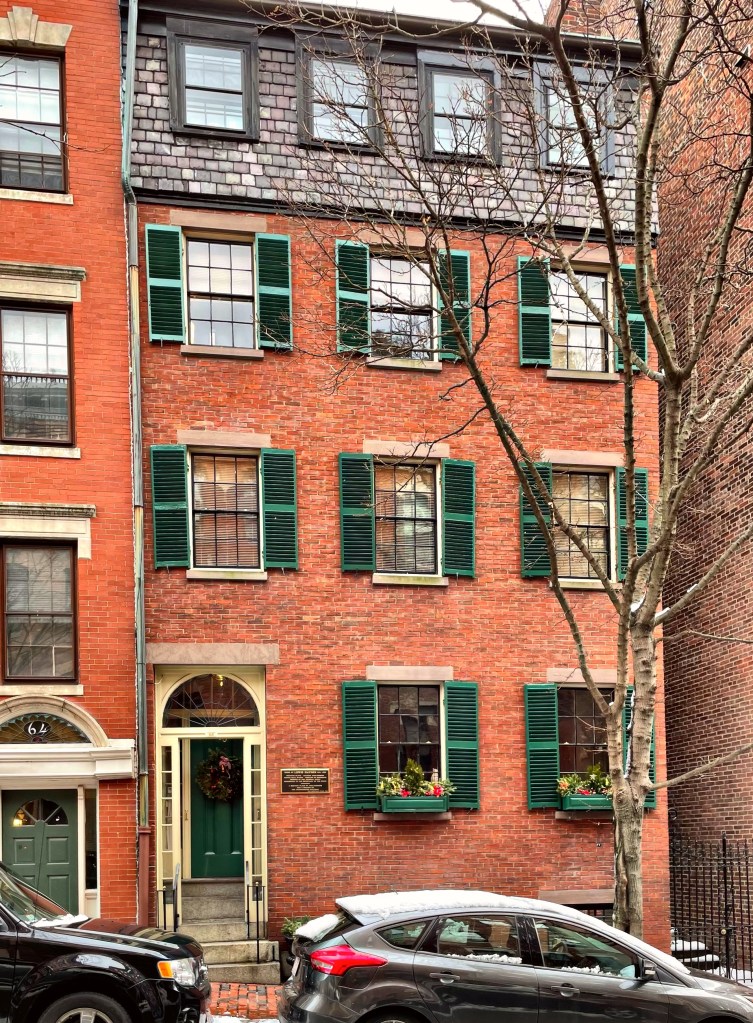
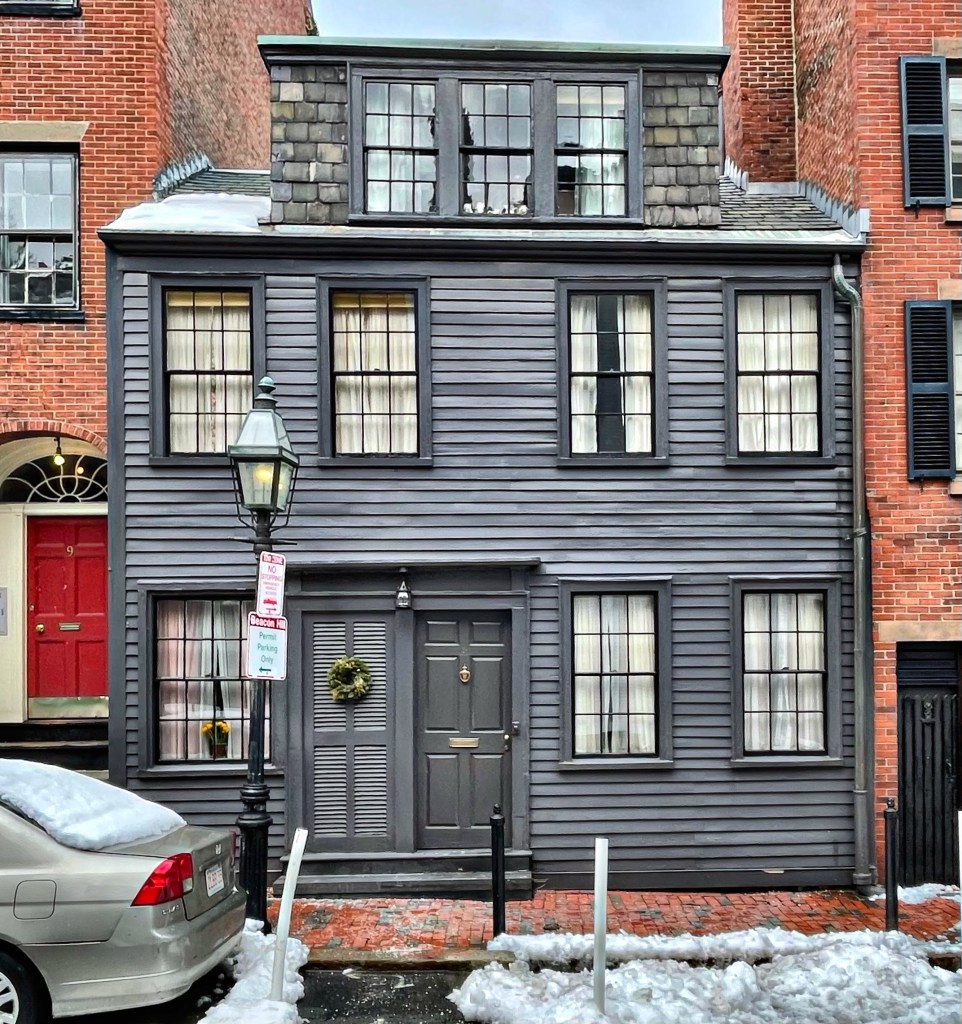
Harriet Tubman House // c.1874

Adjacent to the Susie King Taylor House on Holyoke Street in the South End neighborhood of Boston, the Harriet Tubman House has long served the Black community of Boston. The Harriet Tubman Crusaders, an African American branch of the Women’s Christian Temperance Union in Boston, created the first Harriet Tubman House in 1904 as a residence Black females who had recently migrated from the South. The Harriet Tubman House took in young female boarders, providing them with food, clothing, shelter, and friendship while they adjusted to their new environment. It later adapted to provide housing for Black female students who were not allowed to live in the traditional student dormitories at some Boston-area colleges. The Crusaders rented a home on Holyoke Street until 1909 when member Julia O. Henson donated her own townhouse at 25 Holyoke Street as a permanent headquarters for the organization’s expanding programs. Harriet Tubman visited Boston several times in the late nineteenth and early twentieth centuries, often staying with Julia Henson at this home. In 1960, the Harriet Tubman House merged with other settlement houses in the area to form the United South End Settlements (USES) and in 1976 USES erected a modern building at the corner of Columbus and Massachusetts Avenues, which was designed by Black architect Donald Stull. The 1976 building was recently demolished, despite massive outcry, for a luxury condo development… Shocker.
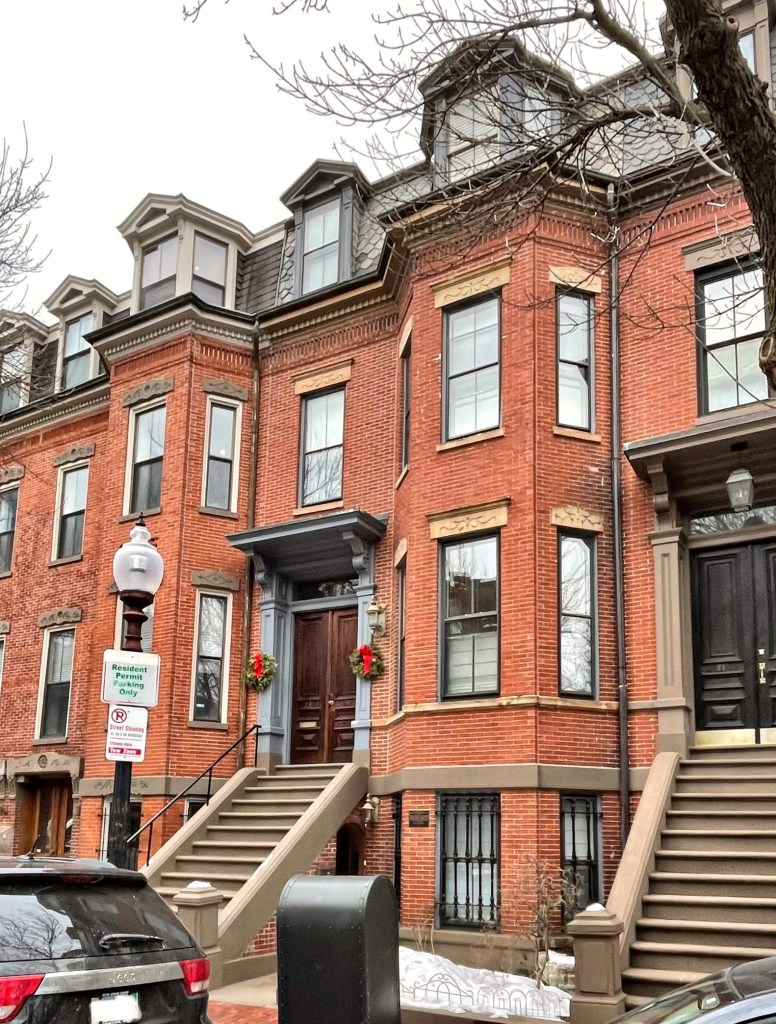
Susie King Taylor House // c.1874

The rowhouse at 23 Holyoke Street in the South End neighborhood of Boston is an excellent architectural specimen, but is best known for one of its residents, Susie King Taylor. Susie King Taylor (1848-1912) was born into slavery near Savannah, Georgia; and despite Georgia’s harsh laws against the formal education the enslaved, she attended two secret schools taught by black women. She became free at the age of 14 when she escaped onto a Union-owned boat off the coast of the then Confederate occupied Fort Pulaski on the islands off the coast of South Carolina. She soon attached herself to the First South Carolina Volunteers, the first black regiment in the US Army. She served under the Union Army in various capacities: officially as a “laundress” but in reality a nurse, caretaker, educator, and showcased such strength and courage as a young woman. Eventually, Taylor married Sergeant Edward King in 1862, and together they remained with the unit until it was mustered out of service in 1866. It is likely at that time that she met Harriet Tubman, who served as a nurse, scout, and spy for the 1st South Carolina Volunteers. Postwar, the Kings moved to Savannah, Georgia. She hoped to continue her teaching career and opened a private school for the children of freedmen. Unfortunately, her husband died the same year, and a public school opening caused her private school to fail. By 1868, Taylor was forced to find work as a domestic servant. She moved to Boston in 1872 where she married Russell Taylor in 1879. She devoted much of the rest of her life to work with the Woman’s Relief Corps, a national organization for female Civil War veterans. She lived at this home on Holyoke for much of her time in Boston, likely re-connecting with her old friend Harriet Tubman when she lived on the street.

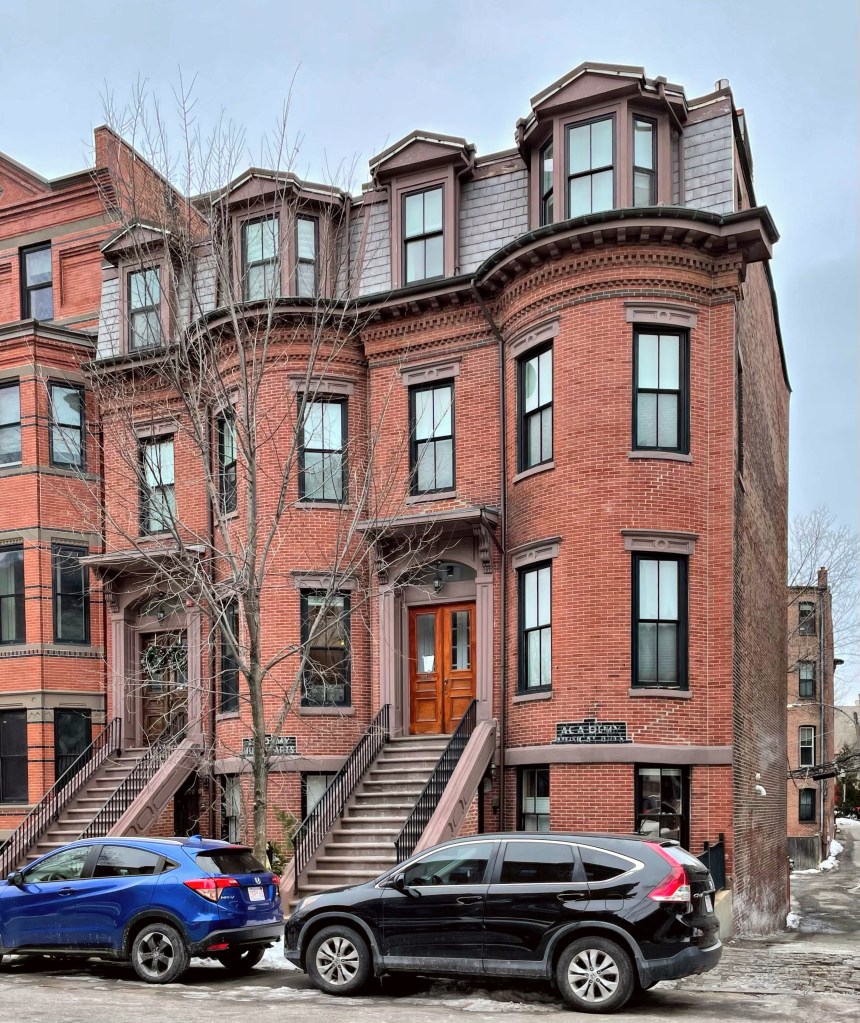
Boston Academy of Musical Arts // c.1874

These paired rowhouses at 1-3 Claremont Park in the South End were built by 1874 as speculative housing. Between 1922 and 1928, 3 Claremont Park was purchased by a twenty-something year old Anna Bobbitt Gardner, and she opened a studio in the home, teaching Bostonians how to play the piano. In 1932, Anna Bobbitt Gardner (1901-97) became the first African American women to be awarded a bachelor’s degree from the New England Conservatory of Music. Her studio, Pianoforte Studio bloomed in popularity among Black and White Bostonians, and she rebranded the school as the Boston Academy of Musical Arts, adding four more studios in the area. She would later acquire the adjacent house at 1 Claremont Park and expanded the school. She went on to manage ‘Colored American Nights’, featuring African American musicians at Boston Symphony Hall, and produced local radio and television programs to boost the African American audience in classical music. After her death in 1997, the New England Conservatory has annually granted a musician the Anna Bobbitt Gardner Lifetime Achievement Award, showing her impact on the arts in Boston.

Wally’s Cafe Jazz Club // 1947

Historically, the South End neighborhood of Boston was populated by middle- to upper-class white residents until the late 19th century, when financial crises paired with new, modern housing (constructed in the Back Bay West and Allston areas) shifted that population elsewhere. West Indian immigrants and Black Bostonians moved to the relatively new neighborhood and many formerly single-family homes were converted to tenements or multi-family uses. From this, a vibrant Black community flourished, bringing black-owned businesses like restaurants, banks and jazz clubs. The area’s famous jazz clubs boomed during the forties and fifties, yet, many have disappeared over the years with the gentrification and development in the neighborhood. Wally’s Cafe Jazz Club on Massachusetts Avenue, was founded by Joseph L. Walcott. Mr. Walcott “Wally” was a Barbadian who immigrated to America in 1910, eventually settling in Boston. He worked many jobs and eventually saved up enough by 1947, purchasing an old rowhome and converting the space into a club. Wally was believed to be the first African American to own a nightclub in New England. He brought famed jazz musicians to Boston, and they played at this iconic venue for decades until 1979, when the venue shifted across the street to this building. With the jazz movement waning in popularity, Wally maintained his commitment to the music by featuring young musicians who were attending prominent academic institutions such as Berklee College of Music and the New England Conservatory of Music. Mr. Walcott cleverly decided to hire these young music students and mixed them with seasoned professionals who were veterans of the Big Band era. This mix of talent was special, and the format enabled Mr. Walcott to continue to serve the jazz loving audiences of New England. After Wally’s death in 1998 at age 101, his three children took over the bar, and today Wally’s Cafe is still owned and managed by his family, though presently closed due to COVID-19 restrictions.

Lewis and Harriet Hayden House // 1833

Lewis Hayden was born into slavery in Lexington, Kentucky, in 1811, as one of a family of 25. Hayden was first owned by a Presbyterian minister, Rev. Adam Rankin. He sold off Lewis’ brothers and sisters in preparation for moving to Pennsylvania, and he traded 10-year-old Hayden for two carriage horses to a man who traveled the state selling clocks. In the mid-1830s, Hayden married Esther Harvey, also a slave. She and their son were sold to U.S. Senator Henry Clay, who sold them both to the Deep South, and Hayden never saw them again. By 1842, Hayden married a second time, to Harriet Bell, who was also enslaved, and he cared for her son Joseph as his stepson. After this marriage, Hayden began making plans to escape to the North, as he feared his second family might be split up like the first. In 1844, he and his family escaped with assistance of abolitionists all the way to Canada. From Canada, the Haydens moved in 1845 to Detroit in the free state of Michigan, and the next year, they moved to Boston, at the center of anti-slavery activity with the city’s strong abolitionist base. In Boston, Hayden became a lecturer and ran a clothing shop, acquiring enough money to live in this large home in Beacon Hill. The Haydens routinely cared for fugitive slaves at their home, which served as a boarding house. Guests included Ellen and William Craft, who escaped from slavery in 1848. Hayden prevented slave catchers from taking the Crafts by threatening to blow up his home with gunpowder if they tried to reclaim the pair. Hayden died in 1889, outliving the abolishment of slavery. Harriet died in 1894 and left $5,000, the entirety of their estate, to the Harvard University for scholarships for African American medical students. It was believed to have been the first, and perhaps only, endowment to a university by a former slave. Their former home remains a stop on Boston’s Black Heritage Trail.

Glapion-Middleton House // 1787

George Middleton and Louis Glapion built this two-family residence in Boston’s Beacon Hill neighborhood in 1787, which is now the oldest extant home on Beacon Hill. This wood structure is a typical example of late 18th century Boston homes built by African Americans. Louis Glapion worked as a hairdresser and may have been from the French West Indies. Glapion lived and ran his business out of 5 Pinckney Street until his death in 1813. His wife Lucy continued to live there until 1832. George Middleton was a “horse breaker” (horse trainer) by trade and was adored in the diverse community of Beacon Hill. Middleton was one of 5,000 African Americans to serve in the military on the Patriot side of the Revolutionary War, leading an all-Black militia called the Bucks of America. The group is believed to have guarded the property of Boston merchants during the Revolution. After the war, he became the third Grand Master of the African Lodge, later known as the Prince Hall Masons. In 1796, Middleton founded the African Benevolent Society, which helped orphans and widows through job placement and financial relief. He died in 1815, outliving his wife and apparently left no children when he died in 1815.