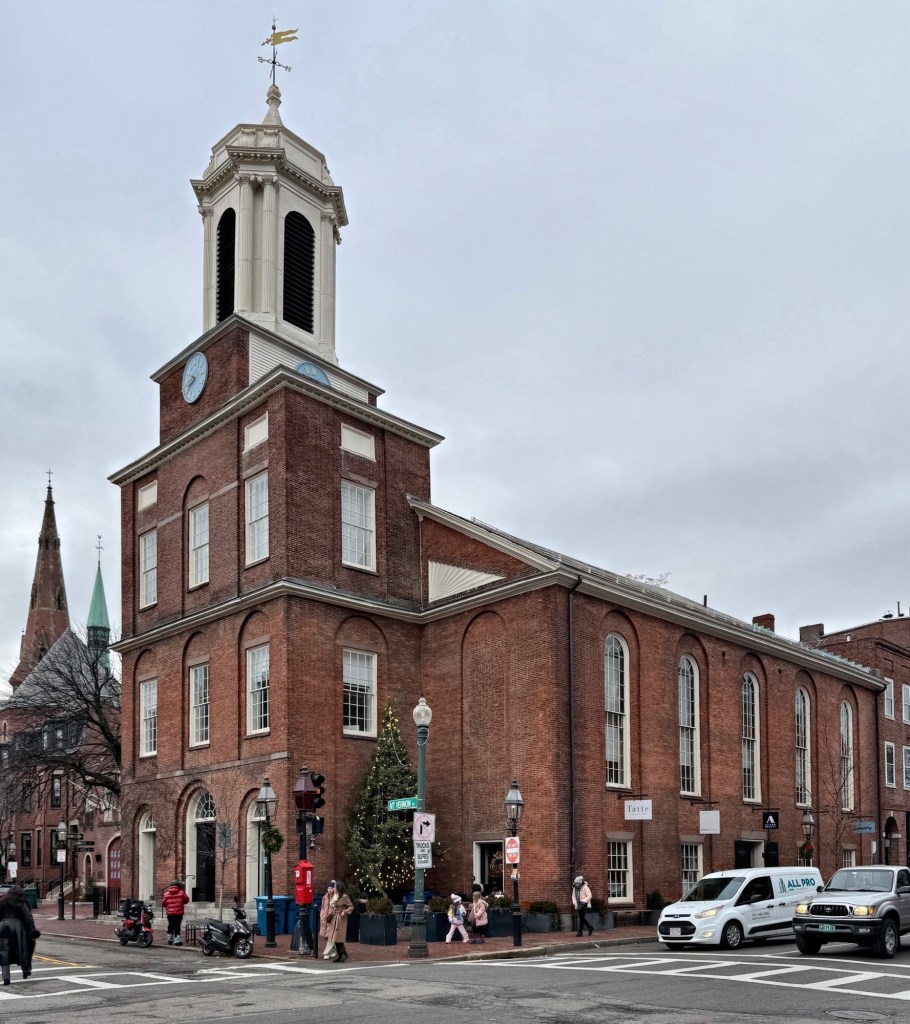
Charles Street Meeting House // 1807

The Charles Street Meeting House at the corner of Charles and Mount Vernon streets in Boston’s Beacon Hill neighborhood is one of the finest examples of a Federal period meeting house in New England. The building is thought to have been designed by architect, Asher Benjamin, due to its similarities to his Old West Church on Cambridge Street built a year prior. At the time of construction in 1807, the church stood near the banks of the Charles River, but is now a distance away from the Charles following a land-filling campaign to expand buildable land in the city. The Charles Street Meeting House consists of a two-story gable-roof main structure with a three-story tower on the south (primary) elevation that supports a clock tower and wooden cupola with double Ionic pilasters supporting the domed roof. The building was constructed for the Third Baptist Church congregation, who used the nearby Charles River for baptisms. In the years before the American Civil War, it was a stronghold of the anti-slavery movement, and was the site of notable speeches from such anti-slavery activists as Frederick DouglassWilliam Lloyd GarrisonWendell PhillipsHarriet Tubman and others. The Baptists sold the structure to the First African Methodist Episcopal Church in 1876, which was part of the first Black independent denomination in the United States. The AME Church sold the building in 1939 to the Charles Street Meeting House Society, and after a period of use as an Albanian Orthodox church, it was sold to the organization that is now, Historic New England, who were required to keep restrictions to preserve the building’s exterior. It served as a Universalist church from 1949 to 1979 with rented space inside to tenants, including a LGBT newsletter, Gay Community News, which was founded in the building in 1973. In 1980 the Meeting House was purchased by the Charles Street Meeting House Associates, who worked with the architectural firm of John Sharrat Associates to restore the building and adaptively reuse it into four floors of offices, with retail on the ground floor.
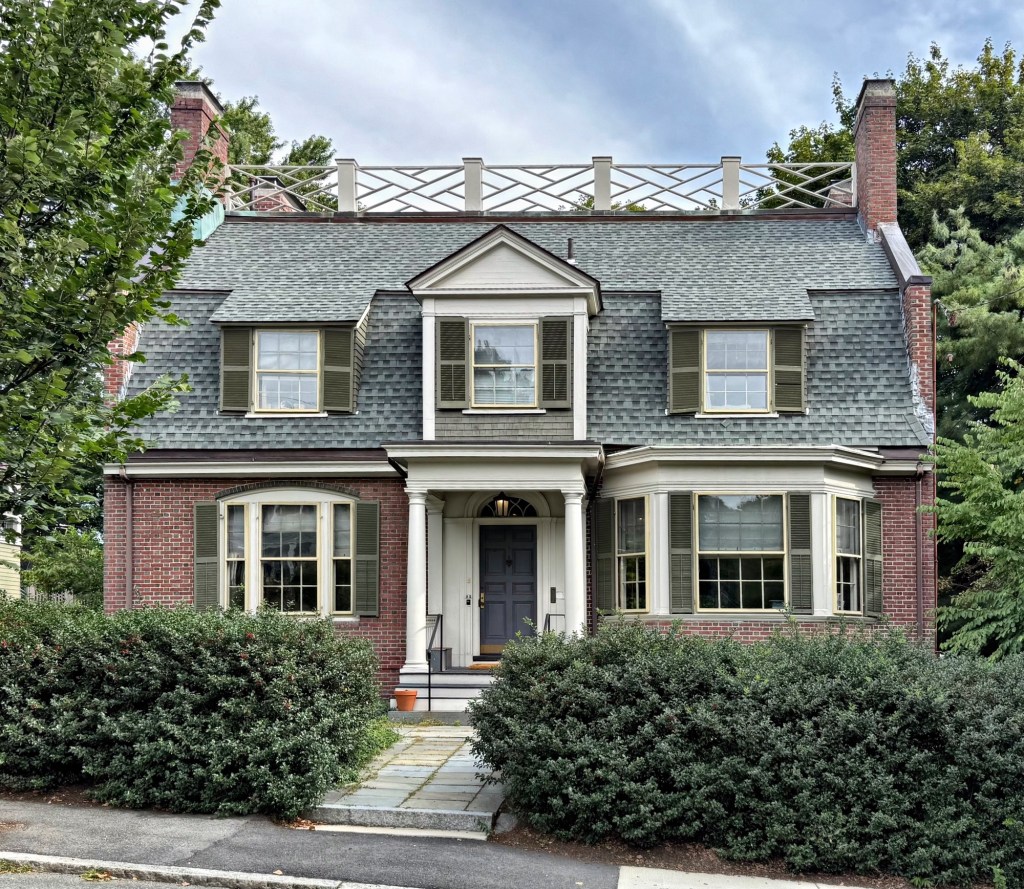
Charles P. Ware House // 1894

The Charles P. Ware House at 52 Allerton Street in Brookline, shows us that a house doesn’t have to be a mansion to make a statement! Built in 1894 from plans by architect, Henry Forbes Bigelow, this charming Colonial Revival cottage is notable for its brick construction with gambrel roof and brick endwalls rising as parapets. The home was built for Charles Pickard Ware (1840-1921) and wife, Elizabeth Lawrence (Appleton) Ware, who lived here until their deaths. Charles P. Ware was an educator, music transcriber, and abolitionist, who served as a civilian administrator in the Union Army, where he was a labor superintendent of freedmen on plantations at Port Royal, South Carolina during the Civil War. At one of the freedmen plantations, Seaside Plantation, Ware transcribed many slave songs with music and lyrics, publishing many in Slave Songs of the United States, which was the first published collection of American folk music. After Charles and Elizabeth Ware died in 1921 and 1926, respectively, the property was inherited by their son, Henry Ware, who was an attorney.

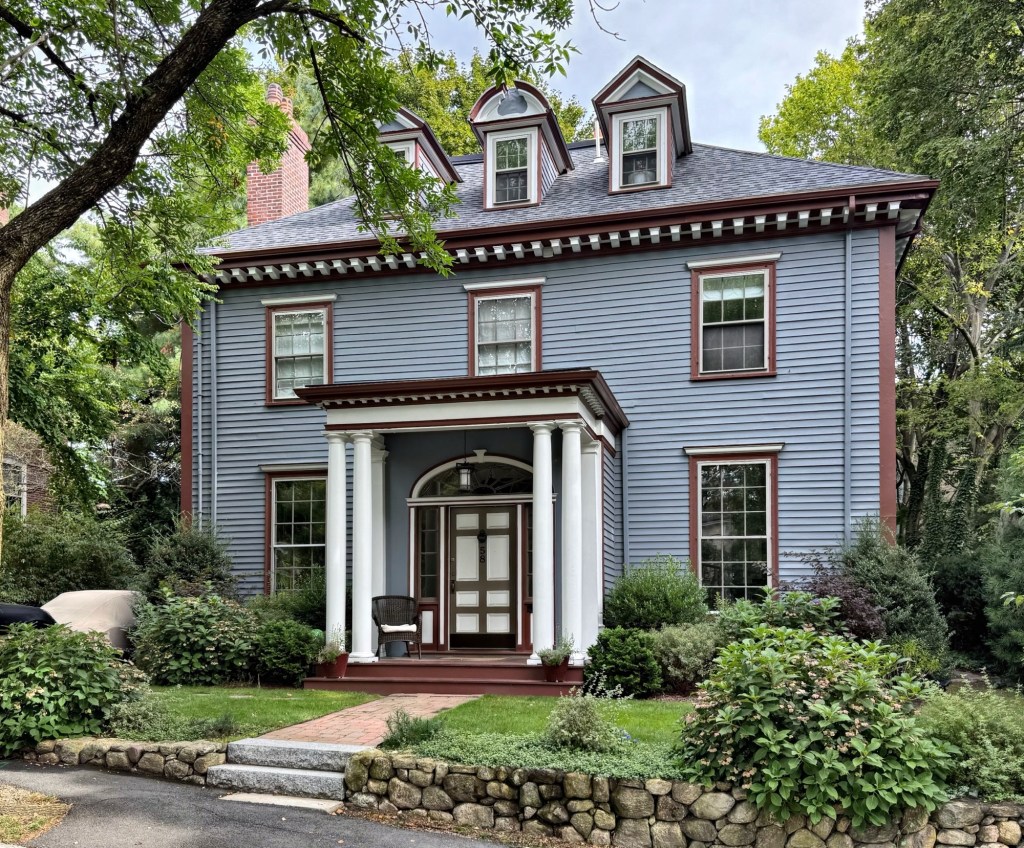
Russell-Hayes House // 1899

The Russell-Hayes House at 58 Allerton Street in Brookline, Massachusetts, was built in 1899 in the highly popular Colonial Revival style for Mr. and Mrs. Russell. Francis Henry Russell (1832-1919) was born in Plymouth and married Elizabeth Stevens (1835-1922) of Lawrence, and had one daughter together. Francis attended Harvard College and eventually worked as the Treasurer of the Bates Manufacturing Company, doing well enough to purchase a house lot in the fashionable “Pill Hill” neighborhood of Brookline to build his home here. Mr. Russell hired Plymouth-born architect, Joseph Everett Chandler, to design his suburban residence for himself, his wife, and daughter. After the death’s of Francis (1919), Elizabeth (1922) and their unmarried daughter, Mary (1926), the property was purchased in 1927 by African American musician, Roland Hayes. Just years prior to purchasing this stately home in Brookline, Roland Hayes performed abroad in Europe, even a private performance for King George V and Queen Mary at Buckingham Palace. He returned to the United States of America in 1923 and made his official debut on November 16, 1923, in Boston’s Symphony Hall, which received critical acclaim. He was the first African-American soloist to appear with the Boston Symphony Orchestra, who would later hire him, with a reported salary of $100,000 a year. Roland and his family lived in this house for 50 years until his death in 1977. His legacy lives on here with a plaque in front of the home, and a public school named after him.

League of Women for Community Service Building // c.1860

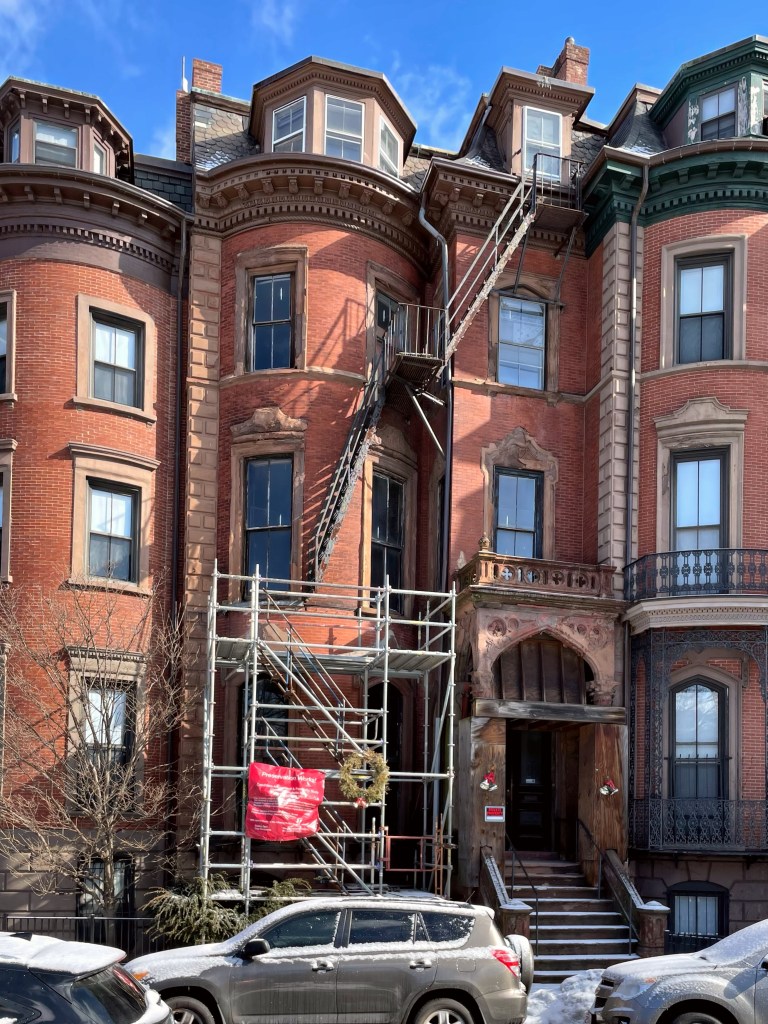
Just a block away from the Women’s Service Club Building (last post) on Mass. Ave in Boston, you’ll find this landmark, with both architectural and cultural significance. The townhouse (along with the house next door) was built around 1860 for William and Martha Carnes. William Rice Carnes was a fine lumber importer and furniture maker, bringing in high-quality mahogany and rosewood to Boston, aligning with the Victorian era housing and furniture boom here, he made a lot of money. Inside his home, he showcased the quality and durability of his product, much of which remains today. It is believed that the house was a stop on the Underground Railroad, with the connected basements of the two houses (#558 and #560) providing an easier escape in the event of a slave-catcher coming by. After William died, the property eventually sold to Nathaniel W. Farwell of Maine on October 29, 1868. The Farwell family occupied the house only until 1910, and as evidence of the decline of the South End, it stood empty until 1920 when it was sold to the League of Women for Community Service, a pioneering Black women’s organization. The League emerged from the ‘30s and ‘40s and as late as the 1950s as a safe place and a popular gathering place for African Americans in Boston. Many hotels at the time were not willing to accommodate Black patrons or charged so much that events there were unattainable. Coretta Scott King lived in the home while she attended college at the New England Conservatory and honed her amazing singing skills. It is at the home that she and Martin Luther King Jr. – then a student at Boston University – likely had dates and began their courtship. The LWCS has recently received funding through grants to preserve and restore the landmark to her former glory.

Women’s Service Club of Boston // c.1860

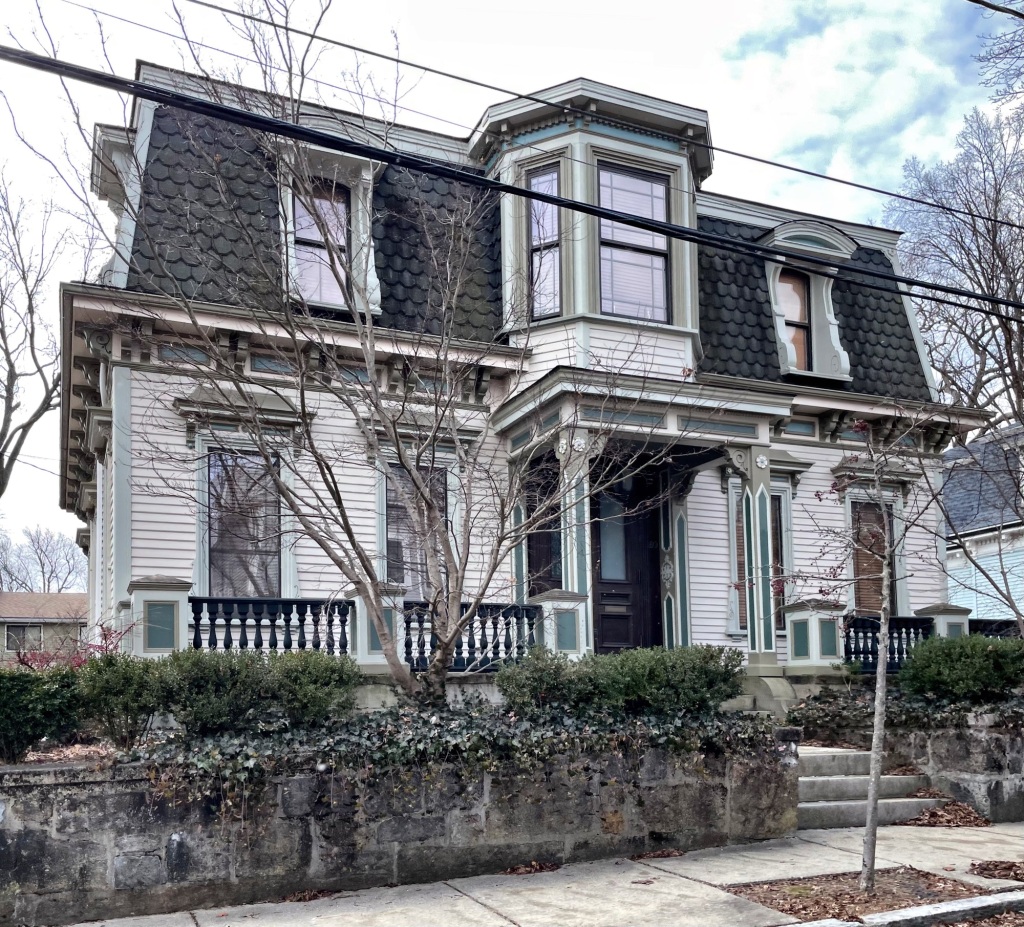
This historic rowhouse in the South End of Boston was home to the Women’s Service Club, a social and volunteer organization made up of Black women to uplift Black Bostonians of varied backgrounds, including soldiers, students, migrants and mothers. “464,” as some locals admiringly called it, was formed in the early 20th century as Boston. The city, once known as “Freedom’s Birthplace” and the “Athens of America” as a hub of abolitionist activity leading up to the Civil War, saw extreme segregation in housing and education for its Black residents by the early 20th century. From this, local activist Mary Evans Wilson organized a knitting group in 1917 to support soldiers of color fighting in World War I. An estimated 350 women joined the group, donating their talents to produce scarves and gloves for servicemen. Humanitarianism guided the activity of the Women’s Service Club’s over the next half century. This building was purchased in 1919 and operated as part-meeting space and part-settlement house. “A Home Away from Home,” as some described it, the building offered affordable shelter to female workers, migrants, and college students barred from on-campus housing due to racist policies. One of the club’s most prominent members was Melnea Cass (1896–1978), who served as its President for more than fifteen years. Cass initiated the Homemakers Training Program which certified domestic workers so they would be assured a liveable minimum wage, social security and other benefits. The club continues to do great work, but could use funding to restore the landmark building!

Johnson’s School of Beauty Culture // c.1865

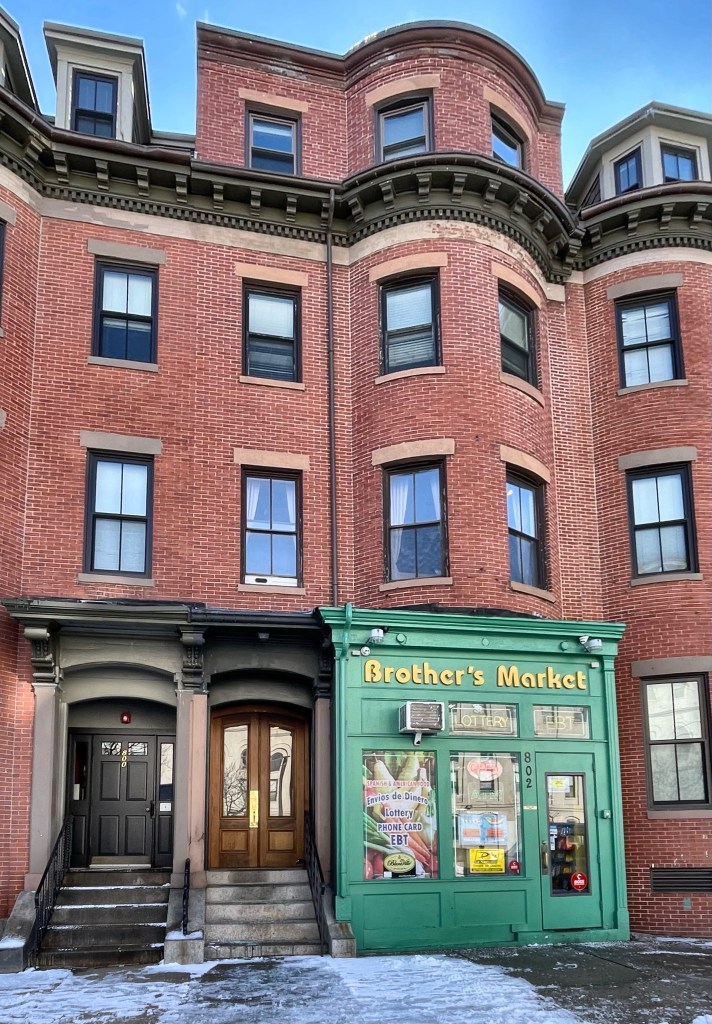
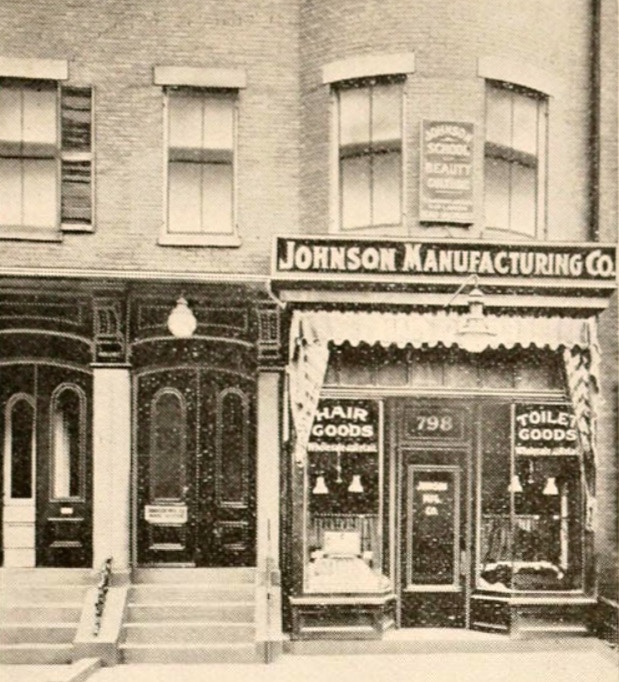
Boston’s South End neighborhood has so much history that NEEDS to be showcased. From the repetitive architecture of beautiful brick and stone bowfronts, to the history of African American activism, enterprise, and stories, the neighborhood is a gem of Boston. This building was constructed around 1865 for Thomas H. Snow (1833-1908) as his home. Snow was a wine and spirit merchant who had a store in Faneuil Hall Square. While that is interesting, Mr. Snow is not the highlight of this building, that comes later in 1899, when the building was rented to Madame Mary L. Johnson, a wig maker, scientific scalp specialist, and hair culturist. Mary Johnson and her husband, Dr. W. Alexander Johnson, were Black and ran one of just 200 Black-owned businesses in the city of Boston by the beginning of the 20th century. At their storefront, they sold hair goods at Johnson’s Hair Store. Sold all over the United States since 1900, their famous “Johnson Hair Food” was “the most scientific pomade yet discovered for growing, beautifying and softening the hair,” they claimed. In connection with their hair product outfit, Madame Johnson operated Johnson’s School of Beauty Culture, where a variety of services including manicuring, shampooing, scalp massage, facial massage, hairdressing, and scalp treatment were offered. The school provided young Black women in Boston technical training and skills, which there were limited options at the time. Mr. Johnson also was President of the Boston Negro Business League, which helped bolster Black businesses at the turn of the century.

Columbus Avenue A.M.E. Zion Church // 1885

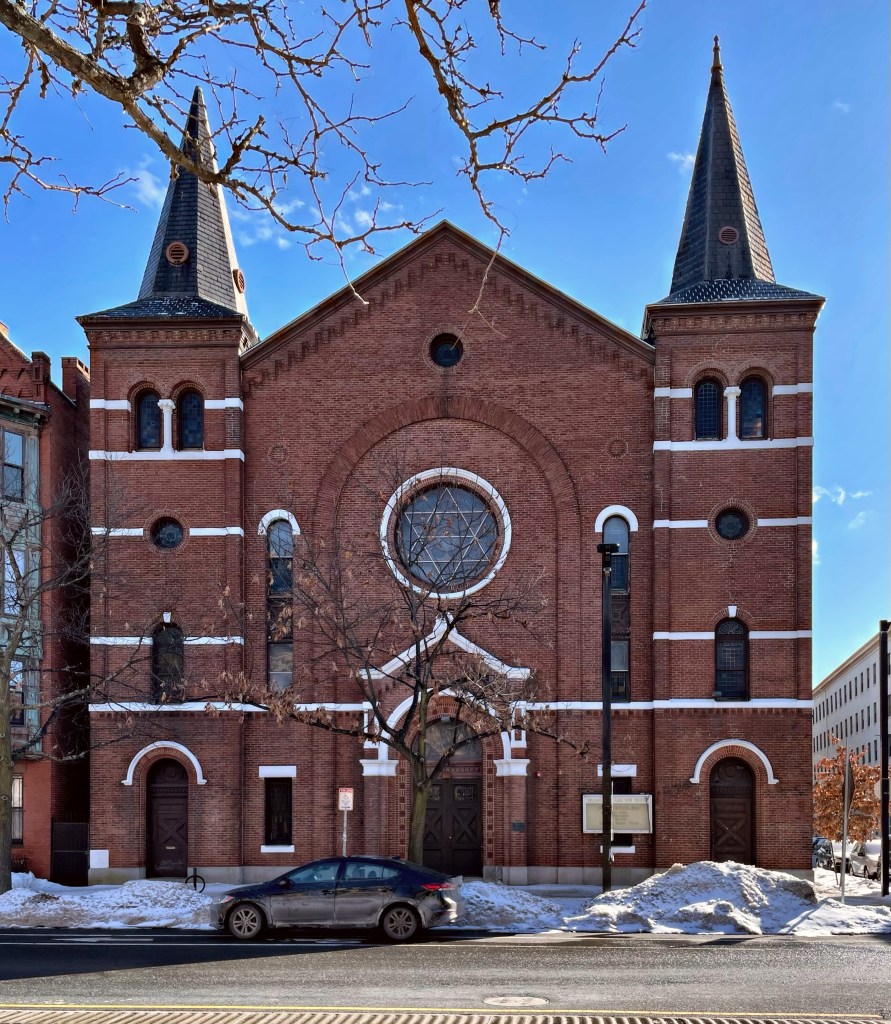
The Columbus Avenue African Methodist Episcopal Zion Church sits on the border of the South End and Lower Roxbury neighborhoods and is a great example of how the area evolved in the 19th and 20th centuries. The beautiful Romanesque Revival building was constructed in 1885 as the first synagogue of Congregation Adath Israel, which was founded in 1854. The congregation sought more space from its current location, and a closer place of worship for many of the German Jews who settled in Boston’s South End. They built this synagogue in 1885 and eventually moved west to a new Kenmore Square synagogue less than thirty years later as the neighborhood’s demographics began to shift. In 1903, the A.M.E. Zion Church purchased the former synagogue as their new home. This congregation had its beginnings in 1838 when seventeen African Americans withdrew from the communion of the Methodist Episcopal Church, then located on Joy Street in Beacon Hill. This group of Black worshippers wanted more religious freedom and desired to become part parcel of The African Methodist Episcopal Zion connection under the leadership of their own race. For many years, this church was the largest and principal Black church in the city of Boston. In 1903, shortly after moving to Columbus Avenue, the church experienced what was called the “Boston Riot.” The church hosted a debate between Booker T. Washington and William Monroe Trotter, editor and publisher of the “Boston Guardian”. Trotter, a Black Bostonian, opposed the gradual conservative approach to civil and political rights as promulgated by Mr. Washington. The debate took place on July 3, 1903 and the church was packed with over 2,000 spectators. Shortly after the opening prayer by Pastor McMullen of the AME Church, Washington was introduced. A disturbance then erupted with Trotter eventually being arrested for disturbing the peace. This building is the oldest synagogue building in Massachusetts and has been a center of Black life in Boston ever since the beginning of the 20th century.

Robert Gould Shaw Memorial // 1897

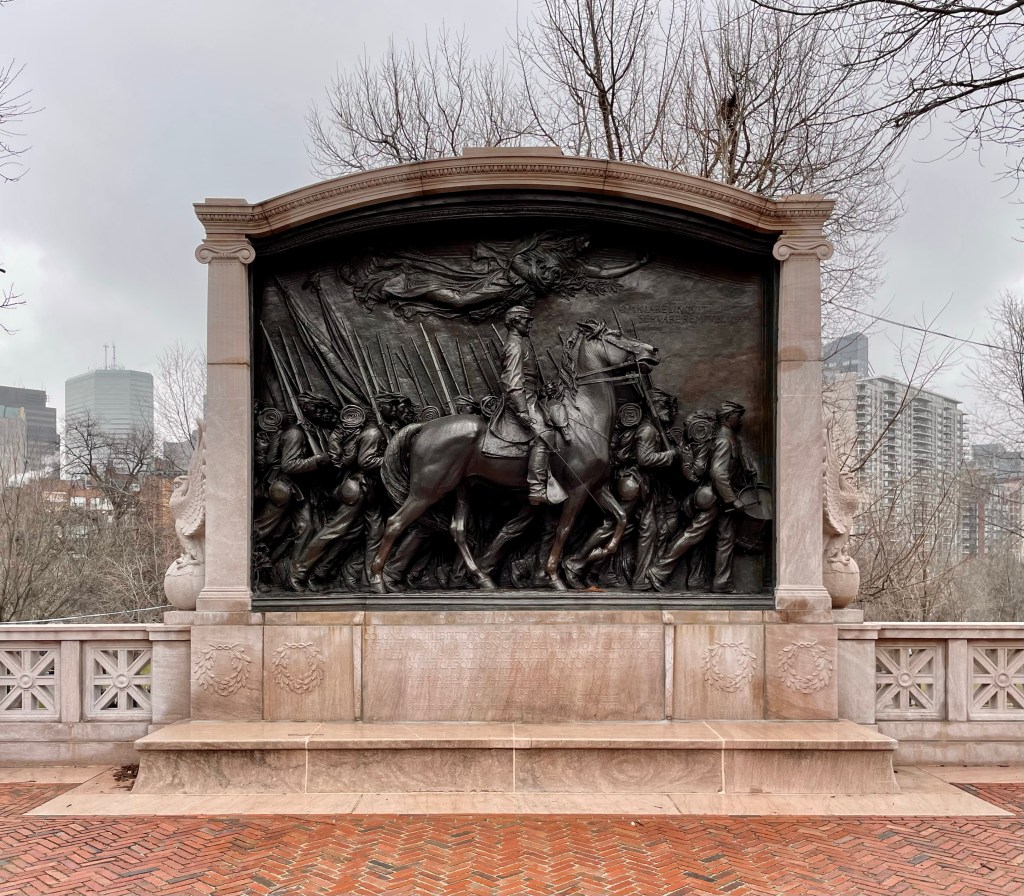
Commissioned from the celebrated American sculptor Augustus Saint-Gaudens in the early 1880s and dedicated in 1897, The Shaw 54th Regiment Memorial (aka the Robert Gould Shaw Memorial) has been acclaimed as the greatest American sculpture of the 19th century. The memorial was designed by famed artist Augustus Saint-Gaudens, and it is a stop on the Boston Black Heritage Trail, commemorating the valiant efforts of Colonel Robert Gould Shaw and the men of the 54th Massachusetts, one of the first Civil War regiments of African Americans enlisted in the North. In July 1863, the regiment was sent to South Carolina where an assault was planned on Fort Wagner guarding Charleston harbor. Shaw had asked to have 54th Regiment lead the attack. Of the 600 men in the attack that day, there were 285 casualties, and Col. Shaw was killed, but the men never wavered in the battle and demonstrated great courage and determination. Following this display of valor, other black regiments were formed, and by the end of the war, 10% of the union army was made up of African American soldiers.

The monument in Boston shows the 25-year-old Shaw seated on his horse, with his regiment as it marched down Beacon Street on May 28, 1863 to depart the city to fight in the South. The concept of Shaw on horseback with marching soldiers was inspired, at least in part, from a painting Saint-Gaudens saw in France, Campagne de France 1814, by Jean-Louis Ernest Meissonier, which depicts Napoleon on horseback with rows of infantry in the background.While Shaw is the centerpiece of the monument, the significance of the monument is the Shaw Memorial is the first civic monument to pay homage to the heroism of African American soldiers in the U.S.

Glapion-Middleton House Ell // c.1800

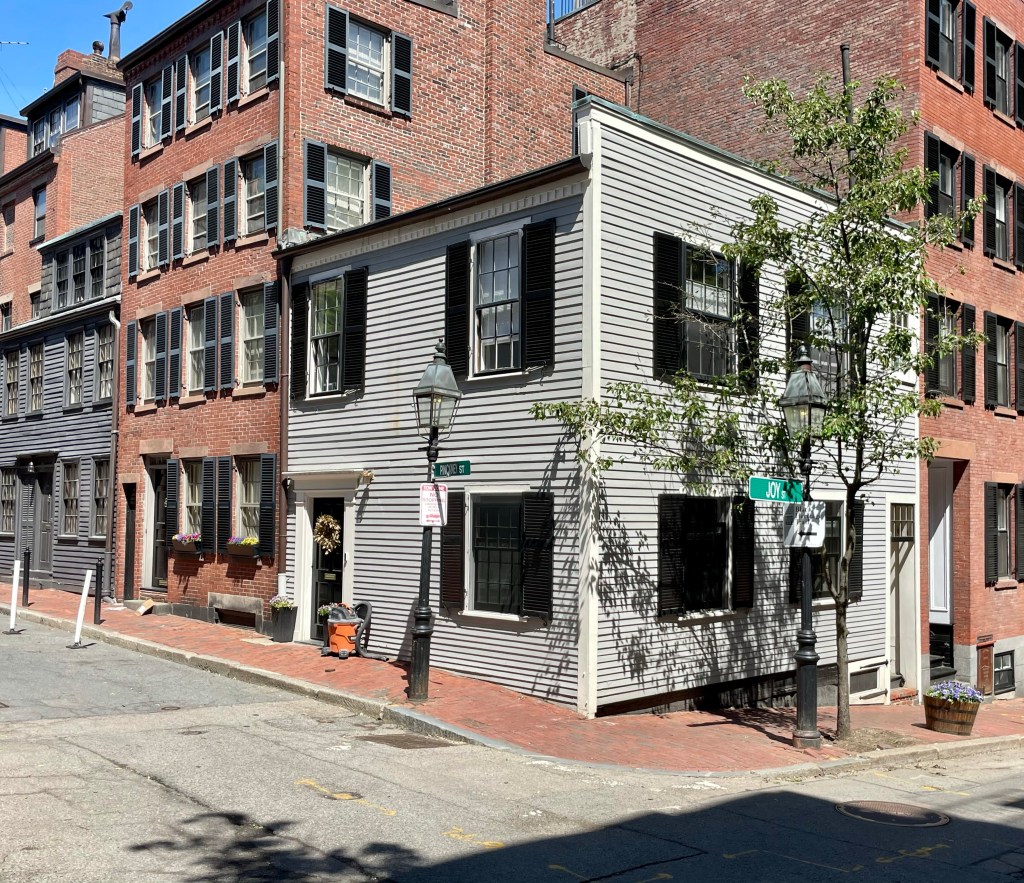
Less than a dozen wood-frame buildings exist on Beacon Hill in Boston, and this curious building is one of them, and also happens to be one of the oldest structures in the neighborhood! Built by 1800, this structure was constructed as an ell/addition to the Glapion-Middleton House at 5 Pinckney Street in Boston. The Glapion-Middleton House (previously featured) was constructed in 1787 after two Black men, George Middleton and Louis Glapion and their wives, built a small double house in the abolitionist center of Boston, Beacon Hill. In recent years, some have speculated that due to this living arrangement and other accounts, that Glapion and Middleton were in-fact gay men, but this is unsubstantiated. After the home was constructed, a two-story, five-bay ell was constructed which connected the home to Joy Street at the corner. The ell served as additional space for the two families and they appear to have had a workshop or store in part of the building. In 1855, owners demolished the center bay of the ell and erected a brick townhouse, similar to others in the neighborhood. The ell in this building was occupied as a store for the majority of its life and became an Italian restaurant and soon after a “Boyer’s Creamery Luncheon”. The property has since been converted to a residence.

Ebenezer Baptist Church // 1860

On September 15, 1847, a ship carrying 66 men and women and children docked at Long Wharf in Boston. This group of ex-slaves, led by Rev. Peter Randolph, emancipated by their former slave master Carter H. Edlow from the Brandon Plantation in Prince Georges County, Virginia. Members of the Boston Anti-Slavery Society, led by William Lloyd Garrison met the newcomers and made them welcome by securing lodging and work for self-support.  The group settled in the South End on Ottaway Court not far from the Holy Cross Cathedral. The group first joined the Twelfth Baptist Church of Boston before establishing their own congregation. They eventually occupied this church in 1887, the building was designed by architect Nathaniel Bradlee in 1860, which was built for what was then the Third Presbyterian Church of Boston. The church has remained here for nearly 150 years, seeing the rapid change in the neighborhood. The church building accommodated meetings including the Professional Black Women’s Business Club, which bolstered Black women in business, many members owned stores in the South End. Many members left the area amid growing gentrification in the 1980s and 1990s, and from that, the aging population remaining made keeping the doors open difficult. Sadly, the church relocated out of the building in 2020 and appears to have sold the building, leaving its future uncertain.

Harriet Tubman House // c.1874

Adjacent to the Susie King Taylor House on Holyoke Street in the South End neighborhood of Boston, the Harriet Tubman House has long served the Black community of Boston. The Harriet Tubman Crusaders, an African American branch of the Women’s Christian Temperance Union in Boston, created the first Harriet Tubman House in 1904 as a residence Black females who had recently migrated from the South. The Harriet Tubman House took in young female boarders, providing them with food, clothing, shelter, and friendship while they adjusted to their new environment. It later adapted to provide housing for Black female students who were not allowed to live in the traditional student dormitories at some Boston-area colleges. The Crusaders rented a home on Holyoke Street until 1909 when member Julia O. Henson donated her own townhouse at 25 Holyoke Street as a permanent headquarters for the organization’s expanding programs. Harriet Tubman visited Boston several times in the late nineteenth and early twentieth centuries, often staying with Julia Henson at this home. In 1960, the Harriet Tubman House merged with other settlement houses in the area to form the United South End Settlements (USES) and in 1976 USES erected a modern building at the corner of Columbus and Massachusetts Avenues, which was designed by Black architect Donald Stull. The 1976 building was recently demolished, despite massive outcry, for a luxury condo development… Shocker.

Susie King Taylor House // c.1874

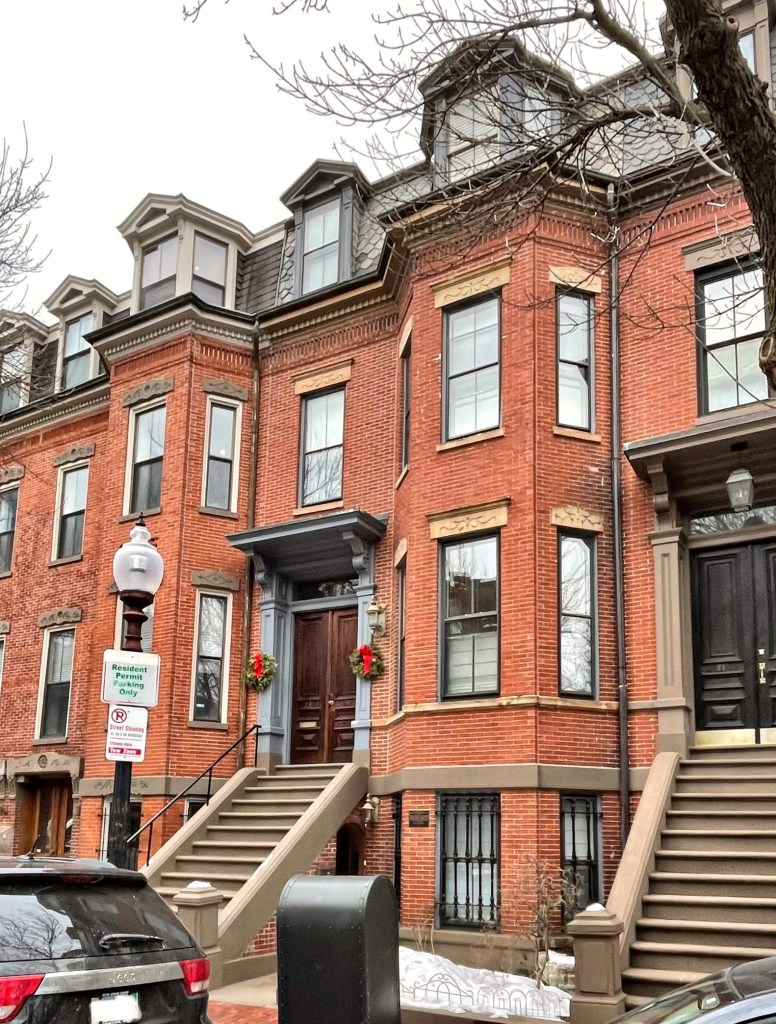
The rowhouse at 23 Holyoke Street in the South End neighborhood of Boston is an excellent architectural specimen, but is best known for one of its residents, Susie King Taylor. Susie King Taylor (1848-1912) was born into slavery near Savannah, Georgia; and despite Georgia’s harsh laws against the formal education the enslaved, she attended two secret schools taught by black women. She became free at the age of 14 when she escaped onto a Union-owned boat off the coast of the then Confederate occupied Fort Pulaski on the islands off the coast of South Carolina. She soon attached herself to the First South Carolina Volunteers, the first black regiment in the US Army. She served under the Union Army in various capacities: officially as a “laundress” but in reality a nurse, caretaker, educator, and showcased such strength and courage as a young woman. Eventually, Taylor married Sergeant Edward King in 1862, and together they remained with the unit until it was mustered out of service in 1866. It is likely at that time that she met Harriet Tubman, who served as a nurse, scout, and spy for the 1st South Carolina Volunteers. Postwar, the Kings moved to Savannah, Georgia. She hoped to continue her teaching career and opened a private school for the children of freedmen. Unfortunately, her husband died the same year, and a public school opening caused her private school to fail. By 1868, Taylor was forced to find work as a domestic servant. She moved to Boston in 1872 where she married Russell Taylor in 1879. She devoted much of the rest of her life to work with the Woman’s Relief Corps, a national organization for female Civil War veterans. She lived at this home on Holyoke for much of her time in Boston, likely re-connecting with her old friend Harriet Tubman when she lived on the street.

Boston Academy of Musical Arts // c.1874

These paired rowhouses at 1-3 Claremont Park in the South End were built by 1874 as speculative housing. Between 1922 and 1928, 3 Claremont Park was purchased by a twenty-something year old Anna Bobbitt Gardner, and she opened a studio in the home, teaching Bostonians how to play the piano. In 1932, Anna Bobbitt Gardner (1901-97) became the first African American women to be awarded a bachelor’s degree from the New England Conservatory of Music. Her studio, Pianoforte Studio bloomed in popularity among Black and White Bostonians, and she rebranded the school as the Boston Academy of Musical Arts, adding four more studios in the area. She would later acquire the adjacent house at 1 Claremont Park and expanded the school. She went on to manage ‘Colored American Nights’, featuring African American musicians at Boston Symphony Hall, and produced local radio and television programs to boost the African American audience in classical music. After her death in 1997, the New England Conservatory has annually granted a musician the Anna Bobbitt Gardner Lifetime Achievement Award, showing her impact on the arts in Boston.

Wally’s Cafe Jazz Club // 1947

Historically, the South End neighborhood of Boston was populated by middle- to upper-class white residents until the late 19th century, when financial crises paired with new, modern housing (constructed in the Back Bay West and Allston areas) shifted that population elsewhere. West Indian immigrants and Black Bostonians moved to the relatively new neighborhood and many formerly single-family homes were converted to tenements or multi-family uses. From this, a vibrant Black community flourished, bringing black-owned businesses like restaurants, banks and jazz clubs. The area’s famous jazz clubs boomed during the forties and fifties, yet, many have disappeared over the years with the gentrification and development in the neighborhood. Wally’s Cafe Jazz Club on Massachusetts Avenue, was founded by Joseph L. Walcott. Mr. Walcott “Wally” was a Barbadian who immigrated to America in 1910, eventually settling in Boston. He worked many jobs and eventually saved up enough by 1947, purchasing an old rowhome and converting the space into a club. Wally was believed to be the first African American to own a nightclub in New England. He brought famed jazz musicians to Boston, and they played at this iconic venue for decades until 1979, when the venue shifted across the street to this building. With the jazz movement waning in popularity, Wally maintained his commitment to the music by featuring young musicians who were attending prominent academic institutions such as Berklee College of Music and the New England Conservatory of Music. Mr. Walcott cleverly decided to hire these young music students and mixed them with seasoned professionals who were veterans of the Big Band era. This mix of talent was special, and the format enabled Mr. Walcott to continue to serve the jazz loving audiences of New England. After Wally’s death in 1998 at age 101, his three children took over the bar, and today Wally’s Cafe is still owned and managed by his family, though presently closed due to COVID-19 restrictions.

Lewis and Harriet Hayden House // 1833

Lewis Hayden was born into slavery in Lexington, Kentucky, in 1811, as one of a family of 25. Hayden was first owned by a Presbyterian minister, Rev. Adam Rankin. He sold off Lewis’ brothers and sisters in preparation for moving to Pennsylvania, and he traded 10-year-old Hayden for two carriage horses to a man who traveled the state selling clocks. In the mid-1830s, Hayden married Esther Harvey, also a slave. She and their son were sold to U.S. Senator Henry Clay, who sold them both to the Deep South, and Hayden never saw them again. By 1842, Hayden married a second time, to Harriet Bell, who was also enslaved, and he cared for her son Joseph as his stepson. After this marriage, Hayden began making plans to escape to the North, as he feared his second family might be split up like the first. In 1844, he and his family escaped with assistance of abolitionists all the way to Canada. From Canada, the Haydens moved in 1845 to Detroit in the free state of Michigan, and the next year, they moved to Boston, at the center of anti-slavery activity with the city’s strong abolitionist base. In Boston, Hayden became a lecturer and ran a clothing shop, acquiring enough money to live in this large home in Beacon Hill. The Haydens routinely cared for fugitive slaves at their home, which served as a boarding house. Guests included Ellen and William Craft, who escaped from slavery in 1848. Hayden prevented slave catchers from taking the Crafts by threatening to blow up his home with gunpowder if they tried to reclaim the pair. Hayden died in 1889, outliving the abolishment of slavery. Harriet died in 1894 and left $5,000, the entirety of their estate, to the Harvard University for scholarships for African American medical students. It was believed to have been the first, and perhaps only, endowment to a university by a former slave. Their former home remains a stop on Boston’s Black Heritage Trail.