Everybody poops, even the Shakers. While not the sexiest building or topic, I couldn’t help but share this mid-19th century privy (outhouse) located in the Canterbury Shaker Village. The small clapboard privy measures just 6.5 x 13 feet and has two chambers, which face outward overlooking the apple orchard, making it a great place to do your business!
The original purpose served by this small clapboard building in the Canterbury Shaker Village, built in 1837 and measuring just 12 x 25 feet is subject to some debate, although it was definitely used as a drying house. Early writings indicate it was built as an apple-drying house while others state that the original purpose was to dry lumber. The present off-center gable-roofed cupola on the gable roof served as a ventilator. In 1865, the building became the headquarters of the bee keepers of the local Shakers.
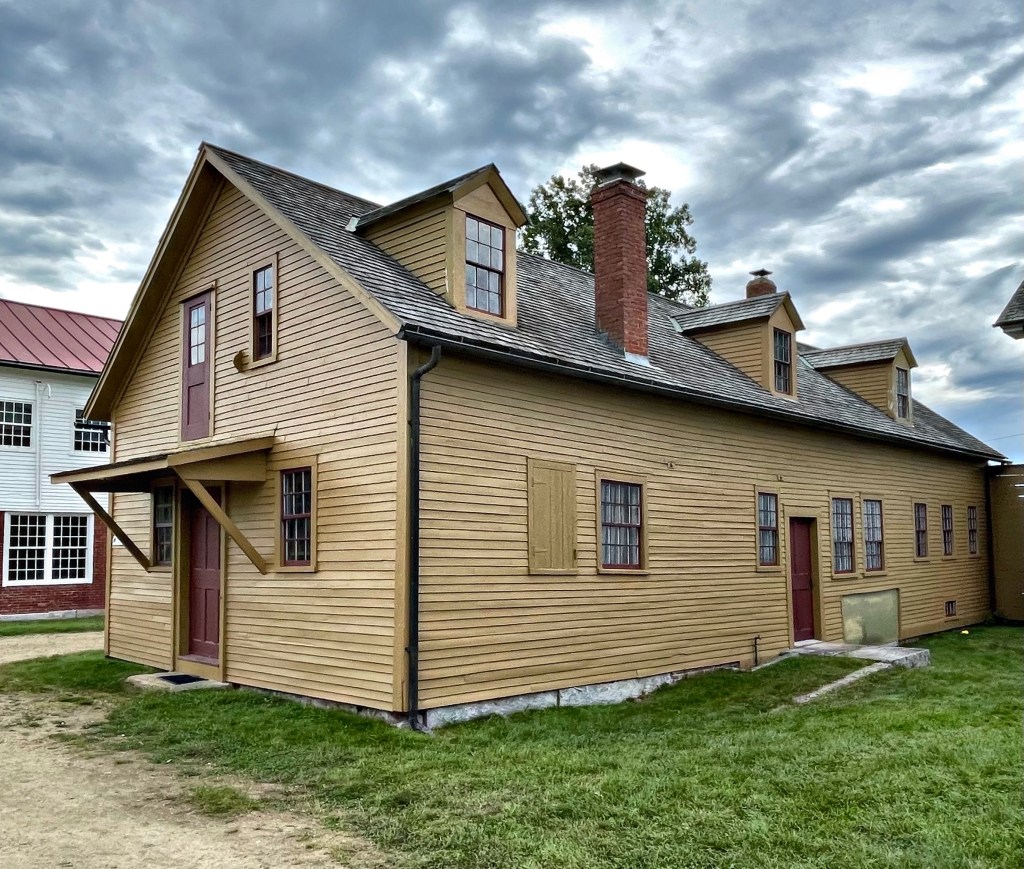
Located just east of the Meeting House at Canterbury Shaker Village in New Hampshire, the Ministry Shop was used initially as a workshop and after 1878, as sleeping quarters for the Ministry, who resided in the Meeting House until that time. Embellishment on the exterior is limited to a door hood over the recessed entrance, but the proportions and simplicity of the building really shine. The building is currently used as public exhibition space for the museum, and features a historically appropriate paint scheme!
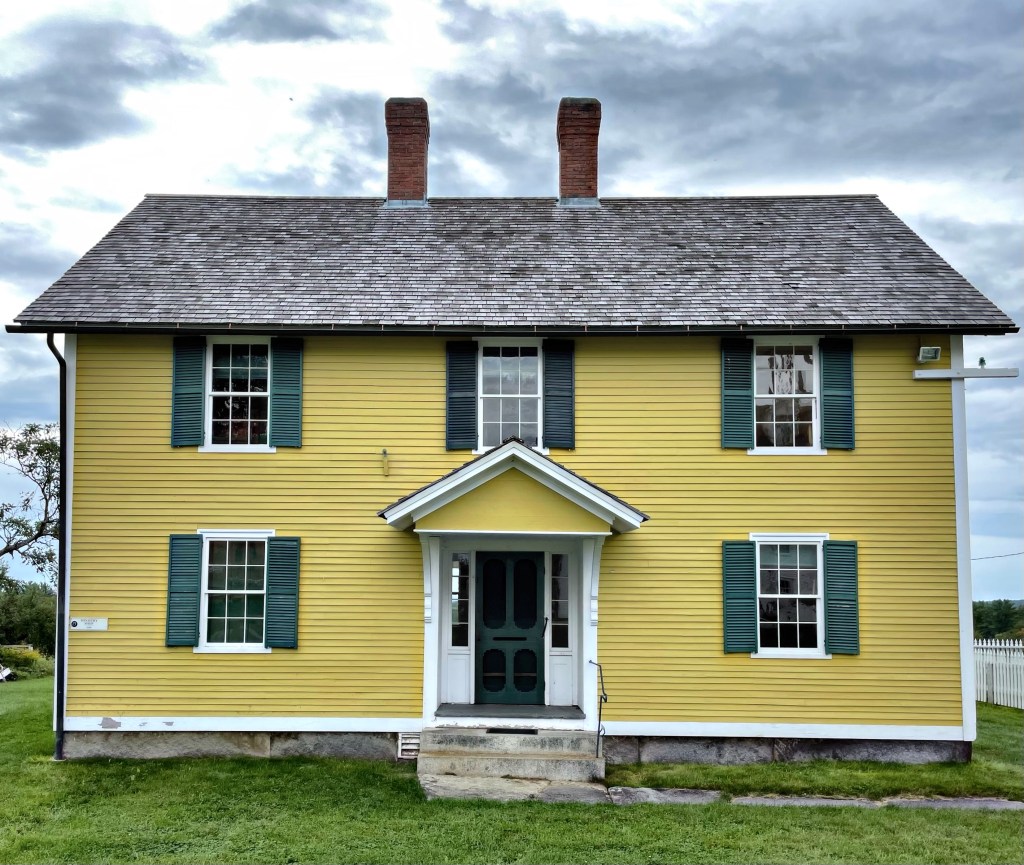
When Benjamin Whitcher donated his farm for the beginnings of a utopian Shaker community, the land and buildings became the catalyst for the next 200 years of Shaker life in the community. It is known that Benjamin Whitcher constructed his farmhouse sometime between 1775 and 1782. With the arrival of the first Shakers in 1783, Whitcher allowed families to reside on the farmland, with the 1790 Census counting 35 people on the Whitcher property. This structure was one of the original structures on the old Whitcher Farm, and is possibly the oldest extant building in the Shaker village today. The building was moved to its present location in 1841 and was used for distilling sarsaparilla syrup for medicinal purposes by members of the community.
The second oldest purpose-built building in the Canterbury Shaker Village (after the 1792 Meeting House), is the dwelling house, constructed in 1793. The T-shaped structure was expanded numerous times and contains 56 rooms. The structure is the largest in the village and is notable for the large domed cupola, housing a Paul Revere bell. The first floor contained the village butcher shop, bakery, communal kitchen and dining room. For many years the second floor consisted of four bedrooms, two for elders and two for the sisters and the brethren. The third floor is also devoted to dwelling rooms. The Dwelling House was the residence of Canterbury’s last remaining Shaker sister, Ethel Hudson, who died in September 1992, the 200th anniversary year of the founding of the Canterbury Shaker community.



 Buildings of New England