Suffield Academy-Memorial Building // 1854

Initially established as the Connecticut Literary Institute (the school was renamed Suffield School in 1916 and then Suffield Academy in 1937), the mission of this school with Baptist roots was to educate young men for the ministry. As the Connecticut Literary Institute was the only high school in Suffield, the town tax dollars paid for local students to attend. Although town and local Baptists served a major role in getting the school underway, the founders soon moved away from a denominational focus. Built for the Institute in 1854, this large brick academic building was designed in the Italianate style with brackets and decorative brickwork at the cornice. In 1950, the school “Colonialized” the campus beginning with the Memorial Building, removing the Victorian flair for a more traditional Colonial Revival appearance. They also did the same with Fuller Hall next door.

North Adams Post Office // 1911

North Adams in Western Massachusetts was incorporated as a city in 1895, separating from Adams, MA in 1873. The town was flourishing as an industrial center due to it’s location on the confluence of the Hoosic River’s two branches here. Thanks to the Arnold Print Works (now Mass MoCA), the town’s population doubled in twenty years after incorporation. Due to this, the United States Post Office and Treasury Department decided to build a large post office, a size that would allow the growing city to fill into. The Georgian Revival post office building is credited to James A. Wetmore, who was actually not an architect, but an attorney and Executive Officer of the Office of the Supervising Architect, within the Treasury Department (what a title). He later became the Supervising Architect without any known education in design. As Supervising Architect, he managed a staff of nearly 1700 architects and draftsmen who designed at least 2000 federal government buildings, including courthouses and post offices. The North Adams Post Office, remains a landmark of a city which has sadly seen a declining population every decade since 1940.

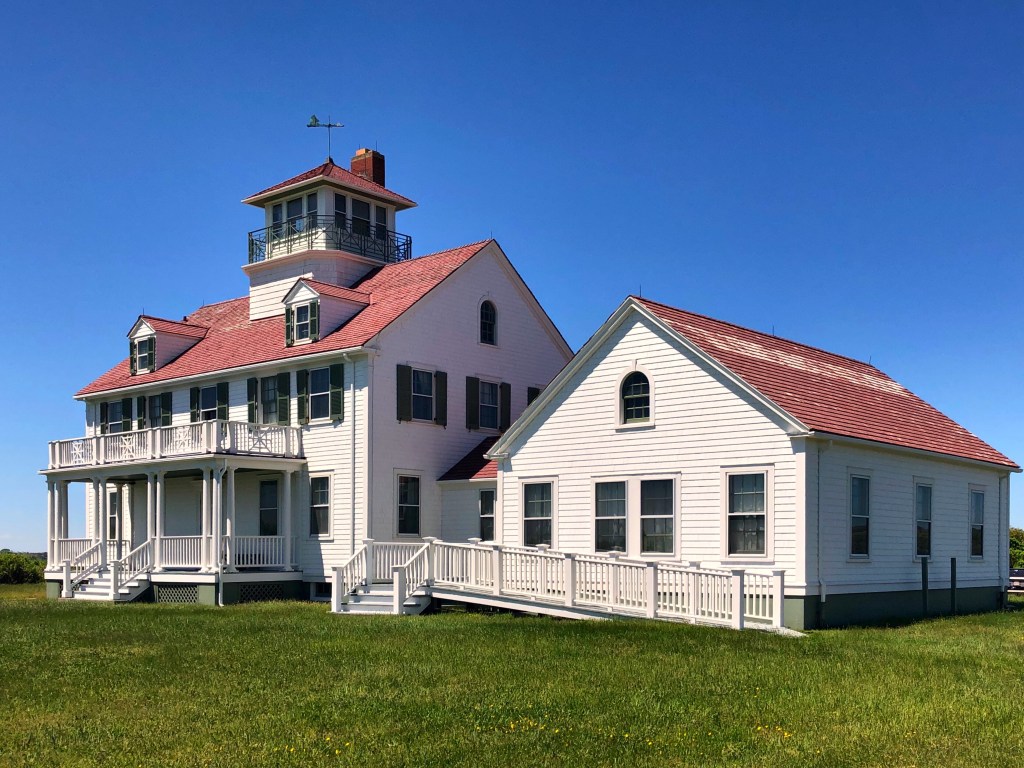
Nauset Coast Guard Station // 1936

Located at one of my favorite beaches in New England, the aptly named Coast Guard Beach, the Nauset Coast Guard Station is an imposing Colonial Revival structure perched upon the bluffs providing sweeping views of the shoreline. The Nauset Coast Guard Station was built in 1936 to replace a late nineteenth century Coast Guard Station which had stood further eastward and north, on land which has been eroded away by the ocean. The present structure was reportedly commissioned after Secretary of the Treasury Henry Morganthau Jr. and his fellow picnickers were driven in 1935 by a summer thunderstorm to seek shelter in the old and antiquated Coast Guard Station, built after the Civil War. Construction of the new station was authorized several weeks after this incident as Morganthau, who spent summers on Cape Cod, took a personal interest in the building’s construction, visiting the site during the summer of 1936.

This area of beaches has had a tradition of assistance to shipwrecked sailors. In 1802, the country’s first all volunteer life saving organization, the Massachusetts Humane Society, erected a hut on this beach. It was replaced by a larger one in 1855 and by the Nauset Life Saving Station in 1872. The building was added on to and moved twice before it was replaced by the present structure in 1936. The building was occupied by the Coast Guard as a station until 1958. It now is home to an education center as part of the Cape Cod National Seashore.