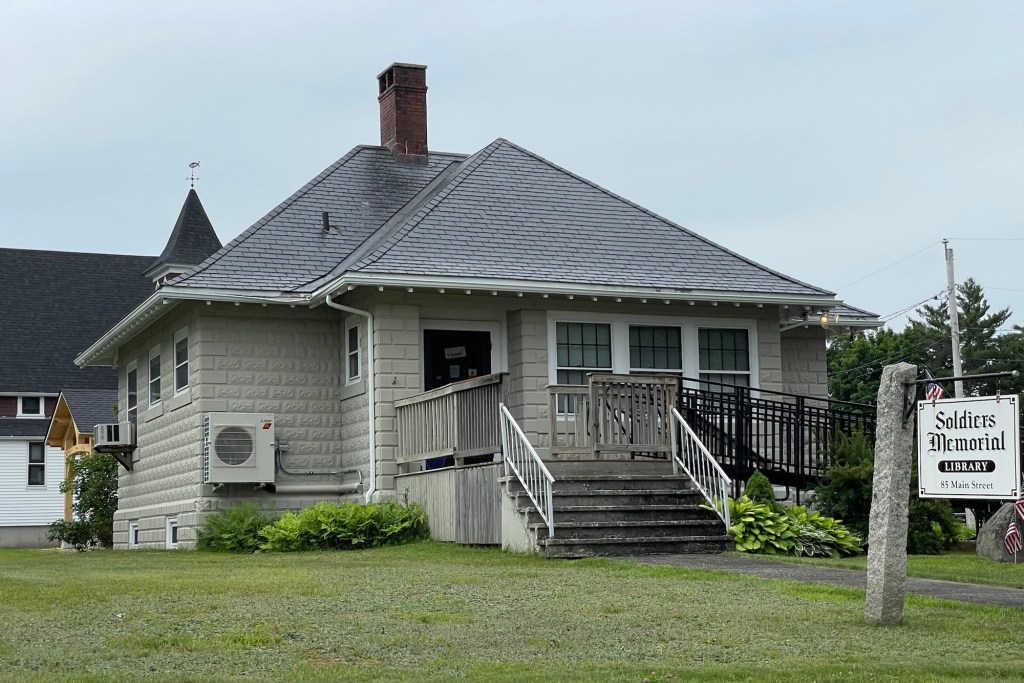
Located on a slight rise above Main Street and across from the sprawling Hiram Village Cemetery, this one-story library with walls of textured concrete blocks was dedicated in August of 1915 and has been a center for cultural activities in the town of Hiram, Maine, since that time. The Soldier’s Memorial Library was built with funds provided largely by Virginia Barker Jordan, a granddaughter of local businessman Benjamin Barker. Also instrumental in organizing Hiram’s first free public library was Llewellyn A. Wadsworth, local poet and cousin of Henry Wadsworth Longfellow. Beyond the unique use of concrete block construction for a library, other interesting exterior architectural features include the wide-flaring eaves with exposed rafters and the bands of windows on the first story walls, which hint of the Arts and Crafts/Bungalow styles. The library building was designed by Boston architects Robert Wambolt and Amos A. Lawrence.
 Buildings of New England