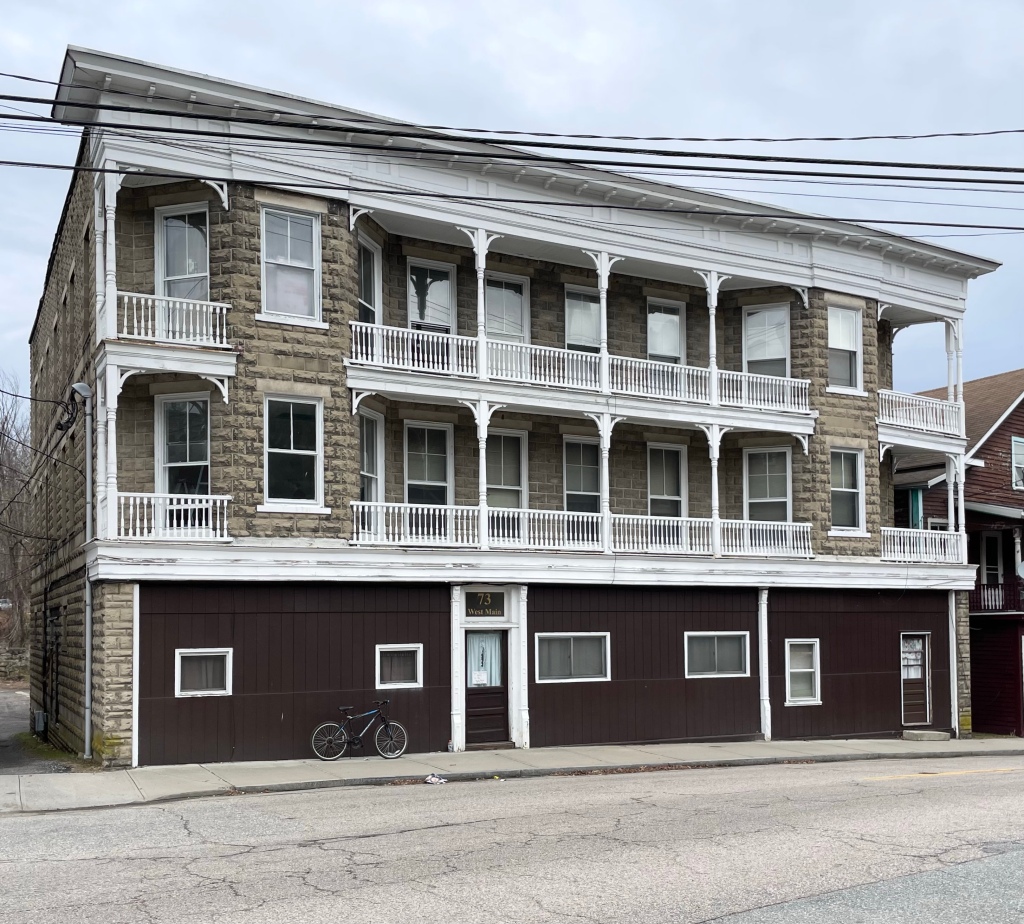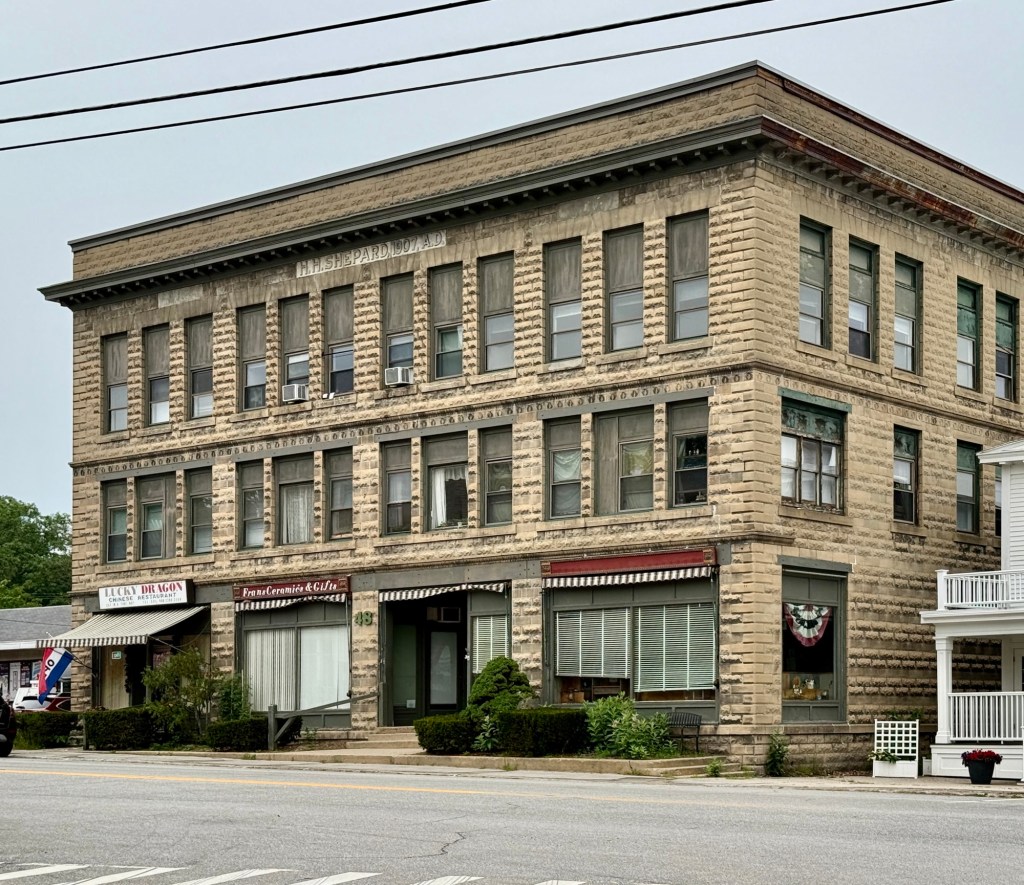
Located on Main Street in Ashland, New Hampshire, the Shepard Block is an architecturally distinctive mixed-use building constructed of a less common building material for commercial buildings, concrete blocks. Now known as concrete masonry units, concrete blocks exploded onto the building scene in the late 19th and early 20th centuries with a flurry of different patents for block designs and production. After Harmon Palmer invented the first commercially successful concrete block machine in 1900, the industry expanded rapidly with multiple manufacturers producing the blocks with their stone-like surface created through either a mold or the use of special aggregates in the concrete mix. Although stonelike concrete blocks were popular for the first quarter of the 20th century, they fell out of fashion following World War II. The Shepard Block in Ashland was built in 1907 by owner, Henry Harrison Shepard who, ironically, made his fortune as a lumber dealer. The upper floor contained a public hall space for the local Mount Prospect Lodge of Masons, and now the building contains 36 apartments and three retail spaces at the ground floor, a great way to provide housing without sacrificing history and character of a Main Street.