Snecked House // c.1850

In the early 1830s, skilled masons from Scotland and Ireland came to central Vermont to work on building projects. A number of these workers, mainly from the Aberdeen area, and specialized in a specific building style in which plates of stone are affixed to a rubblestone wall. This method of bonding stonework is so prevalent in Scotland and
Ireland it has been referred to in some journals as ‘Celtic Bond’, but in Vermont, it is known as “snecked ashlar”. The mixture of stone sizes and colors produces a strong bond and an attractive finish. This home is a rare example in the state, which is estimated to have about 50 of these homes left. I could not locate any information on the owners of the home, but the house has seen better days, with the wooden front porch shifting away from the main house. Also, if you look closely, you can see the original wood shingle roofing breathing under the sheet metal roof!

“Longfield” // 1848

“Longfield”, aka the Abby DeWolf House was built in 1848 and is one of the finest homes in Bristol, Rhode Island. The home was completed from designs by Providence architect Russell Warren, who also designed other mansions in town (I’ll post those later on in this series), the Westminster Arcade in Providence, and “Hey Bonnie Hall” a since demolished Federal style home I featured a couple days ago. Longfield’s name derives from the 60-acre meadow, part of the 300-acre Henry DeWolf farm, given to Abby DeWolf when she married Charles Dana Gibson at just 21 years of age. The DeWolf Family paid for the home as a gift to Abby. The DeWolf Family is infamous for being highly active in the slave trade, and was believed to have transported over 11,000 enslaved people from Africa to the Americas before congress abolished the African Slave Trade in 1808, which “prohibited the importation of slaves into any port or place within the jurisdiction of the United States…from any foreign kingdom, place, or country.” This policy did little as many owners of slaves just kept children born into slavery and also opened plantations in the Caribbean and South America. After Abby died in 1901, the home went to her granddaughter who maintained the home. By the 1970s, the home was sold out of the family and began a period of decades of deterioration to its current state. The interior is effectively gutted, but some original woodwork and fireplaces remain. Recent calls for a townhouse development with ample parking was proposed and approved by the town a couple years ago, but would greatly diminish its siting and architectural integrity. Nothing has happened on the site, but here’s to an appropriate restoration!

Frederick W. Lewis Mansion // 1876

The Frederick W. Lewis Mansion in Newport, New Hampshire is a unique, late-Second Empire home constructed of brick. The home was built in 1876 for Frederick W. Lewis, a merchant who climbed the ranks as a young man, eventually purchasing the store he worked at as a 14-year-old. In 1862, he became cashier of the Sugar River Bank, and held the position until 1865, when the bank was re-organized as a national bank, taking the name of “The First National Bank of Newport.” He then leveraged his position to get into local politics, and took an active role in the development of the town, even incentivizing the railroad to build a stop in town. From this wealth and position, he built this large home. After his death, the home went to his son. By the 1940s, a group of over 30 residents of town purchased the home as a Veteran’s Home. By the end of the 20th century, the home was occupied by the Newport Earth Institute, a school created by esoteric historian and researcher Reverend Vincent Bridges, who died in 2014. The property appears to be vacant now and the home is in much need of some TLC.

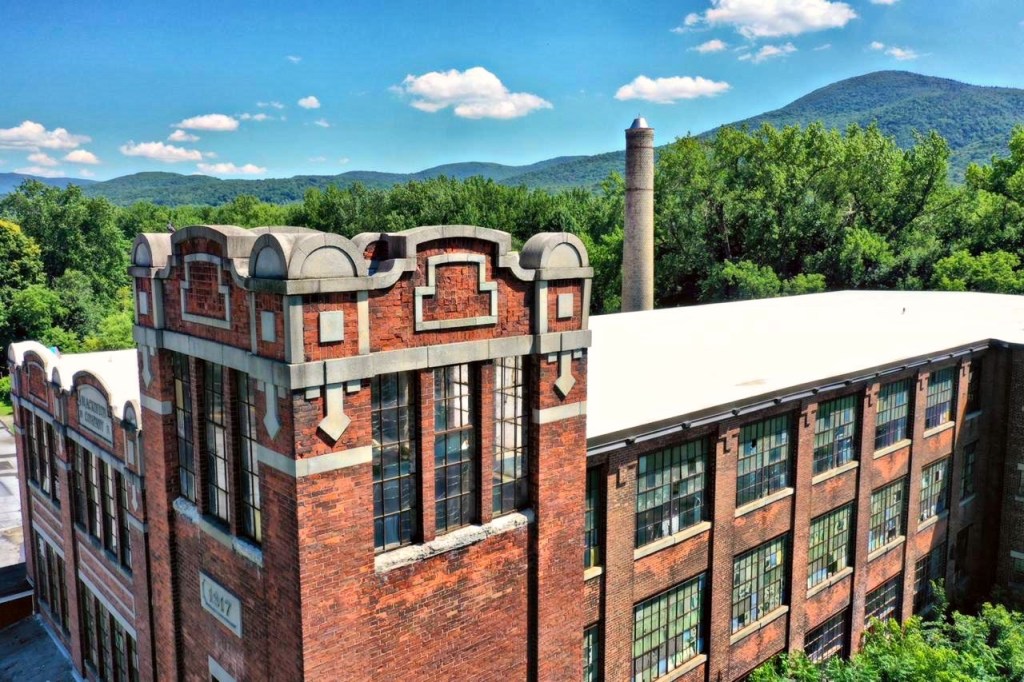
Blackinton Woolen Mill // 1917

On the outskirts of North Adams, in the village of Blackinton, you will find this massive decaying mill complex slowly being overtaken by Mother Nature and time. The complex is the Blackinton Woolen Mill, which was founded by Sanford Blackinton, who started his woolen mill on the banks of the Hoosic River in 1821 (later building his mansion closer to town). The mill increased production yearly and produced cloth during the Civil War for the Union cause. After, the mill increased production and ran 24 hours a day with the only time the mill would close down would be for mill fires, machinery repairs, or low water supply. In 1869, 162 men, 105 women, and 35 children worked in the mill with the length of the working day being eleven hours! After Blackinton’s death, the mill was succeeded by William Pomeroy, his son-in-law, who had marketed the Blackinton product through his own woolen goods store in New York. In 1917, the present main mill building was built; it is three stories high, with large windows in recessed bays between vertical brick members, resembling pilasters, which rise from the ground to the flat roof. The tower and parapet on the end facing the street are decorated with ornate castellation giving the complex a high-style design. The mill was constructed behind the weave shed (1908) which is a long one-story structure fronting the main street, decreasing the mill’s presence. As is the history of industry in New England, the mill struggled after WWII with a national shift to a service economy away from production. The building has been vacant since the late 1980s and has been eyed for redevelopment into loft and artist studios since.
Fingers crossed!
Saint Elizabeth’s Center // 1838

The only two-story temple-front Greek Revival home in the Upper Falls Village of Newton, MA stands on Elliot Street, on the same block as the Mary Immaculate of Lourdes Catholic Church and Rectory. The home was built in 1838 at the present location of the church, but was moved in 1908 to its present location at the opposite end of the block for the erection of the large church. The original owner was Dr. Samuel Whitney, the village doctor who also operated his office out of the large house. By 1844, he moved to Dedham and sold the home and practice to Dr. Abraham D. Dearborn who ran his practice out of the home until the mid 1850s. After successive ownership by mill owners, the property was acquired by the Archdiocese of Boston who moved the home and used it as a rectory until the Colonial Revival rectory was built. The home has since been used as a parish center, but has not been well maintained over the years. Plans were unveiled in 2015 by a long-time resident to purchase the home from the Catholic Church for conversion of a community center with offices for non-profits, but it has not materialized sadly. Its future is unclear.

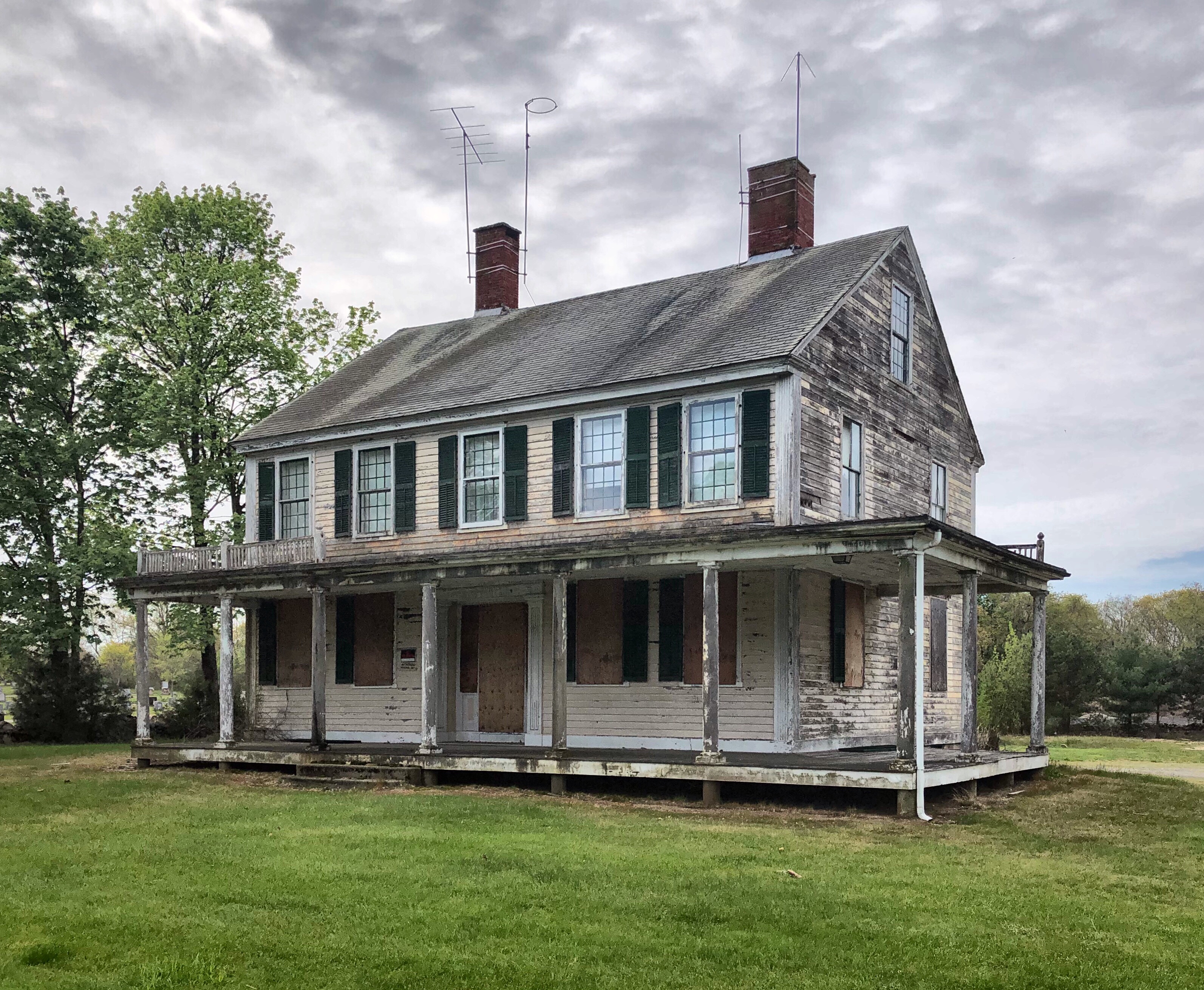
Preserved Gardner Farmhouse // ca.1820

This old farmhouse in Swansea, MA, was built by 1820 for Preserved Gardner (1795-1873), one of five sons of Peleg Gardner, who owned much of Gardners Point. Preserved lived in the home until his death in 1873, and the home and acres of farmland were willed to his only son to live past childhood, Ira Gardner (1836-1901). Ira donated a large tract of land adjacent to the farmhouse to the town in 1882 for a cemetery, in which his father was buried. Later, the farm was purchased by Thomas D. Covel a bank president of Fall River who operated it as a gentleman’s farm and made the house his summer home. A ‘gentleman farmer‘ utilized their farms for pleasure rather than for sustenance or profit. After WWII, the land was purchased by the town to be used as a park and the property is still owned by the town. The Federal home with its veranda that wraps around the side has been neglected by the town for decades while the parks adjacent are maintained adequately.

UPDATE: The Preserved Gardner House was demolished in 2024 by the Town of Swansea.

The town has weighed various options for the home ranging from demolishing it, to preserving the front facade and converting it to a garage and storage shed (with a small museum on the second floor). I hate that idea personally. This seems like an ideal candidate for the town to allow a private individual or developer to move the home and restore it back to its original grandeur. Thoughts?