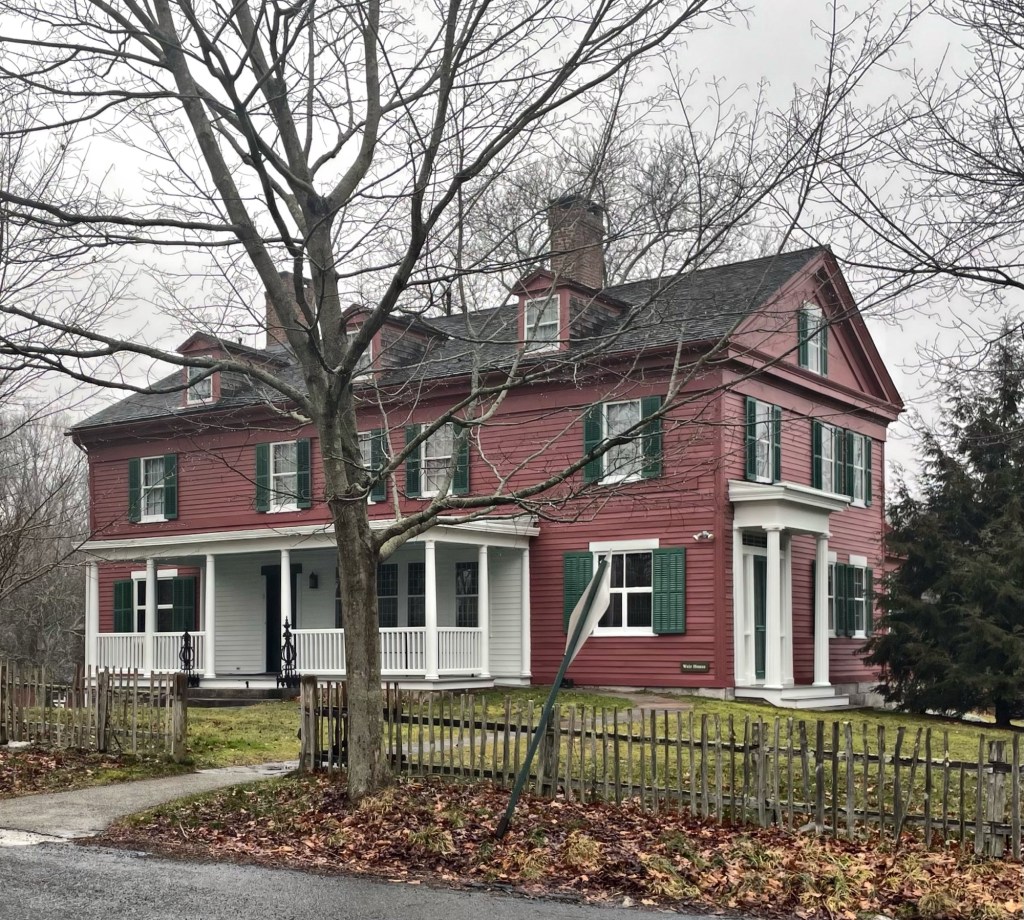
Impressionist painter, Julian Alden Weir was looking to build a home in New York’s Adirondack Mountains when Erwin Davis, an art dealer, offered him a farm in Ridgefield, Connecticut, for a painting he owned plus ten dollars. After a visit in 1882, Weir agreed and acquired the 153-acre farm. The old farmhouse, which dates to the 1780s, and was modified in the Greek Revival style before Weir’s ownership and expanded and renovated again during its time as an artist’s retreat. The house was often filled with family and friends as a popular artistic retreat for Weir’s closest friends, including: Childe Hassam, Albert Pinkham Ryder, John Singer Sargent, and John Twachtman. Weir’s daughter Dorothy Weir, a noted artist in her own right, took over management of the property following her father’s death in 1919. Sculptor Mahonri Young would build a second studio at Weir Farm after the couple married in 1931. The Weir Farm site was designated as a National Historic Site in 1990, but prior to its permanent protection, Weir Farm had been subdivided for housing development in the late 1980s. The Trust for Public Land worked to reacquire the divided land through close to 2 dozen transactions, preserving the site for generations to come.
 Buildings of New England