George’s Island – Fort Warren // 1847

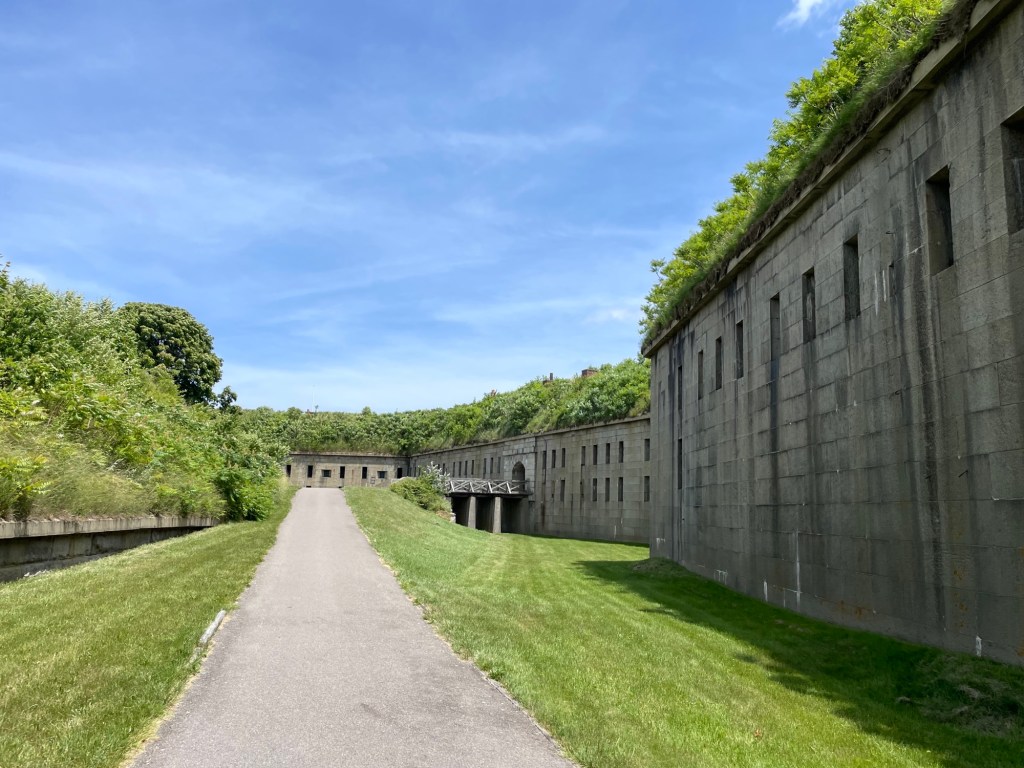
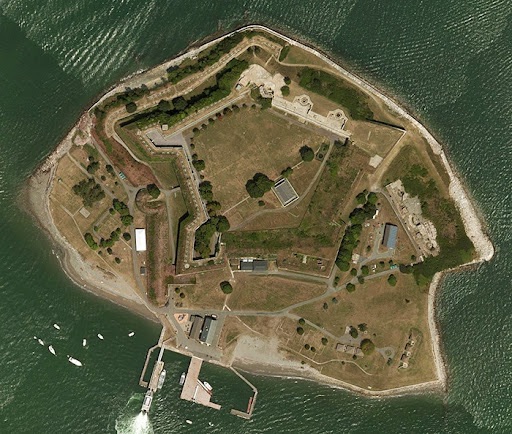
Located seven miles by boat from downtown Boston, Georges Island is a must-visit location for history-buffs and those looking to see the city from a new vantage point! The island in its early days was used for agriculture for 200 years until 1825, when the U.S. government acquired it for coastal defense. Fort Warren was first-dedicated in 1847 and is named for Revolutionary War hero Dr. Joseph Warren, who sent Paul Revere on his famous ride, and was later killed at the Battle of Bunker Hill. Fort Warren is a pentagonal bastion fort, made of granite, and was constructed from 1833 to 1861, overseen by Col. Sylvanus Thayer, and completed shortly after the beginning of the American Civil War. Fort Warren defended the harbor in Boston, Massachusetts, off-and-on from 1861 through the end of World War II. It’s highest use was during the Civil War, where it served as a training facility and as a prison for Confederate officers and government officials. Unused after WWII, Fort Warren was acquired by the Commonwealth of Massachusetts by the Federal government and is today maintained by the Massachusetts Department of Conservation and Recreation as the centerpiece of the Boston Harbor Islands National Recreation Area.
Have you been to Georges Island?
Fort Revere // 1898-1947

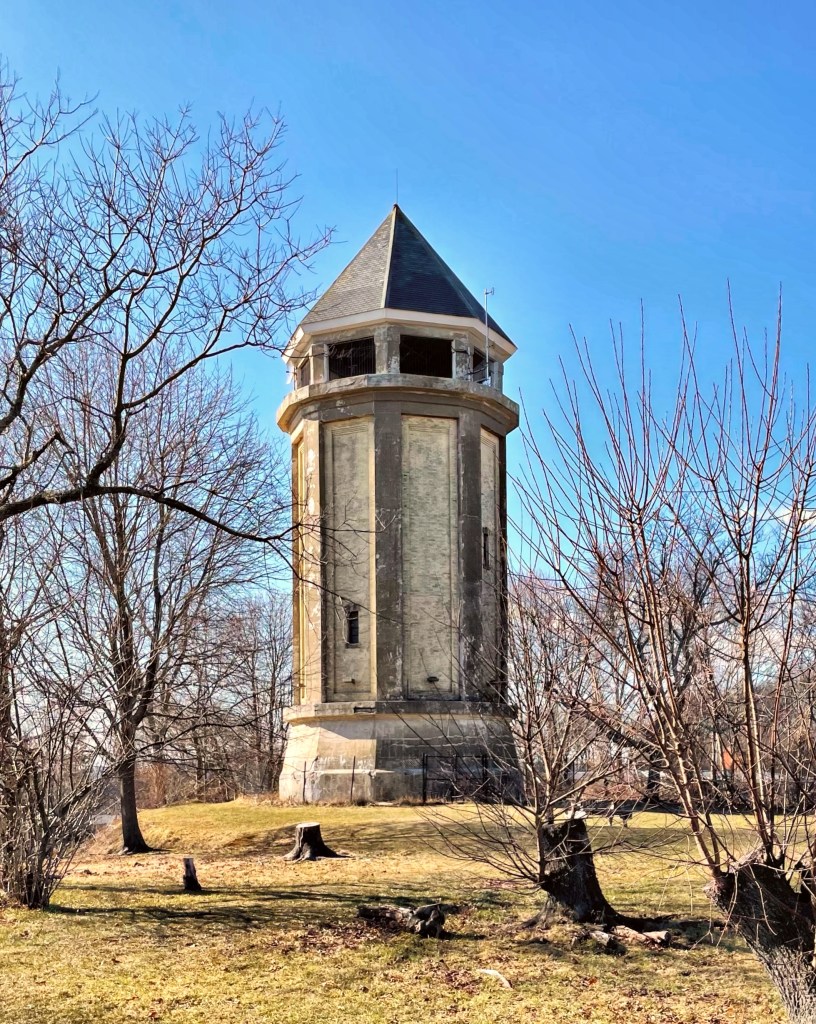
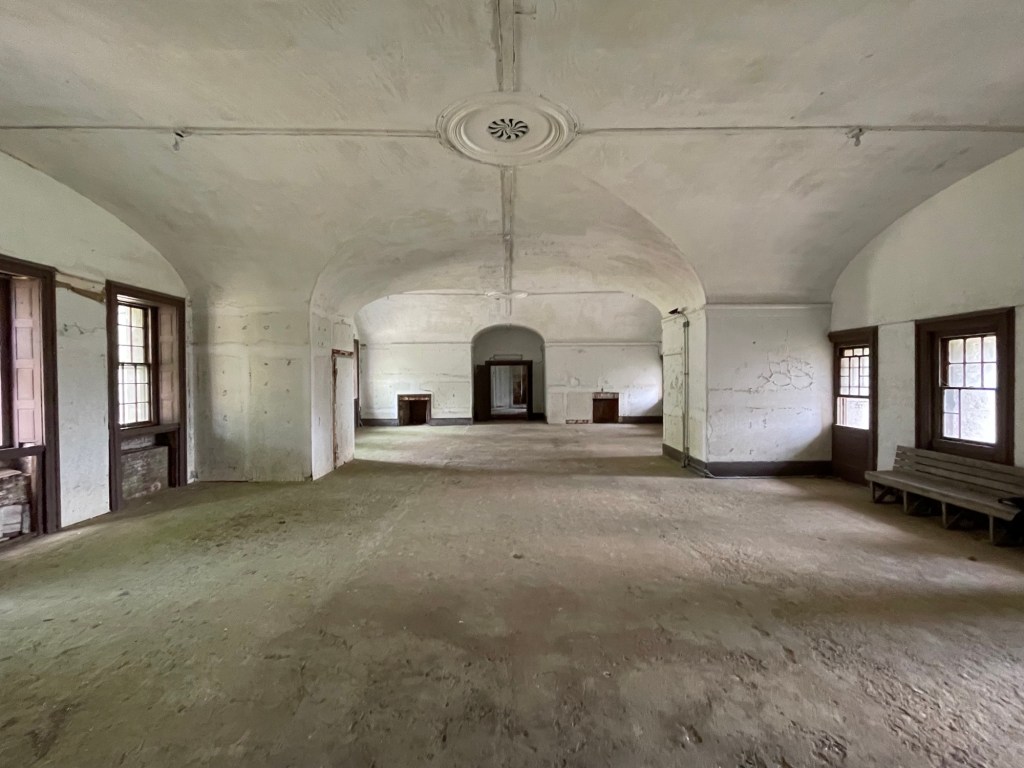
Fort Revere, named in honor of Paul Revere, was acquired as Nantasket Head Military Reservation in 1897 under the large-scale Endicott program, which initially included seven forts in the Harbor Defenses of Boston. The fort replaced the outdated Revolutionary-era fortifications and built upon the earthworks, creating batteries were built 1898–1906. Additionally, a 1903 concrete water tower was constructed to provide water and reconnaissance to the fort. After the American entry into World War I in early 1917, the fort was expanded to include temporary structures such as quarters and additional storehouses. With the outbreak of World War II in 1939, Fort Revere was again built up with temporary structures to accommodate the 1940–1941 mobilization. With new defenses completed elsewhere in the Boston area, the fort’s remaining original guns were scrapped in 1943. After the war, Fort Revere was disarmed and turned over to the Commonwealth of Massachusetts. Remains of Fort Revere include six gun emplacements built into the southeast, east and north sides of Telegraph Hill. They are connected by dugouts or bunkers and are of concrete and brick construction. Additionally, tunnels and storerooms can be explored, lined with graffiti and crumbling concrete. I highly recommend you all check it out and explore the grounds, its a great place to explore and learn history! Fingers crossed to see the remaining fortifications restored to their former glory.

Fort Revere Tower // 1903

The Town of Hull, Massachusetts was first settled in 1622 and officially incorporated in 1644, when it was named for Kingston upon Hull, England. The town juts out into the Boston Harbor, which historically had provided as a defense for approaching vessels into the harbor. As early as 1673, Telegraph Hill in Hull, was used as the highest point in the Boston harbor area from which signals could be sent warning the approach of vessels. The site was first used as a fort in 1776 to defend the port of Boston. Fort Independence was built on top of the hill in 1776-1777, to be succeeded by the much larger Fort Revere in 1903 (see next post). The first telegraph tower was built on the hill in 1827. Several other telegraph stations later occupied the site until 1938, when radio communications made the site obsolete. Though little of the original Revolutionary-era fort remains, the fort which began construction at the turn of the 20th century lasts as a stunning reminder to the importance of coastal defenses, high atop hills. At the highest point of Telegraph Hill this water tower which rises 120 feet off the ground was built in 1903 for the new Fort Revere as the first reinforced concrete water tower in the United States. At the top of the tower, an observation deck (now closed) was also used to send messages to other harbor defenses. The tower was restored in 1975 was designated an American Water Landmark in 2003. It was periodically open to the public until mid-2012 when it was closed due to safety concerns.