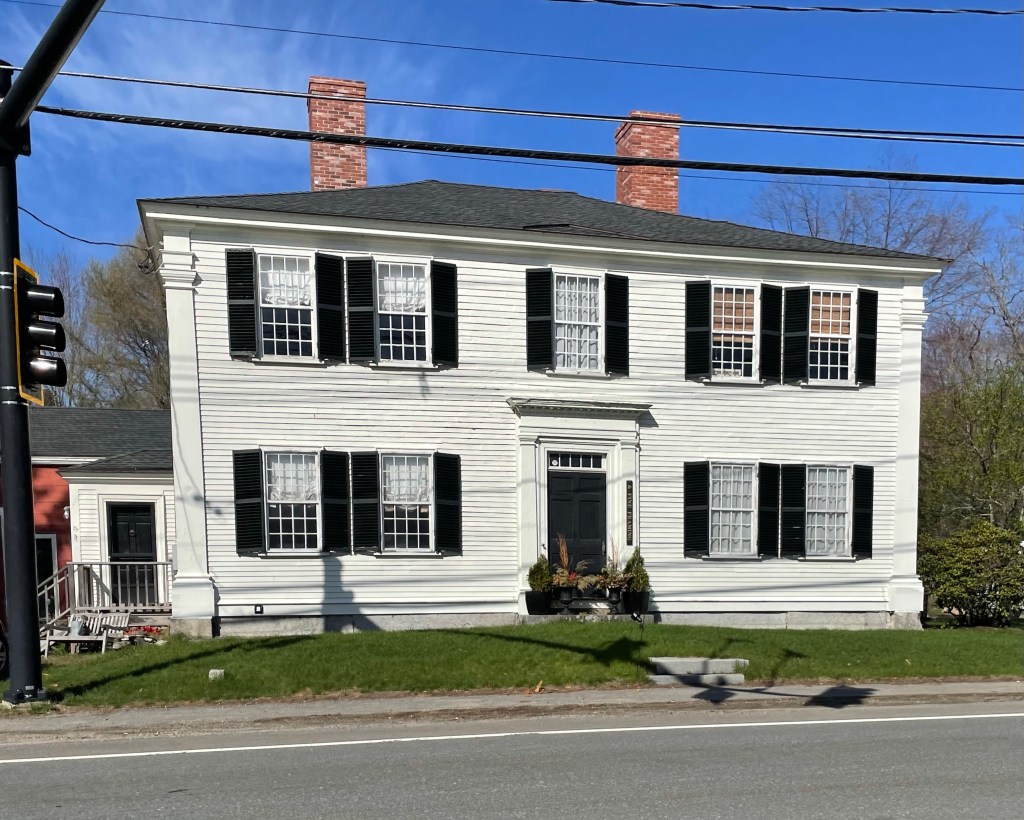
Government-sanctioned lotteries originated in Massachusetts as an alternative to taxation, but soon expanded as a fundraising tool to help fund building projects and support charities. In 1765, the General Court passed the first legislation allowing Harvard College to run a lottery to support dormitory building projects. Before Harvard University accepted multi-million dollar donations, they drew lotteries between 1794 and 1797 to build the second Stoughton Hall and in the early 1800s, for the building of Holworthy Hall. In Harvard’s lottery of 1794-1796 which John Robbins, a farmer and Revolutionary War veteran, entered, together with three friends, each of whom purchased a quarter-share in one ticket. They won! This Federal style home with hipped roof and symmetrical facade is one of four built in Acton.
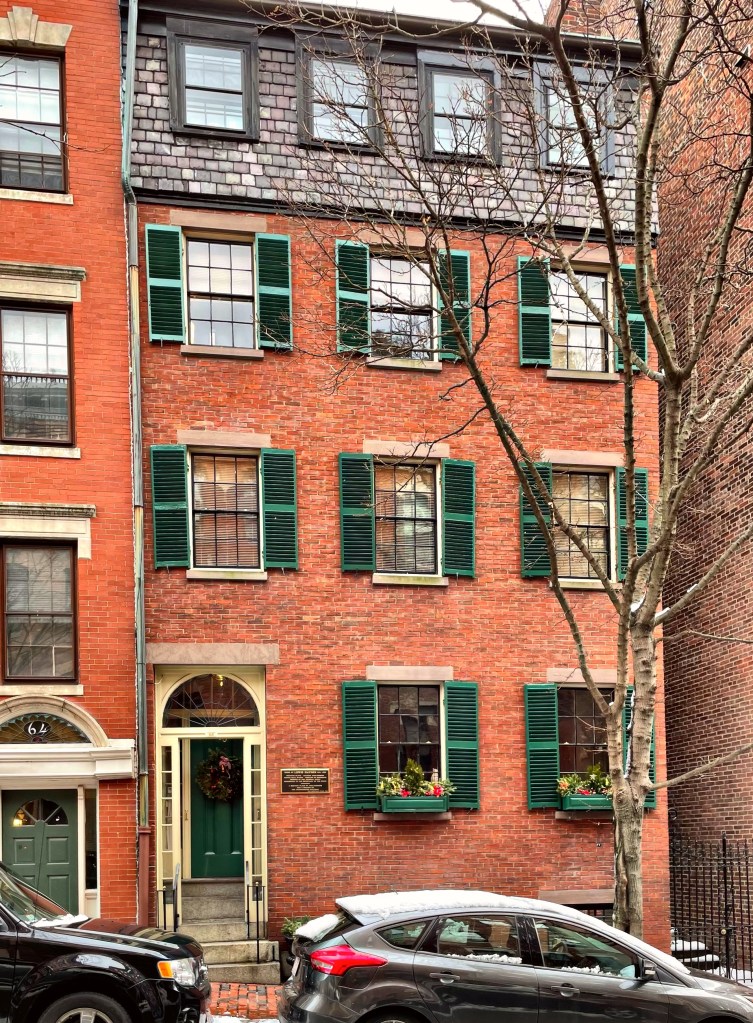
Lewis Hayden was born into slavery in Lexington, Kentucky, in 1811, as one of a family of 25. Hayden was first owned by a Presbyterian minister, Rev. Adam Rankin. He sold off Lewis’ brothers and sisters in preparation for moving to Pennsylvania, and he traded 10-year-old Hayden for two carriage horses to a man who traveled the state selling clocks. In the mid-1830s, Hayden married Esther Harvey, also a slave. She and their son were sold to U.S. Senator Henry Clay, who sold them both to the Deep South, and Hayden never saw them again. By 1842, Hayden married a second time, to Harriet Bell, who was also enslaved, and he cared for her son Joseph as his stepson. After this marriage, Hayden began making plans to escape to the North, as he feared his second family might be split up like the first. In 1844, he and his family escaped with assistance of abolitionists all the way to Canada. From Canada, the Haydens moved in 1845 to Detroit in the free state of Michigan, and the next year, they moved to Boston, at the center of anti-slavery activity with the city’s strong abolitionist base. In Boston, Hayden became a lecturer and ran a clothing shop, acquiring enough money to live in this large home in Beacon Hill. The Haydens routinely cared for fugitive slaves at their home, which served as a boarding house. Guests included Ellen and William Craft, who escaped from slavery in 1848. Hayden prevented slave catchers from taking the Crafts by threatening to blow up his home with gunpowder if they tried to reclaim the pair. Hayden died in 1889, outliving the abolishment of slavery. Harriet died in 1894 and left $5,000, the entirety of their estate, to the Harvard University for scholarships for African American medical students. It was believed to have been the first, and perhaps only, endowment to a university by a former slave. Their former home remains a stop on Boston’s Black Heritage Trail.
William C. Strong purchased the old Wyman Farm in present day Waban Village in 1875, consisting of 93 acres of open land and rolling hills. He subdivided some of the land after the completion of the Waban Station, later developing the Strong’s Block, the premier commercial block in the village. To kick off the development along Windsor Road, he hired architect Herbert Langford Warren, the Dean of Harvard’s Architecture School (who also owned a historic farmhouse nearby) to design a couple homes for sale. This stunning house is notable for the prominent gable end gambrel roof, shingle siding, and porte-cochere.

 Buildings of New England