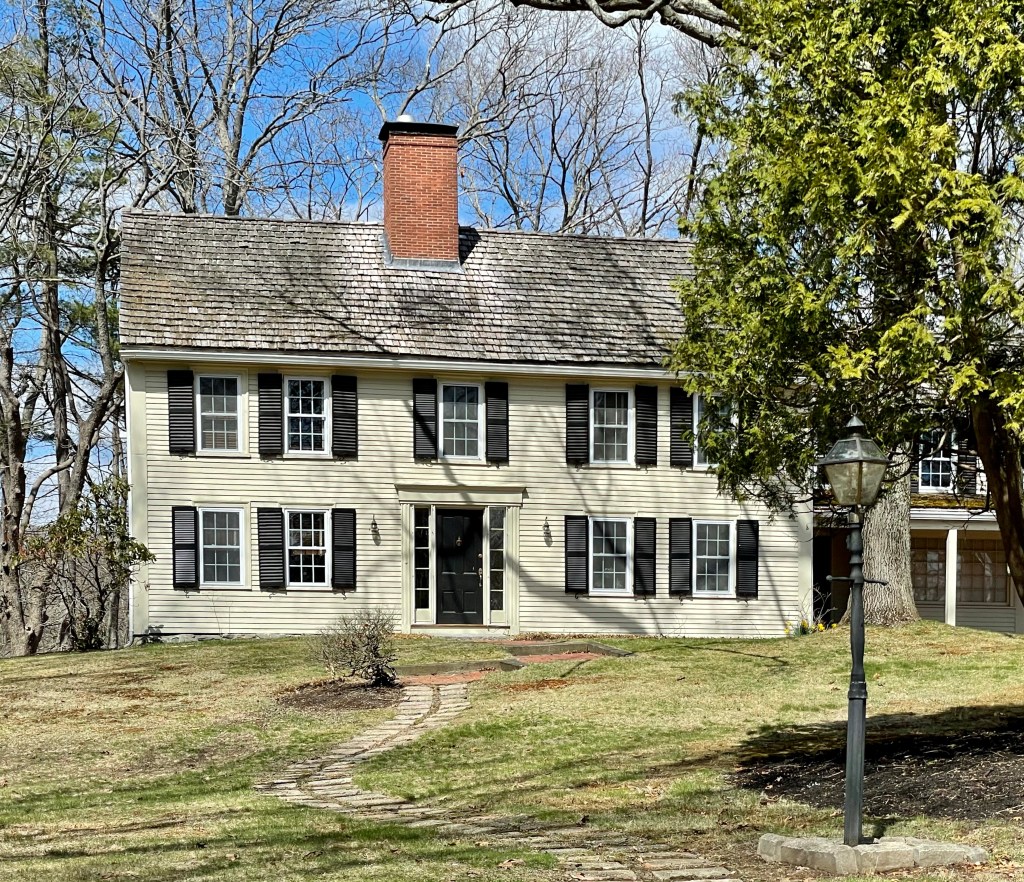
Another of Oak Hill Village’s pre-Revolution homes is this stunner! This home was built some years before 1718 and was eventually occupied by Robert Murdock (1663-1754) and wife Hannah Stedman. Murdock emigrated from Scotland to Plymouth, MA in 1688 with his brother, later settling in Roxbury. In 1703, Robert bought a house and 120-acres of land here, and worked as a housewright. Like the King House (last post), the house was likely rebuilt or modified substantially at this time. Robert also served as a selectman, Constable, Surveyor of Highways, and Assessor in town until his death; and his son, Robert Murdock Jr., took over the property. By the mid-18th century, the estate was purchased by Jeremiah Wiswall (1725-1807). Wiswall served as Captain of the militia at the battle at Concord and Dorchester Heights during the Revolution and held a number of positions in the community including Overseer of the Poor, Constable, Selectman and as a hogreeve (person charted with the prevention or appraising of damages by stray swine). He was very involved in the events leading up to the Revolution including the committee on the tea embargo and drilled with the militia. He also lent money to the town to hire soldiers and owned a house designated as a place to receive smallpox inoculations in 1777, though it is unclear if it was this house he used. The house was eventually slated for demolition in the 1960s, but was saved by Dr. Roy Carlson, President of nearby Mount Ida College (now owned by UMass. For $1, he purchased the home from a developer and paid for it to be moved from its original location at the corner of Brookline and Dedham streets a ¼ mile southwest to its current location, on Carlson Ave, and it served as the President’s House.
 Buildings of New England