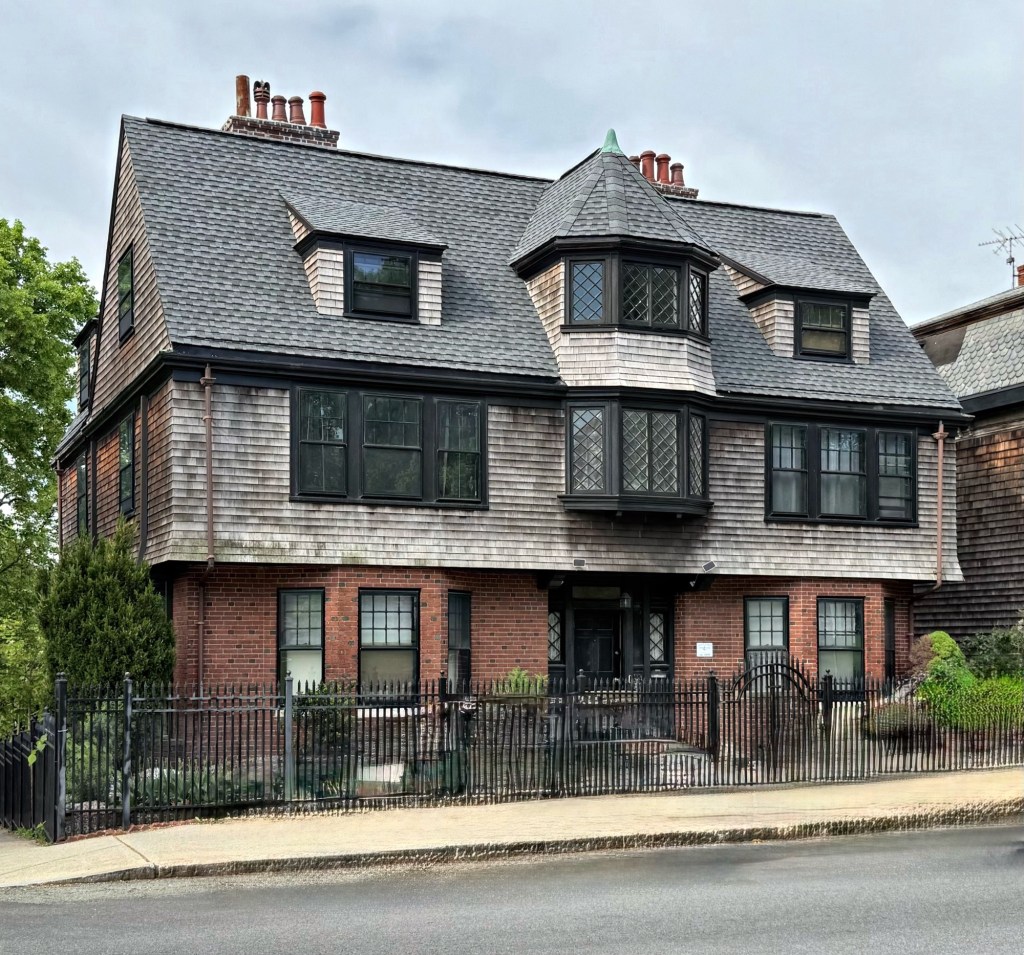
George F. Loring House // 1895

The George F. Loring House on Highland Avenue in Somerville, Massachusetts, is an architect-designed house designed as the architect’s personal residence. While the architect specialized in the Richardsonian Romanesque and Colonial Revival styles, for his own home, George Loring crafted a free interpretation of seventeenth-century medieval architecture with a brick first story and upper floors overhanging and sheathed in cedar shingles. Loring trained in the office of Boston City Architect, George A. Clough, before establishing his own practice. By 1895, when he constructed this residence on Highland Avenue, Loring was in partnership with Sanford Phipps, specializing in the design of large single-family homes in the Boston metropolitan area.
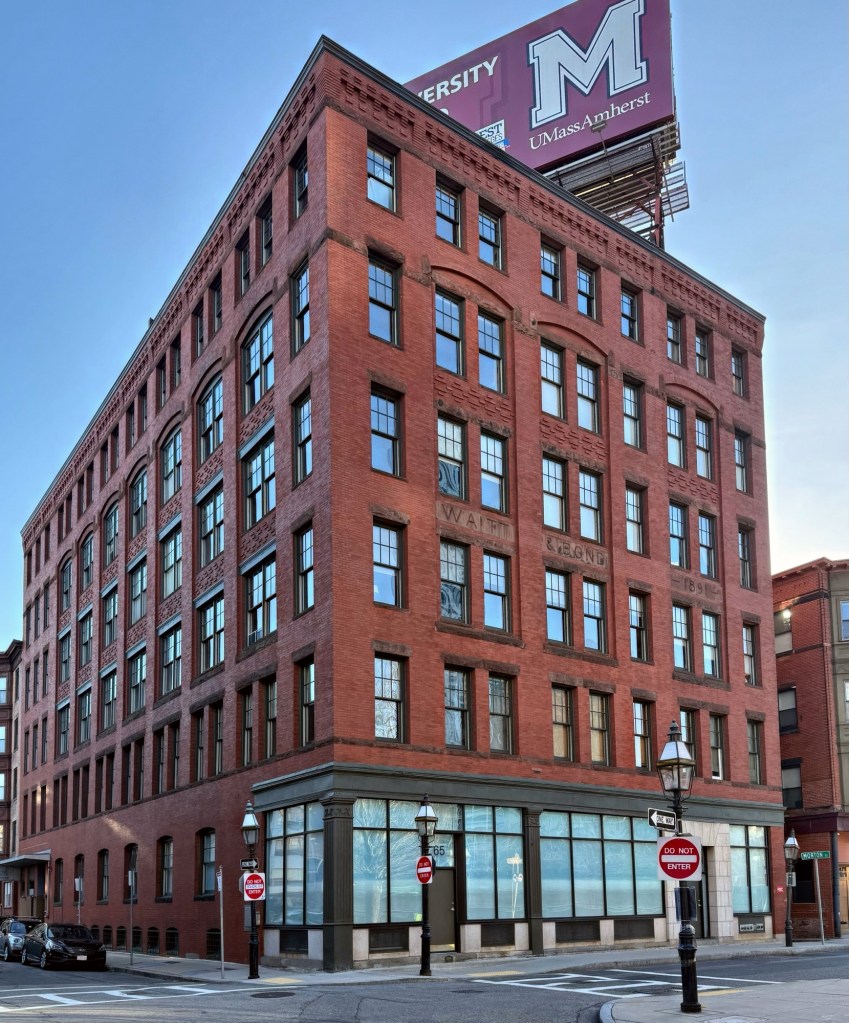
Waitt and Bond Building // 1891

One of several late 19th-century industrial buildings in the North End, the Waitt & Bond Building stands on Endicott Street, looking over the scar on the landscape that is I-93. This six-story building was constructed in 1891 and is the oldest extant building in Boston associated with cigar manufacturers Henry Waitt (1842-1902) and Charles H. Bond (1846-1908), who started business in 1870. The business relocated from Saugus to Boston in 1873 and moved into this building upon its completion. Waitt & Bond produced handmade cigars with each employee hand-rolling over 300-a-day. The architect, Ernest N. Boyden, designed the building in the Panel-Brick and Romanesque styles with decorative brick panels, cornice, and arched detailing. Rooftop billboard signage (blight) was first added to the building in 1956, with increased visibility via the elevated John Fitzgerald Expressway (the Central Artery). By the early 1960s, Joseph Castignetti moved his men’s clothing store, Castignetti Brothers, to this location. In 2001, the building was converted into 28 loft-style condos, an early sign of the gentrification to come to the North End.

William Slattery Tenements // c.1893

It is not always the architect-designed, high-style buildings that give a place character. The North End is a neighborhood almost entirely built of working-class tenement housing, but its density, immigrant history, and vernacular, make it one of the most visited and unique in the city. Michael Slattery, an Irish-born teamster, and his son, William, a grocer, developed this handsome block of tenement housing on North Margin Street in the North End neighborhood of Boston. The row of apartments stands out for its elevated design elements, including the projecting metal oriels with decorative wreath and swag motifs, arched openings, and brick corbeling at the cornice. The apartments here were rented by the Slattery family until the mid-1920s when the buildings were sold to Italian-Americans who continued to rent the buildings to lower-income residents. There is something about the North End’s vernacular that is so charming.