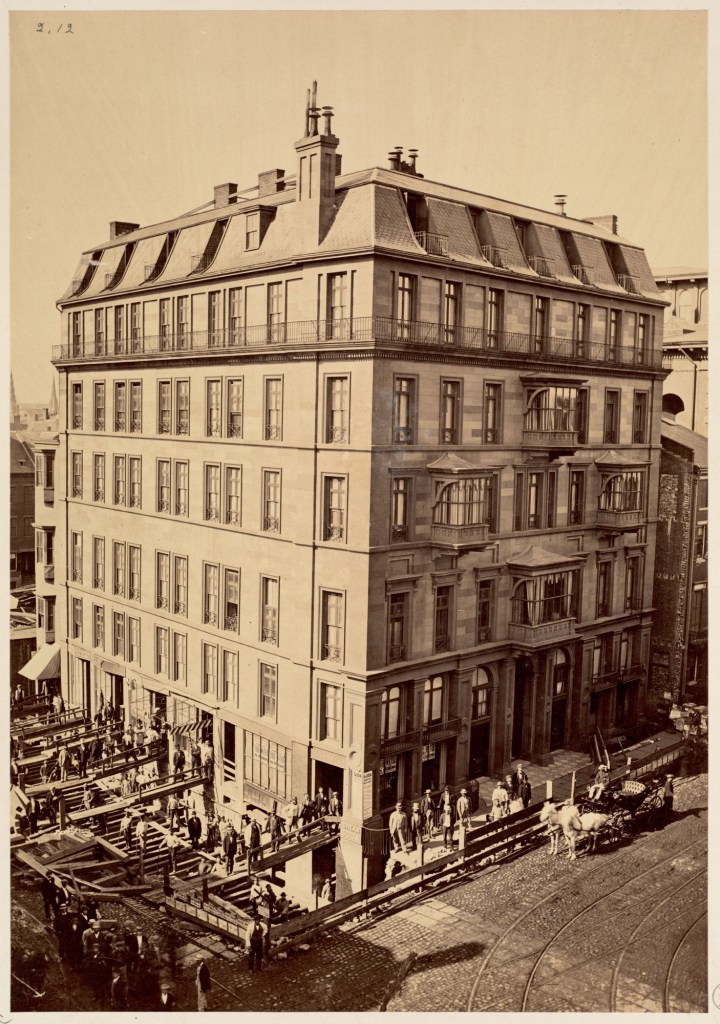
Built in 1857 at the prominent intersection of Boylston and Tremont streets in Boston, the Hotel Pelham is said to have been the first apartment building of its type in America. Seen as a high-end apartment building, not like the slum-like tenements in New York and elsewhere in Boston, the units were like French-flats for medium-term renters, rather than short-term stays. The Hotel Pelham was developed by Dr. John Homer Dix, a doctor who took a keen interest in providing healthy accomodations for city-folk. The Hotel Pelham was designed by architect Alfred Stone, as an early example of the Second Empire style, with a French Mansard roof and stone facades. Just about a decade after the building was completed, Tremont Street (which runs along the side of the building) was set to be widened. This work would require the partial (and likely full) demolition of the Pelham Hotel. Rather than see his building face the wrecking ball, Dr. Dix, in 1869, had the Hotel Pelham slid off its foundation, and moved westward thirty feet to accommodate the expanded Tremont Street. This incredible feat of engineering was undertaken by John S. Blair, with architect Nathaniel Bradlee overseeing updates to the facades and interiors. The building would survive a gas main explosion in 1897, but succumbed to redevelopment during WWI, when the building was demolished for the present building on the site, the Little Building.
 Buildings of New England