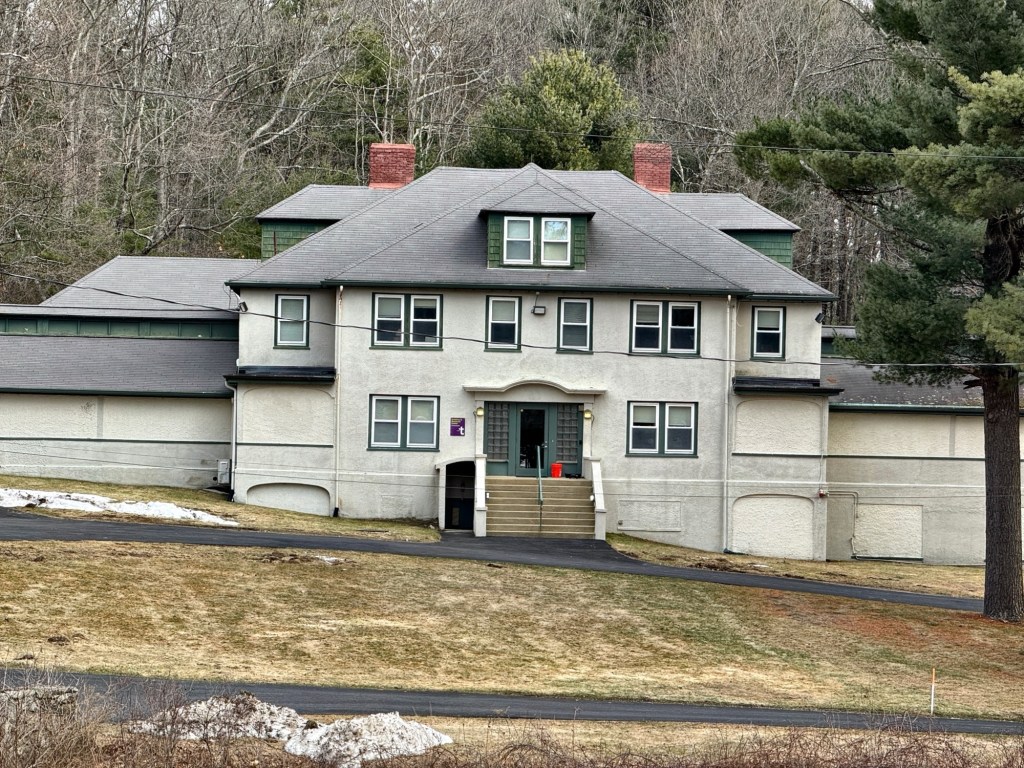
Old Sharon Sanatorium – Former Kendall Whaling Museum // 1891

The old Sharon Sanatorium was built on former farmland in Sharon, Massachusetts, as a medical facility for the cure of pulmonary infectious diseases. The rural medical institution was designed in 1890 by the architectural firm of Longfellow, Alden and Harlow and completed a year later. The Sharon Sanatorium for Pulmonary Diseases opened formally in February 1891 with the purpose to provide affordable care for patients suffering from Tuberculosis and other pulmonary diseases. At the time, tuberculosis was a major health concern and treatment often included fresh air, so facilities such as this were designed with access to open air sleeping porches and forested surroundings. The Sharon Sanatorium was sited to catch the prevailing breezes on the side of Moose Hill, the second highest ascent between Boston and Providence. In 1916, the Sanatorium opened a Children’s Pavilion, which was reserved for children less than fourteen years of age suffering from tuberculosis. By 1938, the threat of tuberculosis was under control, and the Sanatorium began admitting patients suffering from arthritis and rheumatic fever until the facility closed in 1947. The Sanatorium integrated with the Boston Children’s Hospital in 1949 and soon after, the property was bought by Henry Plimpton Kendall (1878-1959), a wealthy entrepreneur and industrialist, for use as the Kendall Whaling Museum, showcasing his personal collection of paintings, prints, and tools of the whaling industry in New England. In 2001, the museum merged with the New Bedford Whaling Museum and today, the property is managed by the Trustees of Reservations as their Archives and Research Center.
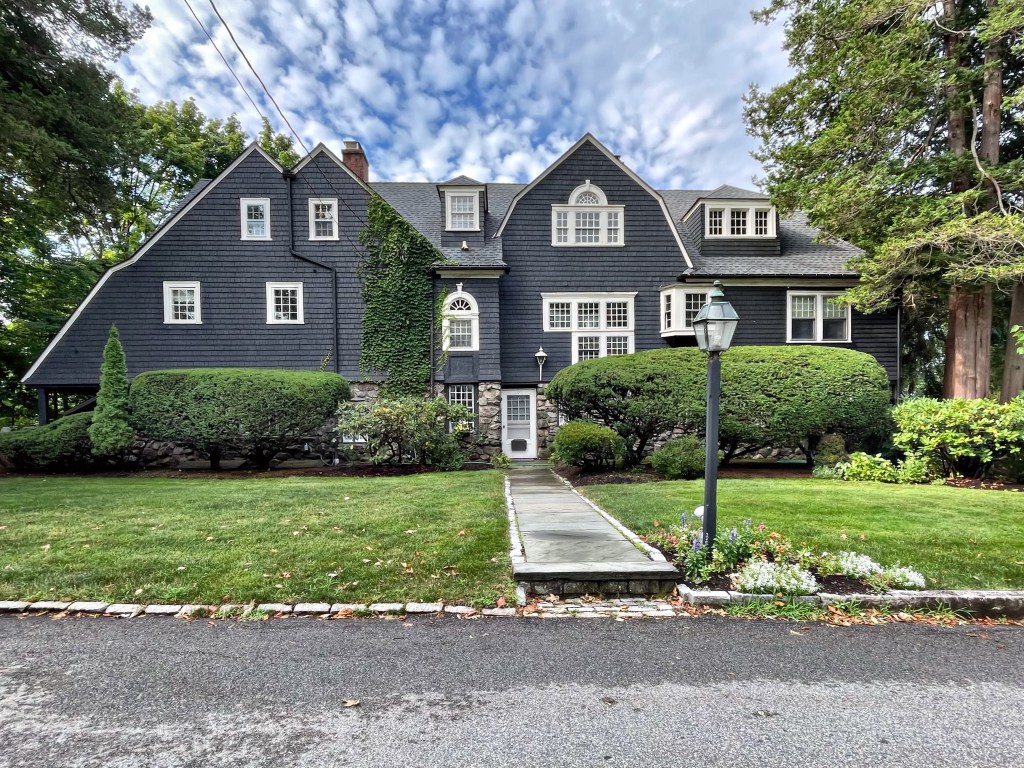
Harlow House // c.1909

Located on a dead end street in Waban, you’ll find this stunning Shingle style property, which rambles on forever! The house was built in the first decade of the 20th century and blends the Shingle style with the ever-popular Colonial Revival style. I could surprisingly not locate the architect for the house, but I’d guess that it was designed by the architectural firm of Longfellow, Alden, & Harlow, the last of which, Alfred Branch Harlow, shared a last name with the original owner of the home, Arthur Brooks Harlow. (And the same last name as Louis K. Harlow, an artist who lived one street away in a similar style home). I am not sure if these two were related, but thats my hunch. If anyone wants to do more digging on this and share the story with me, I’d be so grateful!

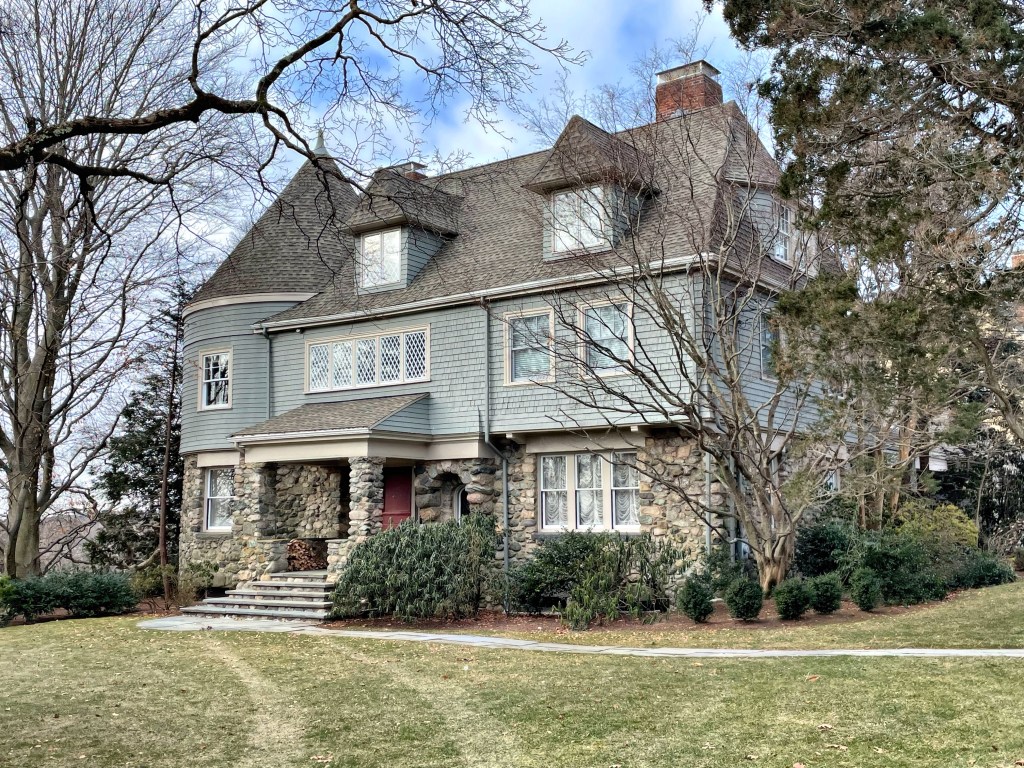
Louis K. Harlow House // 1888

One of the best houses in Waban Village in Newton is this absolutely stunning Shingle style/Queen Anne home perched high on Moffat Hill. This house was built in 1888 for Louis K. Harlow, who began his career as a professional artist in 1880 and traveled Europe to study the work of prominent painters. Back in the Boston area, Harlow painted nature and landscapes and produced etchings that were shown in the Boston Art Club and sold worldwide. He later got into poetry and published multiple works. Harlow hired the firm of Longfellow, Alden, and Harlow, to design this country retreat. I assume there is a relation between Louis K. and the architect Alfred Branch Harlow, but I would love to find out the connection! The design is quintessentially Queen Anne, with the asymmetry, complex roof form, varied siding types, and diamond window sashes. The shingled second floor overhangs the fieldstone first floor which to me, evokes the Shingle style where the house seems to have grown out from the earth. I can only imagine how spectacular the interior is!