Powsland-Homan-Dixey House // 1732

The colonial home at 33 Washington Street in Marblehead was built in 1732 for (and likely by) Jonathan Powsland, a joiner (furniture maker-carpenter). In the 1740s, Peter Homan added the rear lean-to, giving the home a saltbox appearance, possibly after he married into the Powsland family. The home was eventually owned by the Dixey Family. John Dixey (1776-1868) spent a good part of his life as a ship master and had several sons that also went to sea. The most well known son was Richard W. Dixey (1809-1860) who, along with two other Marbleheaders, captained the ship that took the first American Consulate to China.
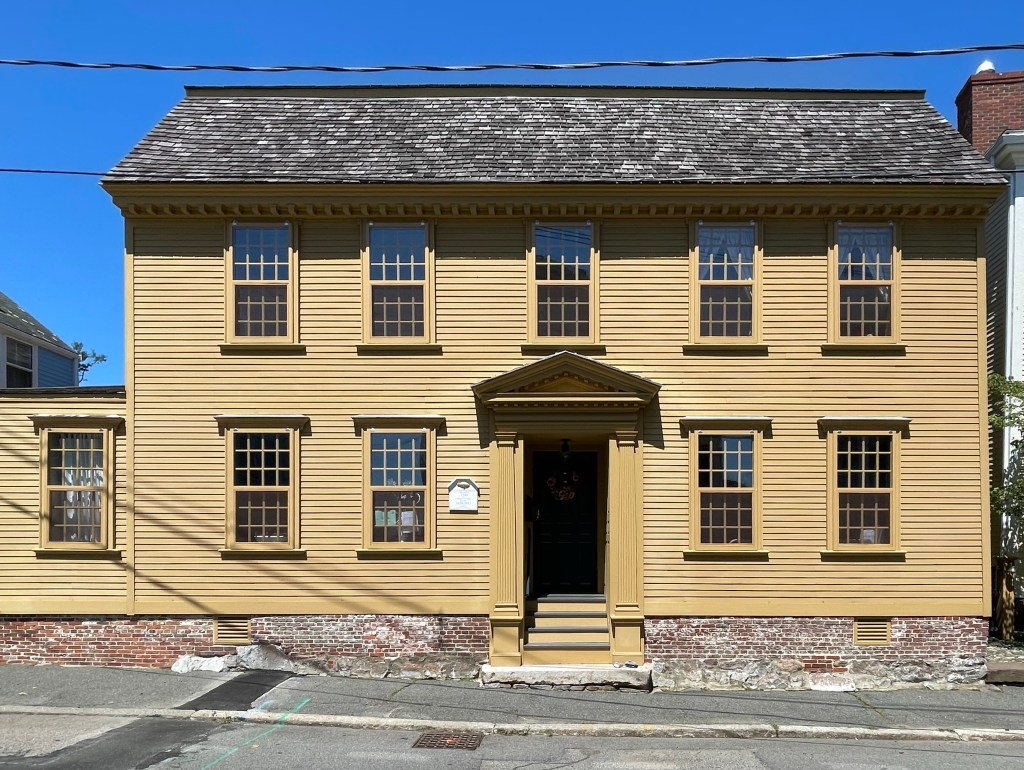
Homan House // 1744

This perfect Georgian house in Marblehead was built in 1744 for Richard Homan (1713-1803), a sea captain who also fought in the Revolutionary War. In 1736, Richard married Hannah Goodwin, the daughter of William Goodwin, a notable housewright. William Goodwin seemingly gave the newlywed couple land on his estate and likely built this stunning home for them. Hannah died in 1772, and remarried in 1776 to Susanna Stacey, who he also outlived. The couple moved to Ipswich, and this home was sold to his son, William. In the 1800s, the property was owned by William Hawkes Jr., a trader and shopkeeper who apparently operated a “rum shop” out of the first floor of the home. It remained in the Hawkes Family until at least 2013. The house features a gambrel roof of cedar shingles, 12-over-12 windows, a pedimented entry, and a period-appropriate paint color.

John Goodwin House // c.1810

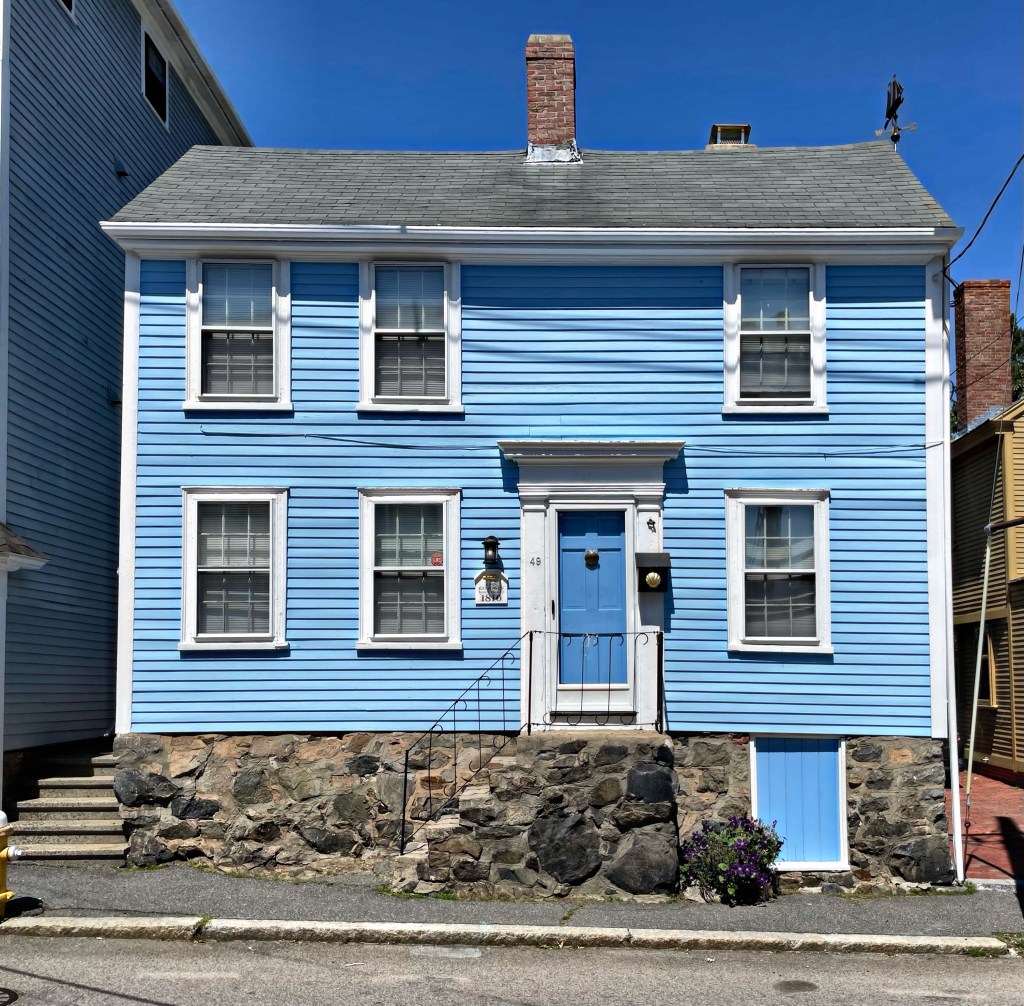
Oh, Marblehead, why are you so pretty? The town of Marblehead was originally called Massebequash after the river which ran between it and Salem. The land was inhabited by the Naumkeag tribe under the sachem Nanepashemet. Epidemics in the early 1600s devastated the tribe’s population leading to it’s colonization. In 1635, the General Court of Massachusetts Bay established the town of Marblehead on land that belonged to Salem. The citizens in Marblehead were less devout and conservative than others in Salem, and they incorporated as their own town in 1649. Now… the name. Marblehead is believed to have gotten its name by settlers who mistook its granite ledges and cliffs for marble. The mistake stuck as the namesake. The town thrived as a fishing village, with many fishermen and sea-based jobs, with homes built on small lots along the warren of narrow streets. This home sits on Washington Street, one of the major streets in the Old Town. The home was built around 1810 for John Goodwin on land formerly owned by his grandfather. The Federal style home sits atop a raised stone foundation and has been excellently preserved.