When Pieter Ostrander settled in Hurley, NY with his family in the late 1600s. Being of Dutch descent, he (and other settlers) built their homes and barns in Dutch traditions. This lot along the village’s main street was acquired by Pieter and inherited by his son, Arent in about 1710, about the time the home is estimated to have been built. It was acquired by the Elmendorf Family by the early 19th century. At that time, the property operated as the Half Moon Tavern, after Petrus Elmendorf purchased it in 1804. The addition to the east (right) was built as a weaving room. The property remained in the Elmendorf family until 2008 (that’s almost 300 years in two families!) It was acquired by the new owner who has been restoring and researching the home ever since. He runs a blog documenting the property’s rich history.
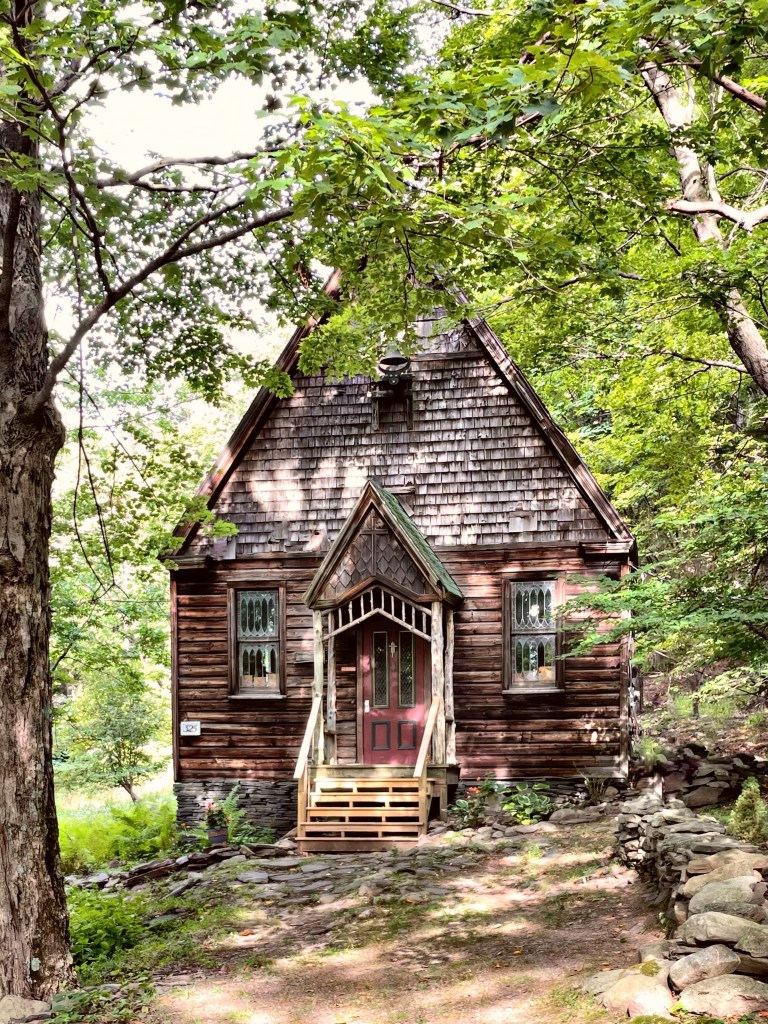
Highlighted by the establishment of the Catskill Mountain House in the 1820s, and furthered by the construction of subsequent resorts and boarding houses, the Catskill Mountains enjoyed a lively seasonal tourist industry that continued largely unabated throughout most of the nineteenth century. Mead’s Mountain House was representative of the smaller, less ostentatious boarding houses that sprang up in the region to serve a more middle-class clientele of tourists. This church, the Church of the Holy Transfiguration was originally constructed in 1891 in association with Mead’s Mountain House as a modest place of worship for guests of the Mead family’s boarding house and those of the nearby Overlook Mountain House. The chapel was constructed in 1891 and modestly built, constructed with a wood balloon frame above a fieldstone foundation with detailing reminiscent of the rustic aesthetic, popular in the Adirondacks to the north. In the 1960s, Father Francis, the much-beloved “hippie priest”, here welcomed hippies who had congregated in town during those years that culminated in the famous art and music festival. Fr. Francis began the practice of this lesser known branch of Catholicism, which acknowledges the Pope as an earthly spiritual leader but, unlike classical Roman Catholicism, does not consider the Pope to be supreme or infallible. The small chapel remains as a quirky and important piece of local history.
One of the most intriguing and historical hikes around is at Overlook Mountain in Woodstock, there is just something so mesmerising and enchanting about abandoned places. Overlook Mountain has long been a significant location in New York. In the boom years of New York City after the Civil War, more than 90 quarries in the Town of Woodstock (many around Mount Overlook) produced bluestone for sidewalks in Manhattan. By the end of the 19th century, the mountain and surrounding area became a tourist location for New Yorkers escaping the woes of city living, looking to breathe in the fresh mountain air up the Hudson. The current ruins Overlook Mountain House was actually the third hotel on the site. The first Overlook Mountain House was built in 1871 and accommodated 300 guests, before it was destroyed by fire in 1875. It was rebuilt in 1878 by the Kiersted Brothers of Saugerties. Overlook was used irregularly between 1887 and 1917, when Morris Newgold of Manhattan purchased the hotel. In 1921, it was the site of a secret organizational meeting of what was to become the Communist Labor Party of America. The second incarnation of the Overlook Mountain House was destroyed by fire in 1923. And Morris Newgold sought to rebuild with fireproof construction.
His architect used concrete to rebuild the hotel, which likely would have been covered with stucco. They also broke ground for a chapel, stables, and a standalone lodge for private housing for his family. Newgold’s shaky finances paired with the Great Depression made for slow progress, and portions of the resort were still “under construction” as late as 1939 (and the main hotel never being finished from what I could find). Morris Newgold died in 1940 and the property was either sold by his son or acquired via eminent domain by the New York State Conservation Department and made part of the Catskill Forest Preserve. You can now explore the old ruins of the Overlook Mountain House between views of the Catskill Mountains.
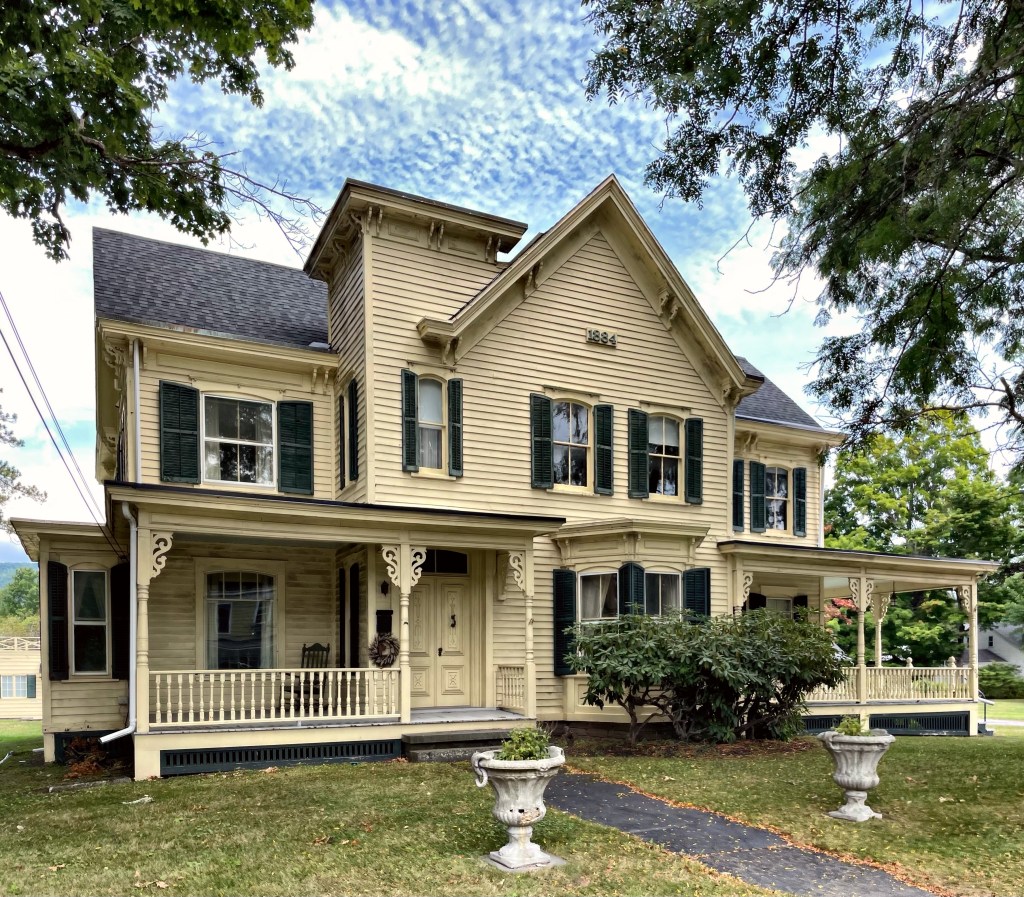
The James Nelson Lasher House in Woodstock, NY was built by James Nelson Lasher (1829-1906) in about 1884. “Nelson” Lasher, a farmer from Bearsville, acquired 45 acres on the outskirts of the village of Woodstock and established an undertaking business on the property, in 1879. Over the next two decades, he farmed the property with his son Franklin “Frank”, who by 1890, also began to manage the undertaking business. Frank Lasher (1864-1912) may have added the Queen Anne porches and tower to the house around this time. In the early 1900s, the Lasher household consisted of Nelson and wife Elizabeth, and Frank and his wife and three children. Nelson died in 1906 and Frank died six years later, leaving the property to his son, Victor, who continued the family undertaking/funeral home business. The property was sold out of the Lasher family in 1960, but operated as a funeral home until 2019. The property has recently been eyed as a hotel and for town offices, I wonder what its future holds!
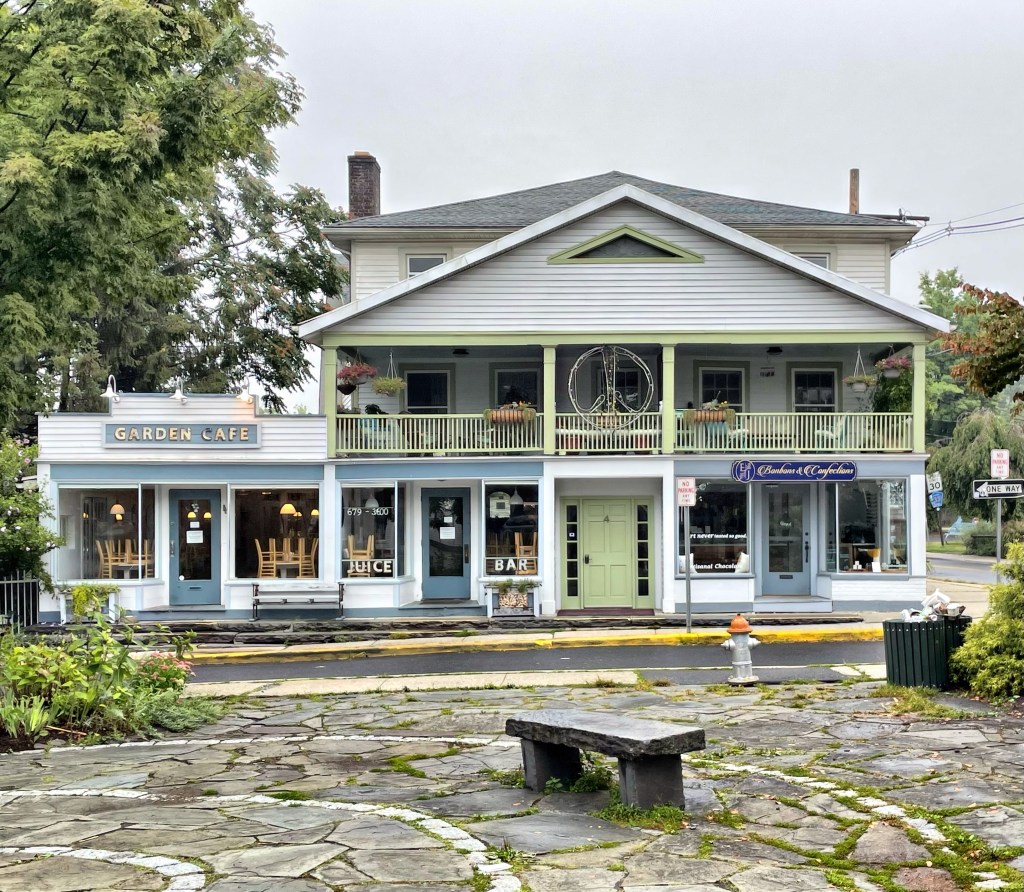
One of the largest buildings in the charming village of Woodstock, NY, is the former Krack House… I know what you are thinking, and no it was not due to illegal activity! The Krack House was developed in 1870 by Charles H. Krack (1824-1893), as a response to the success of other summer hotels built nearby as the area saw a boom in tourism. Charles Krack was born in Germany and after serving in the military there, he arrived to America in the mid-1800s. Here, he served as an overseer of a Georgia plantation, and moved to New York City after the Civil War, operating a hotel in Manhattan. He later became the owner of a floating bathhouse on New York City’s East River anchored near Grand Street, and made great money, investing it up the Hudson in Woodstock. In Ulster County, he got involved in politics. The Krack House was a summer lodging facility with food service and all the best amenities in the village. After Charles’ death in 1893, the property was eventually purchased by Stanley Brinckerhoff Longyear, who rebranded the hotel in his name, The Longyear. The building appears to now contain apartments above commercial spaces.
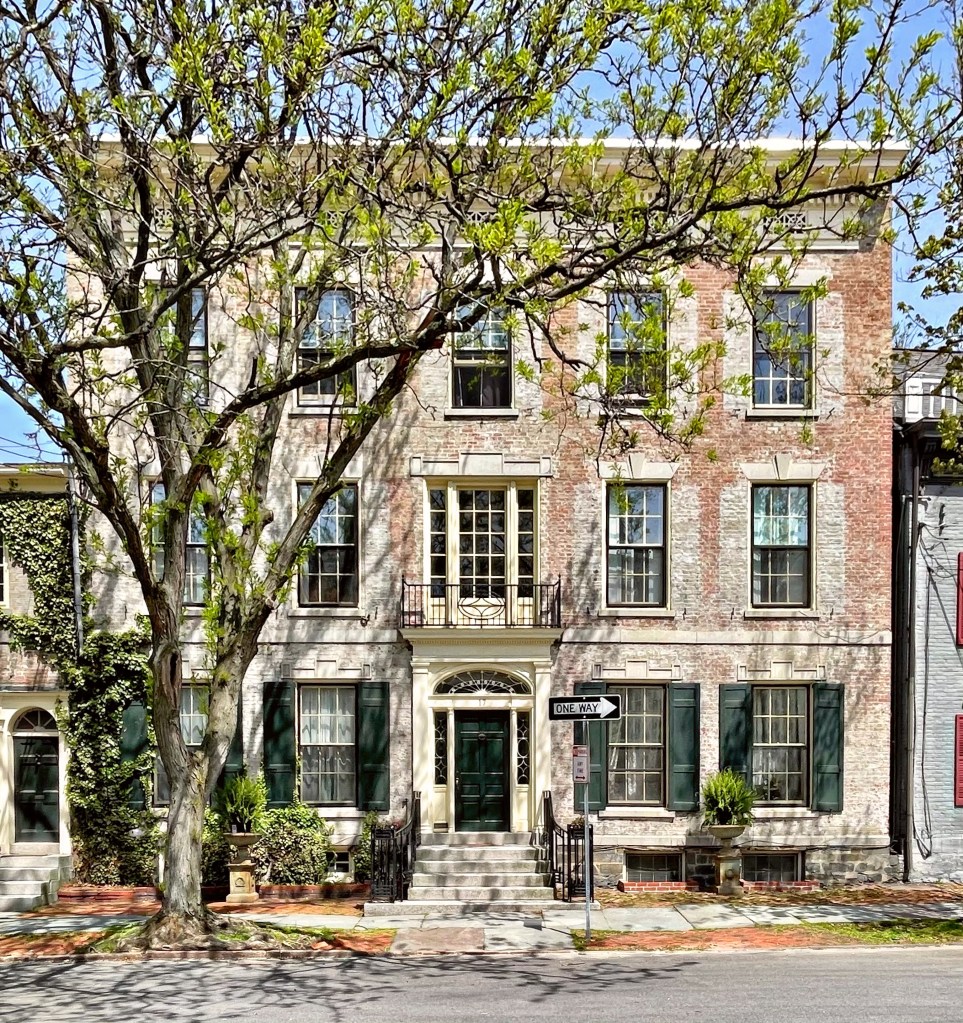
Tobias H. Ten Eyck was born in 1717 to a wealthy family from Albany, New York. He lived in Schenectady as a child and met his wife, Rachel De Peyster. The year he married Ms. De Peyster, he had this brick Georgian mansion built, which at the time, had a gambrel roof. Tobias was counted among Schenectady’s wealthiest businessmen, dealing in trade here until his death in 1774. The house was purchased next by James Ellice, who lived in the home with his wife Ann. While on a business trip to Montreal as an “Indian fur trader”, Ellice died at the young age of 33. His widow Ann remarried Joseph C. Yates, a lawyer. The couple occupied this home and Joseph built the one story law office to the side of the building to run his firm out of. He also had this home “modernized in the early 1800s, boxing off the third story and adding the Federal period detailing. He served as the mayor of Schenectady (beginning in 1798), being appointed successively to twelve one-year terms. In 1805 he was elected as a state senator, in 1808 as a State Supreme Court justice, and in 1823, as the seventh governor of New York (1823–1824).
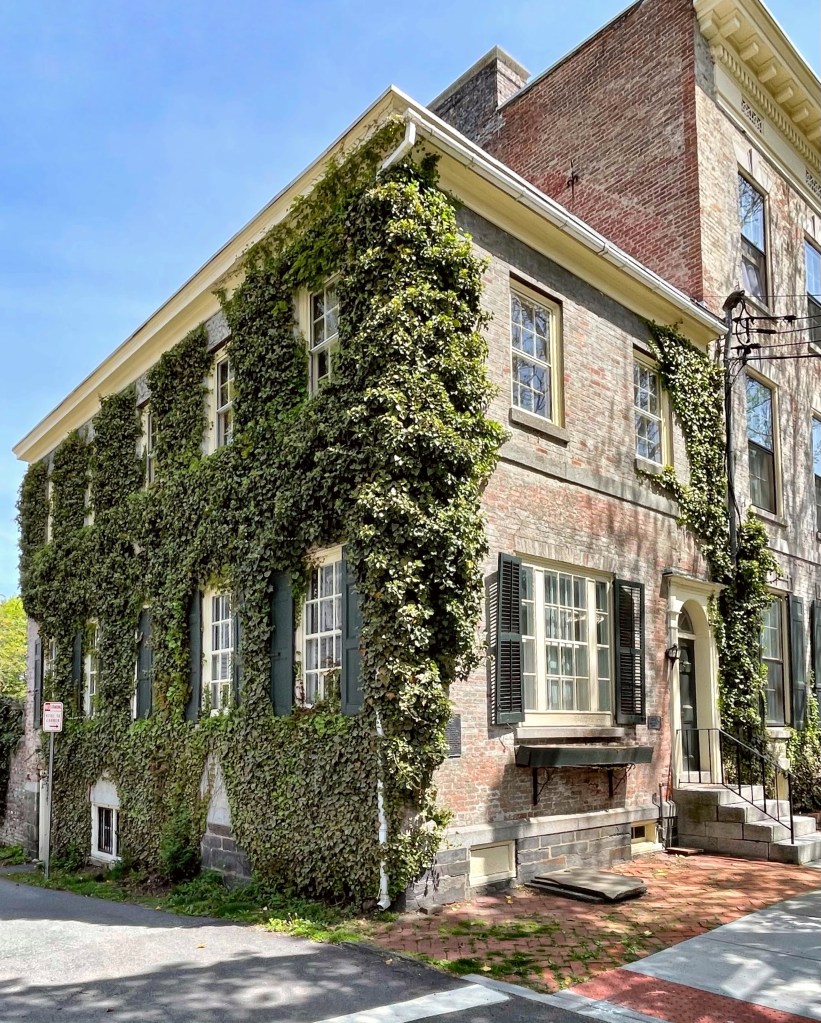
This gorgeous house in Schenectady’s Stockade neighborhood was built in 1792 for Jacob A. Swits. Swits was a descendant of the first settlers of Schenectady and served in the local militia upon the start of the American Revolution. He later, worked in town as a merchant and was involved with local affairs. He became Major General of the regional militia during the War of 1812. Between these two wars, he had this home built, which was likely a asymmetrical three-bay Federal home. Sometime later, the rightmost bay was added and much of the ornate detailing was added.
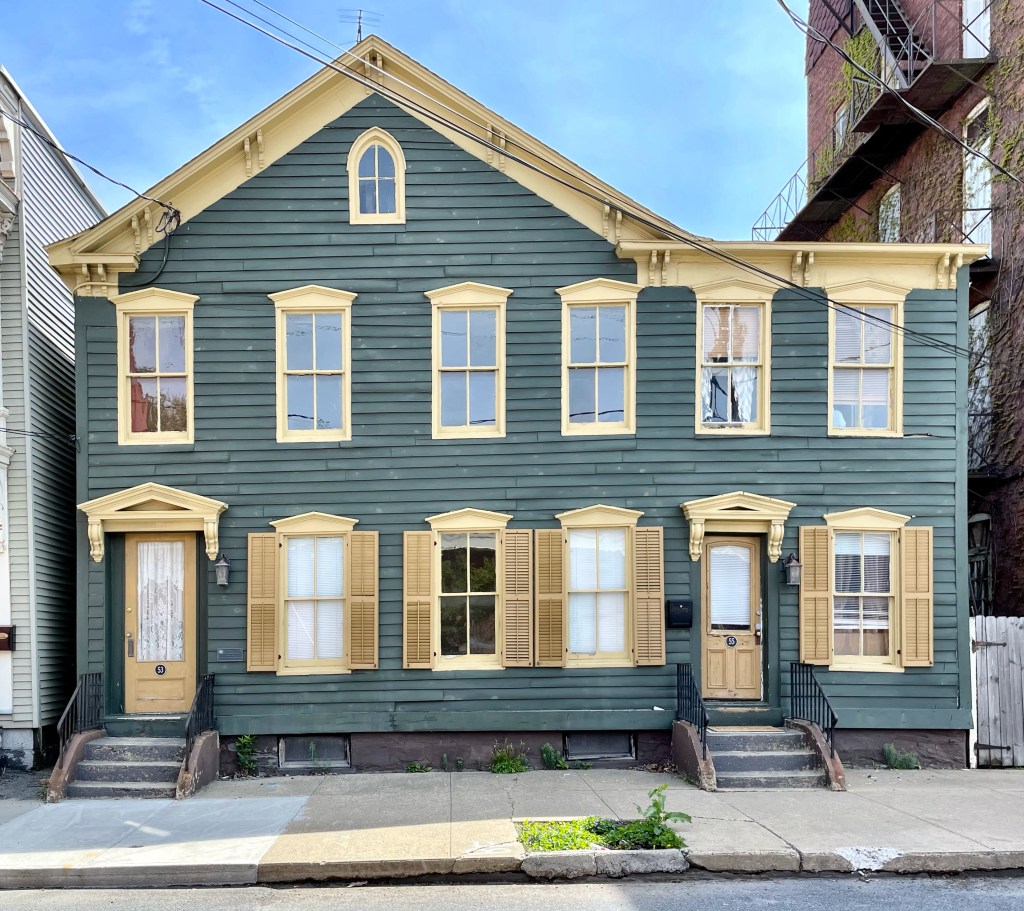
This home in Schenectady’s Stockade Historic District appears to have been built in the mid-19th century, and is an excellent example of a modestly sized Gothic Revival cottage. The house was occupied around 1860 by David P. Forrest, who served one term as Mayor of Schenectady in 1859, later becoming an Inspector of State Prisons from 1860 to 1862. The amazing Gothic bargeboard and other trimmings have remained and add so much intrigue to the home’s design. And that lancet window in the gable end! Swoon.
Welcome to the Stockade Historic District in Schenectady, NY! The National Park Service has described it as “the highest concentration of historic period homes in the country,” from this, the Stockade became New York State’s first local historic district, protecting it from demolitions and unfettered development. The neighborhood began in 1661, when a group of Dutch settlers, mostly merchants and fur traders looking to do business with Native Americans, settled the banks of the Mohawk River. This group of settlers built twelve houses surrounded by a wooden stockade (wooden defensive walls), to protect them from invasions, the neighborhood was named after this feature. The neighborhood developed over the 17th, 18th, and 19th centuries, providing an amazing layered neighborhood that showcases the best of designs throughout history! This home is no different. It was built around 1850 as an early example of Italianate architecture. It was most notably occupied by the famed Dr. Charles Proteus Steinmetz, a German-born scientist who beat the (then) impossible odds of succeeding with from dwarfism, hunchback, and hip dysplasia. Born Karl August Rudolph Steinmetz, he emigrated to the United States in the 1880s He changed his first name to “Charles” in order to sound more American, and chose the middle name “Proteus“, a wise hunchbacked character from the Odyssey. He got a job with General Electric in Lynn, MA, and was later transferred to Schenectady where he lived out his days. He settled in this quaint home between 1893-97, running a laboratory out of the first floor rooms. He went on to bigger homes, and never married or fostered children. I highly recommend that you all read more about him, he was a truly fascinating person!
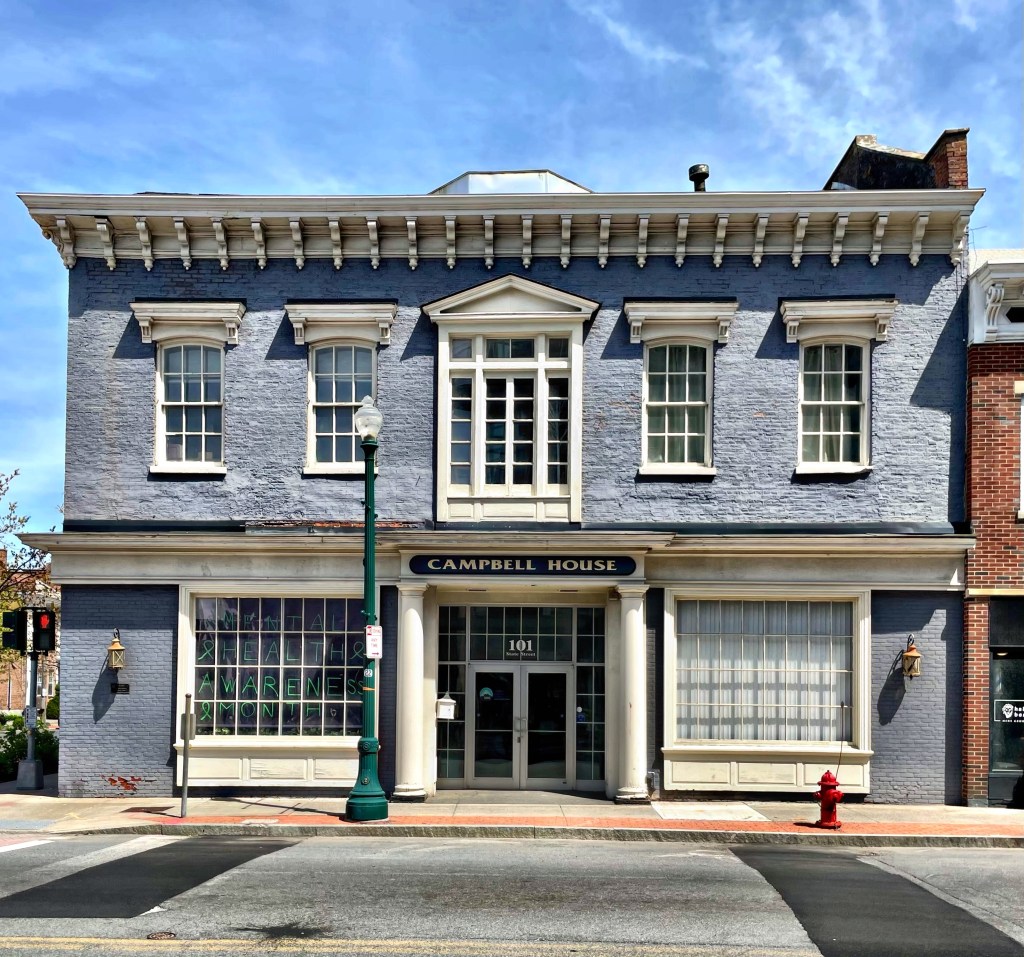
Daniel Campbell (1730-1802) emigrated to Schenectady, New York from Ireland, in 1754 at just 24. When he arrived to New York, he became involved in the fur trade, buying furs of animals from native people in the undeveloped lands of upstate, and selling the furs back to Europe. He began to purchase valuable land in the river town of Schenectady and nearby Albany, solidifying his position in those cities. In 1760, he married Engeltie Bradt, daughter of the Schenectady branch of a prominent New-Netherland era family. Soon after his marriage, he hired architect Samuel Fuller to design a spacious new Georgian mansion. The couple split their time between Schenectady and Albany until Daniel’s death in 1802. His widow resided at this home until her death ten years later. As State Street (where this mansion sits) turned more industrial, this home was modified with storefronts and later alterations in the mid 19th century.





 Buildings of New England