Old Mill – Newport Tower // c.1670

No structure in Newport is as hotly debated than the “Newport Tower” located in Touro Park. The old stone, cylindrical tower stands like an ancient relic of ancient Europe, just dropped in downtown Newport. For centuries, people have debated the structure’s history and use. Some say this structure was built by Viking masons who visited North America 1,000 years ago, while other theories (more rooted in fact) share another story. The tower was located at the upper end of the plot behind the now-demolished mansion built by Benedict Arnold, the first colonial governor of Rhode Island (his grandson was the infamous Benedict Arnold, the traitor who switched sides to fight with the British. In 1677, Arnold mentions “my stone built Wind Mill” in his will is evidence that the tower was once used as a windmill. However, some state that there is no reference to Arnold ever having the structure built, with some stating that he simply repurposed the building to be used as the base of a windmill. In 1837, Danish archaeologist Carl Christian Rafn proposed a Viking origin for the tower in his book Antiquitates Americanæ. This hypothesis is predicated on the uncertainty of the southward extent of the early Norse explorations of North America, particularly in regard to the actual location of Vinland, where Leif Erikson is believed to have first landed around 1000 CE, nearly five centuries before the voyages of Christopher Columbus and John Cabot.. Rafn’s popularization of the theory led to a flurry of interest and “proofs” of Norse settlement in the area. Mortar tests completed in the 20th century basically prove this theory to be false, and date the structure to the middle of the 1600s, but it is fun to imagine it is much older!
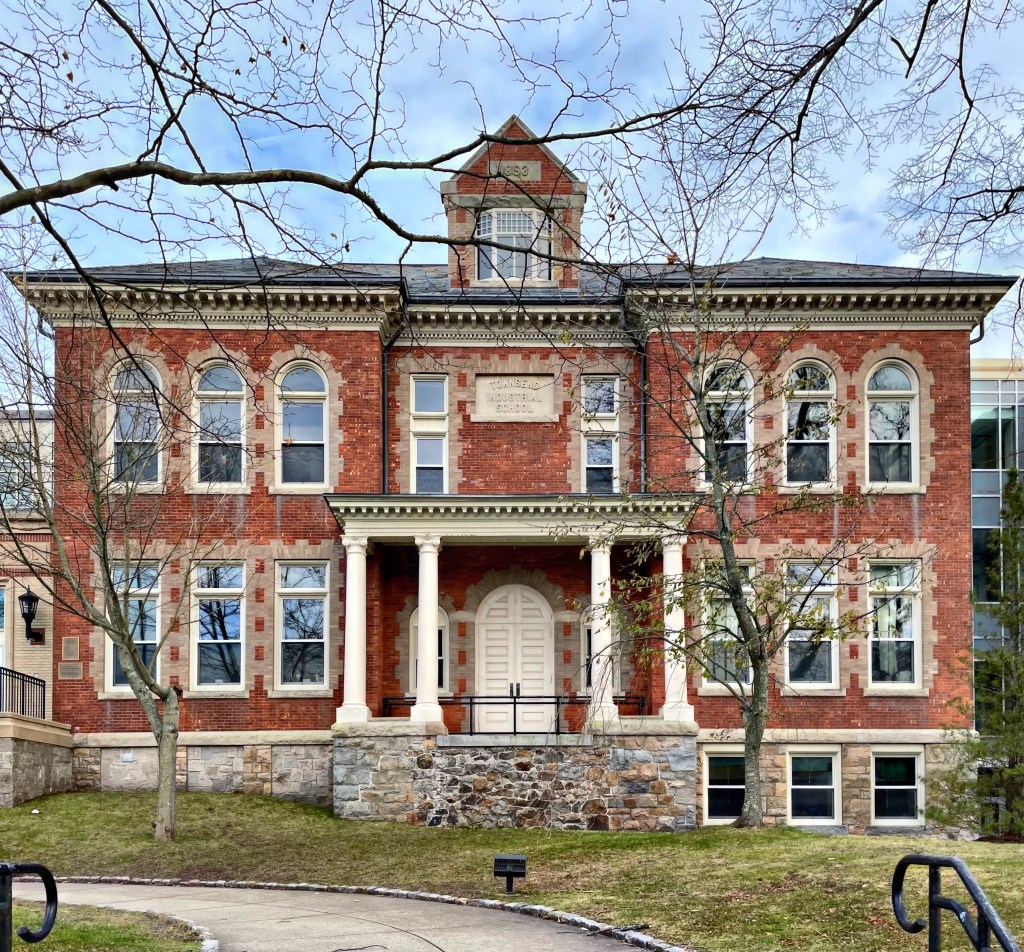
Townsend Industrial School // 1894

Located next to and predating Newport City Hall (a previous post), the Townsend Industrial School building is a great, eclectic Victorian-era building in Newport, that is often overlooked. The school itself evolved from a vocational school for women, that Katherine Prescott Wormeley began in town in 1872. The school taught pupils “not destined for classic education” but taught them skills that they would be able to use in the “real world”. The school was located next to the Rogers High School (demolished in 1957), which provided a more traditional education. The building was designed by Newport architect James C. Fludder and has maintained its stately presence to this day. The building has been acquired by the City of Newport, who added a Post-Modern addition, and it is now known as the Frank E. Thompson Middle School.

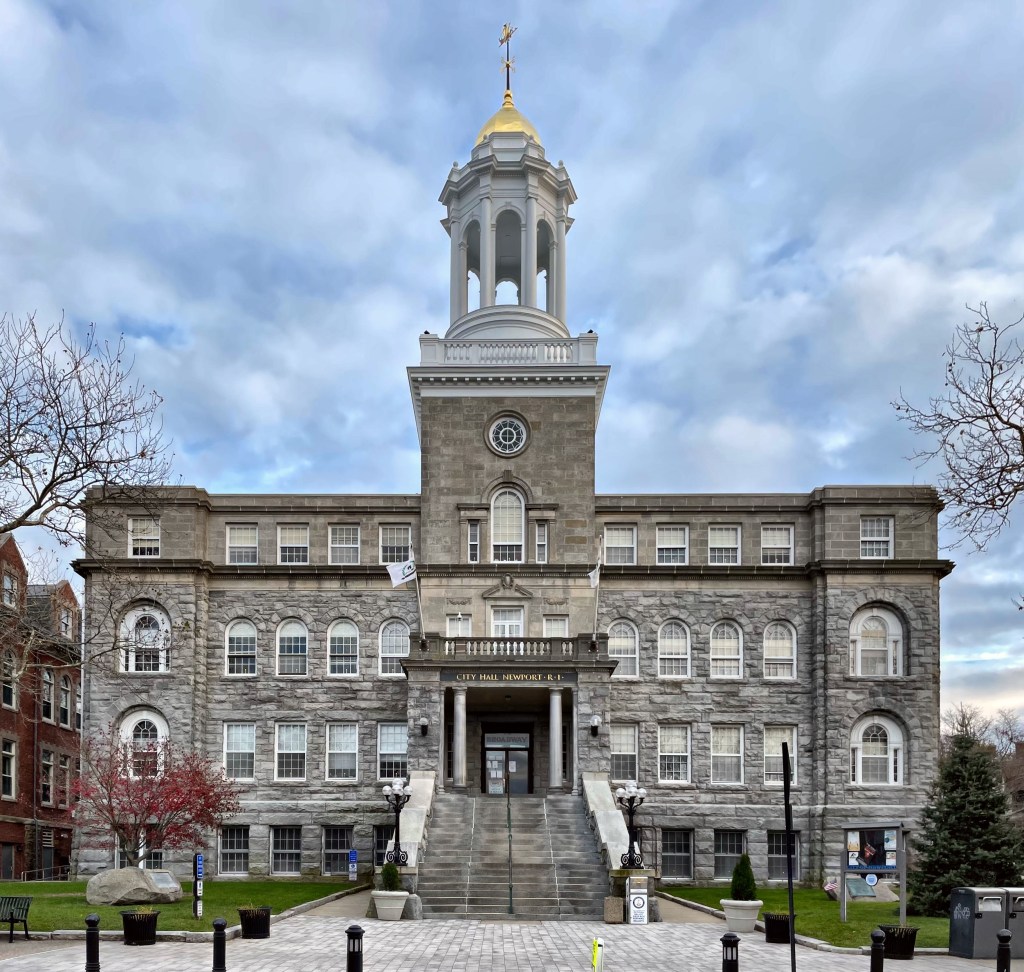
Newport City Hall // 1900

Newport, Rhode Island was settled in 1639 from colonists, who took land from the Narragansett people, who had lived on the land for generations. Newport eventually grew to be the largest of the original settlements that later became the Colony of Rhode Island and Providence Plantations. Newport served as the seat of Rhode Island’s government until the current Rhode Island State House in Providence was completed in 1904. Newport was a major center of the slave trade in colonial and early America, active in the “triangle trade” in which slave-produced sugar and molasses from the Caribbean were carried to Rhode Island and distilled into rum that was then carried to West Africa and exchanged for captives. In all, about 60% of slave-trading voyages launched from North America – in some years more than 90% departed from the tiny state, many of which left from Newport. Beginning in the mid-nineteenth century, wealthy southern planters seeking to escape the heat began to build summer cottages. By the end of the 19th century, a large number of America’s elite would build summer “cottages” in the town, transforming much of it to the Gilded Age splendor we see today. Stay tuned for a sampling of Newport buildings.

Newport City Hall was completed in 1900 from Newport-based architect and builder John Dixon Johnston. The massive Beaux-Arts style building was constructed of granite block and capped with a mansard roof with iron cresting. Tragically, a fire destroyed much of the interior and the roof in 1925, leading to a re-imagining of City Hall. In the 1920s, Colonial design prevailed in New England, and architect William Cornell Appleton envisioned the building with more Colonial features. Palladian windows and a boxed-off fourth floor were added, along with a towering cupola.