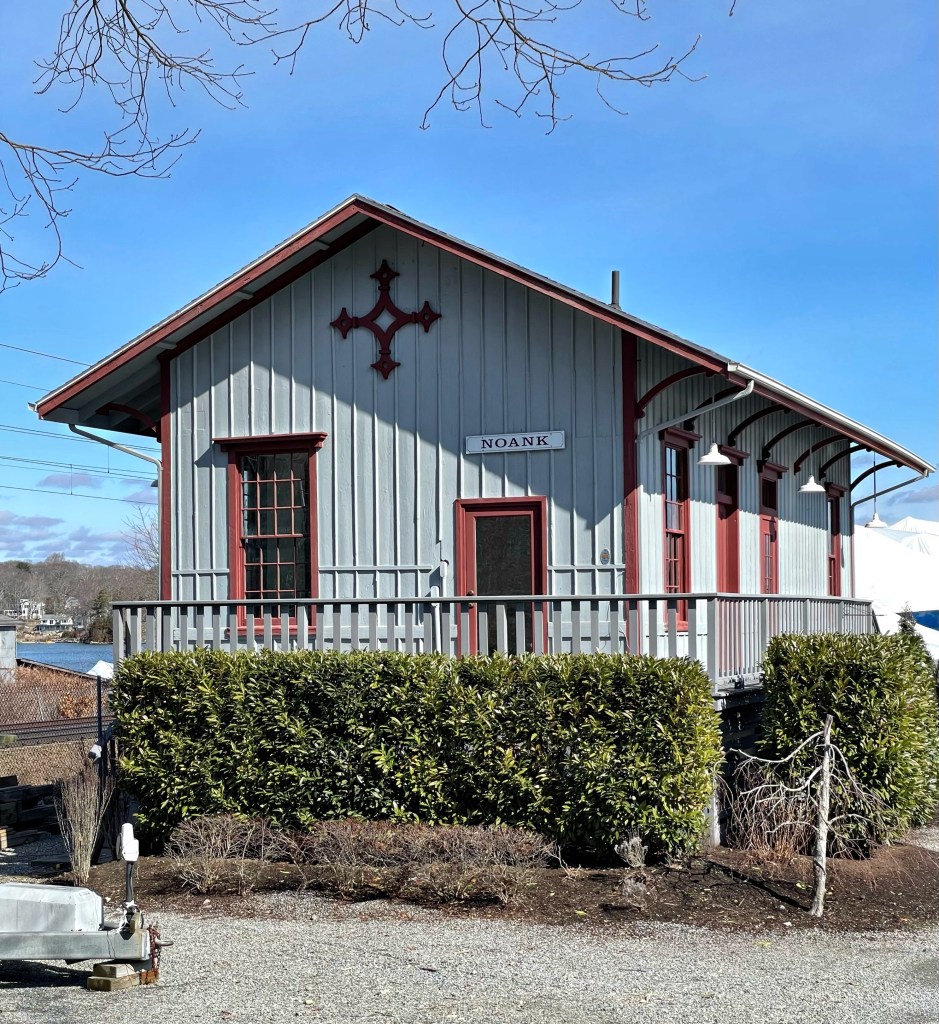
Noank Train Depot // 1858

Starting in 1848, rail service connecting New Haven and New London, Connecticut commenced to provide transit between two of the state’s economic centers. The New Haven and New London Railroad was completed in 1852 and almost immediately, work commenced on extending the line eastward as the New London and Stonington Railroad. This completed the “Shore Line” route between New York City and Boston through other lines and the span became re-organized and named the Shore Line Railway. One of the many village stops along the route was in Noank, in this 1858 rail depot. The small train station is covered in board-and-batten siding with an overhanging gable roof supported by brackets. In 1976, much of the shoreline track was purchased by Amtrak, which is now known as the Northeast Corridor. The Noank station was cancelled as a stop, and the building was sold from the holdings, it is now office space, seemingly for the Noank Village Boatyard.

Robert Palmer Jr. House // 1907

Robert Palmer Jr. (1856-1914) was born in Groton, Connecticut as the son of Robert Sr., a prominent businessman and Deacon in Noank’s seaside village (his house was featured previously). Robert Sr. established the Palmer shipyard, which became the largest business enterprise in Noank. Jr. would later join his father’s business and did well for himself financially, eventually marrying and building this Neo-Classical mansion on Church Street in town. The company, under Sr. and Jr.’s leadership, built many seafaring vessels that were internationally renowned until the company closed in 1914 after the death of Robert Jr. This house is unique in town for the monumental two-story portico, Palladian windows at the first floor, and a projecting entry vestibule.

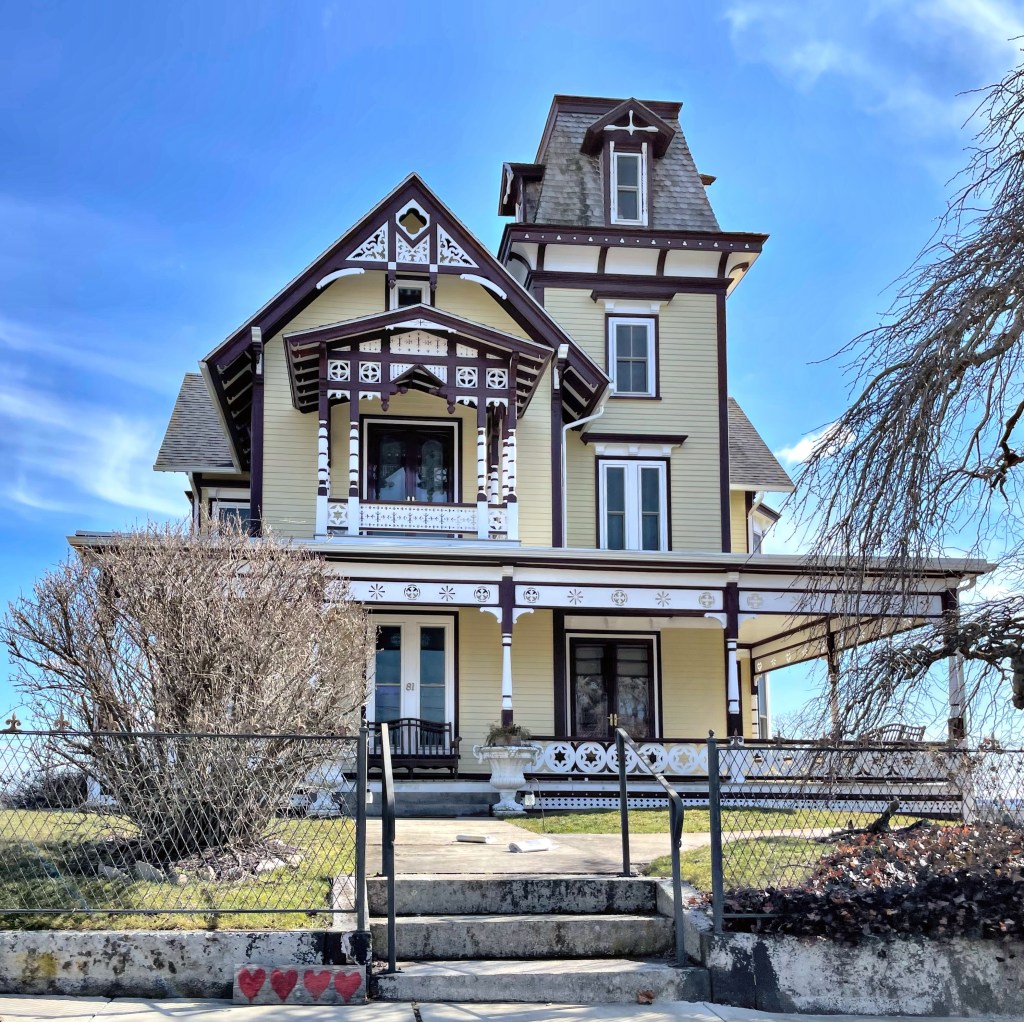
Deacon Robert Palmer House // 1884

Perched on the highest hill in the coastal village of Noank, Connecticut, you will find this absolutely enchanting gingerbread Victorian mansion. The house was built in 1884 for Deacon Robert Palmer (1825-1913), a wealthy man who wasn’t only deacon of the village’s Baptist church, he was the owner of a flourishing shipyard, and it was his shipyard workers who built him, with loving care, a house he could be proud of! Robert ran the shipyard in town first with his brother, and then with his son. During the late nineteenth and early twentieth centuries the shipyard was the largest facility for building and repair of wooden vessels in southern New England, employing over 300 men. The yard specialized in building railroad car floats, schooner barges, and dump scows as well as fishing smacks. Robert Palmer and Son went out of business in 1914 with the passing of the Robert. The Stick style mansion with mansard roofed tower remained in the Palmer family until the early 2000s when it sold and was restored to her former glory. The residence features exposed rafters, a pagoda-like second story balcony, a frieze with geometric cut-outs, and a wrap-around porch which provides sweeping views of the ocean. I can only imagine how beautiful this old Victorian is on the inside!