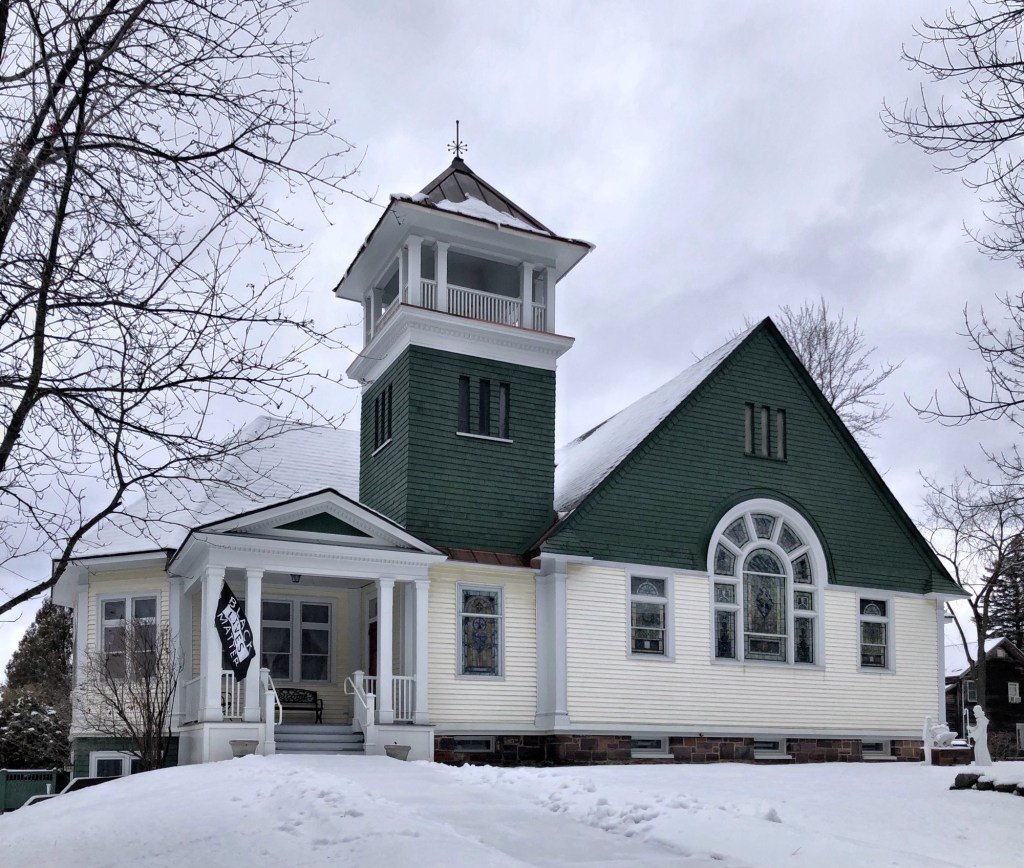
The Richmond Congregational Church is a stellar example of an early 20th century, wood-frame church building in the small town of Richmond, Vermont. Designed by prominent Burlington architect, Walter R. B. Wilcox in 1903, the building blends many styles that were popular at the time, namely the Shingle, Queen Anne, and Colonial Revival styles, into a single composition. The parish hall addition was built in 1984, and is in a sympathetic Colonial Revival style, designed by Burlington architect Donald Albertson. The congregation remains active and maintains the church building, which was listed on the National Register of Historic Places in 2001.
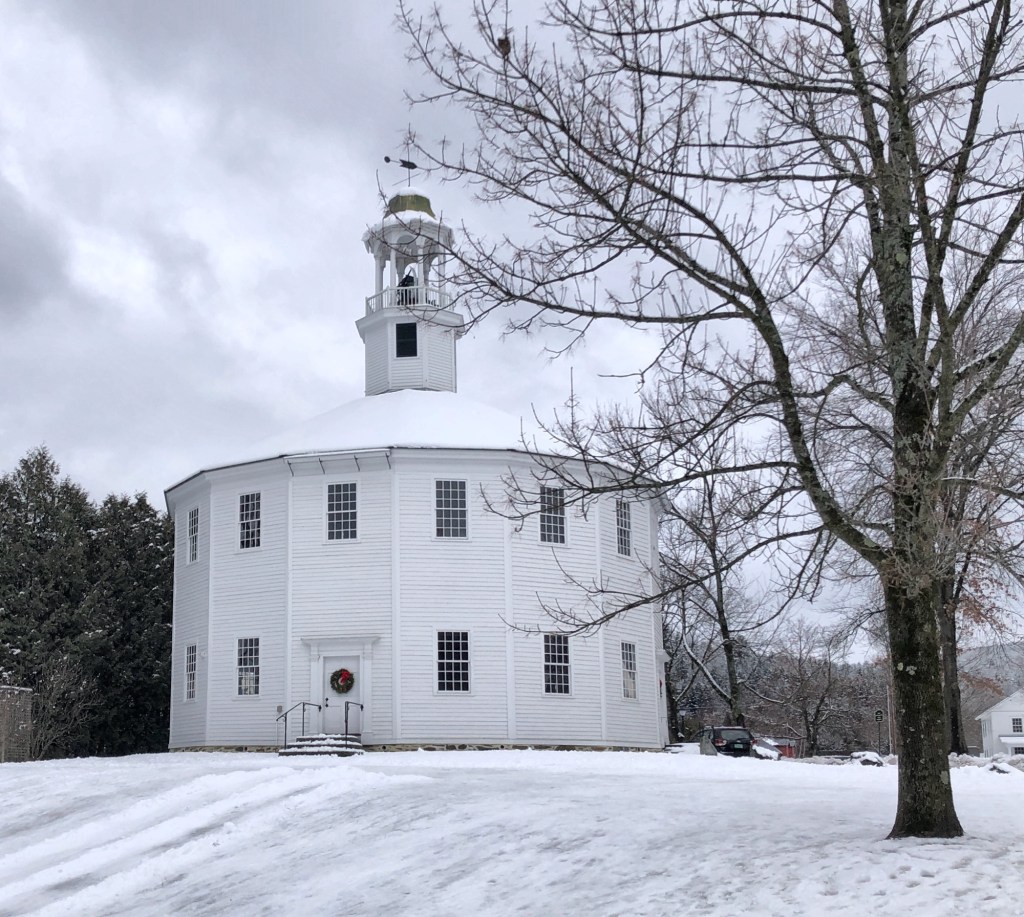
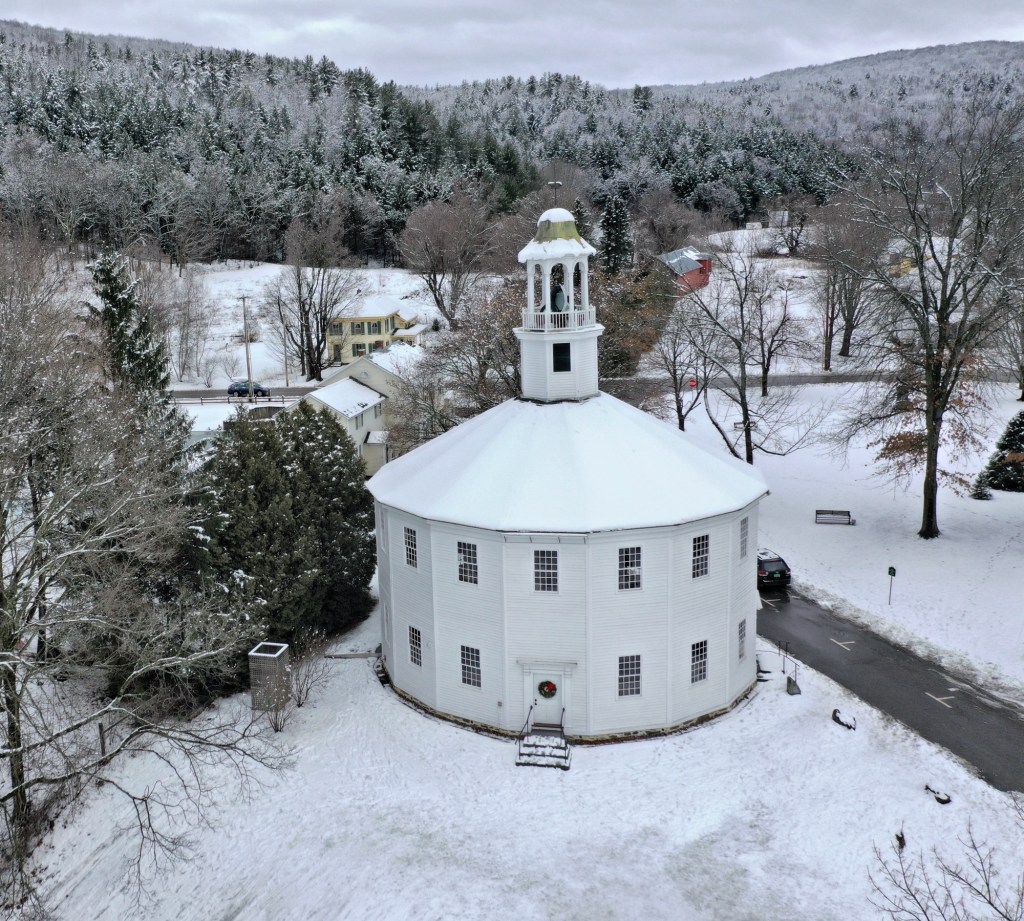
The Old Round Church in Richmond, Vermont, was built in 1812 on the village common to serve the town’s many congregations as a union church. The building is a master-work of housewright William Rhodes, who documented its construction in his journal and is a vernacular, yet grand Federal period church. While known as the Round Church, the building is actually a sixteen-sided hexdecagon with shallow angle cuts to create the rounded form, so the term round church sounds a little better than the Old Hexdecagon Church! Fifty feet in diameter, the two-story church rises to a hipped roof which is surmounted by a two-stage octagonal belfry with a bellcast cap and weathervane. Within a few decades of the church’s opening, the founding denominations began to move out, building their own houses of worship, and in 1880, the Old Round Church reverted to the Town of Richmond and continued in use as the town’s meeting hall until 1973, at which time safety concerns forced its closure to the public. The Richmond Historical Society was formed in 1973, shortly before the church had to be closed and in 1976, the town deeded the church to the society, who then gathered funds to restore the building. The Old Round Church remains one of the most unique architectural designs in Vermont and is always a treat to drive by in all seasons. The beloved building was declared a National Historic Landmark in 2000, one of just 18 in Vermont.
 Buildings of New England