David Scott House // 1714

One of the oldest extant houses in Ridgefield, Connecticut is this charmer, which was moved not once, but twice! The house was built for David Scott (1678-1760), an Irish-born resident of the town, who purchased one of the town’s original Main Street house lots which sat undeveloped. Scott had abandoned his wife, Mary in Ireland, and settled in Ridgefield, entering into a new relationship with Elizabeth St. John. A woman scorned, Mary unexpectedly arrived in America and filed suit against her husband, citing Elizabeth as the “pretended wife of David Scott.” A judge awarded Mary three acres of her husband’s land. David Scott and his second wife lived at this 1714 house until they moved in 1740. His property (which included two enslaved Africans) was sold to Vivus Dauchy, a Frenchman. In the 1920s, as the Scott House section of Main Street commercialized, the owners relocated this house to Catoonah Street, building a commercial block in the former location. After numerous other owners, the most recent owner, The Ridgefield Preservation Trust (now the Ridgefield Historical Society) put it to use as a new historical society headquarters, after saving the Colonial-era home from demolition for stores and a parking lot! It was relocated to its current site and has been meticulously restored.
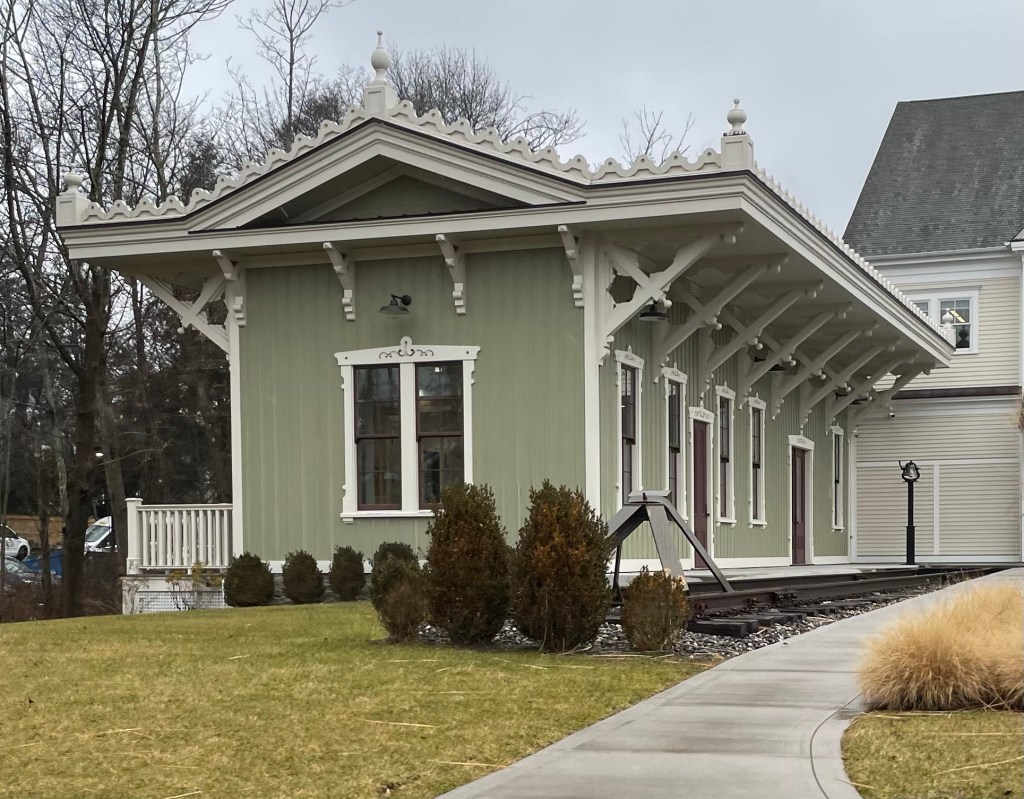
Ridgefield Train Depot // 1870

In 1870, the Ridgefield Branch branch line of the Danbury and Norwalk Railroad and later the New York, New Haven and Hartford Railroad was built connecting the sleepy village of Ridgefield to Branchville train station via the main line. The line was an early risk, built to offer service to the wealthy New Yorkers who began arriving to spend their summers in Ridgefield. Many of these “summer people” had their own private railroad cars, with chauffeurs meeting them as they arrived, driving horse and buggies to bring them and their luggage to their estates located throughout the town. As travel shifted to personal automobile, ridership dropped in the early 20th century, and the branch was replaced by bus service in 1925. Freight service was scarce, and lasted longer, to 1964. The depot was sold to the Ridgefield Supply Company, who used the 1870 building as storage for decades until it was disassembled, moved and rebuilt by the Ridgefield Supply Company in 2015, as part of their expansion. The historic station today provides an important link to Ridgefield’s past.

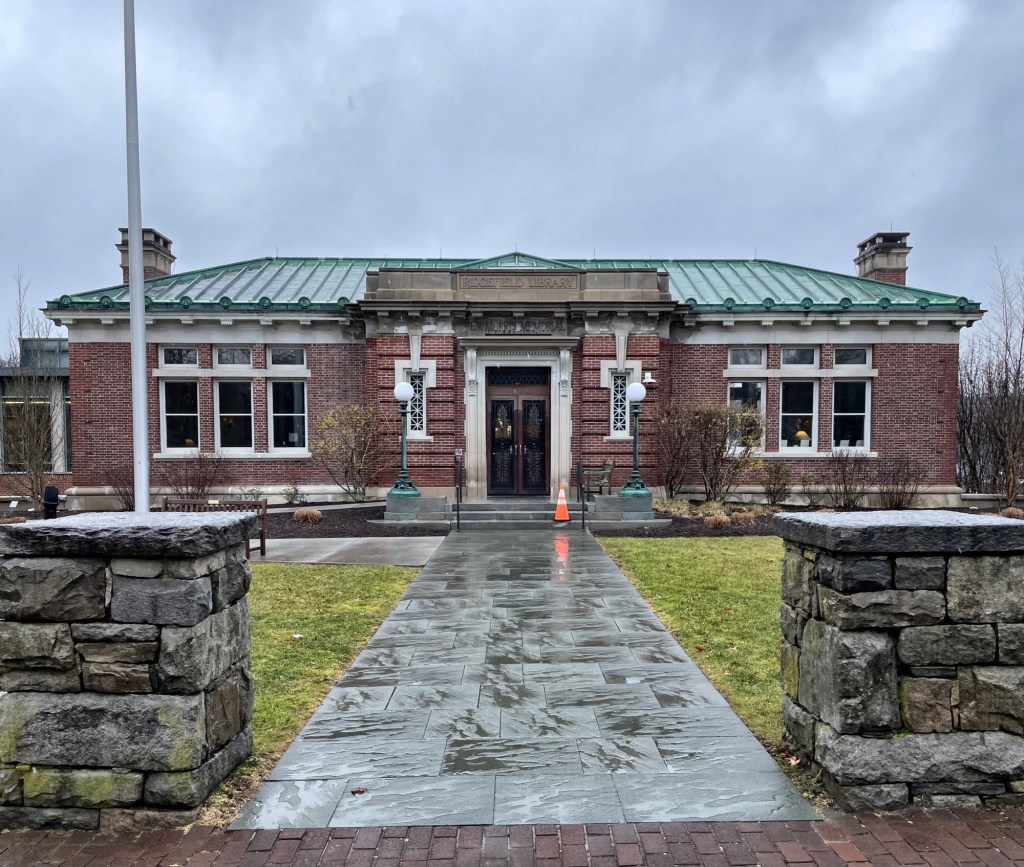
Ridgefield Public Library // 1901

The Ridgefield Public Library is an intriguing Beaux Arts style building from the turn of the 20th century. Built in 1901, the brick structure replaced the Smith Tavern, a 1798 frame structure built by Amos Smith right on Main Street. In 1900 the Smith Family sold the property to James N. Morris who had this library built in memory of his wife, Elizabeth, donating it to the town. Architect Raleigh G. Gildersleeve is credited with the design which is comprised of a one-story building constructed of brick with cast stone trim details and ironwork at the door. The library was given later additions, which are recessive in location and detailing to let the original building shine, as it should!

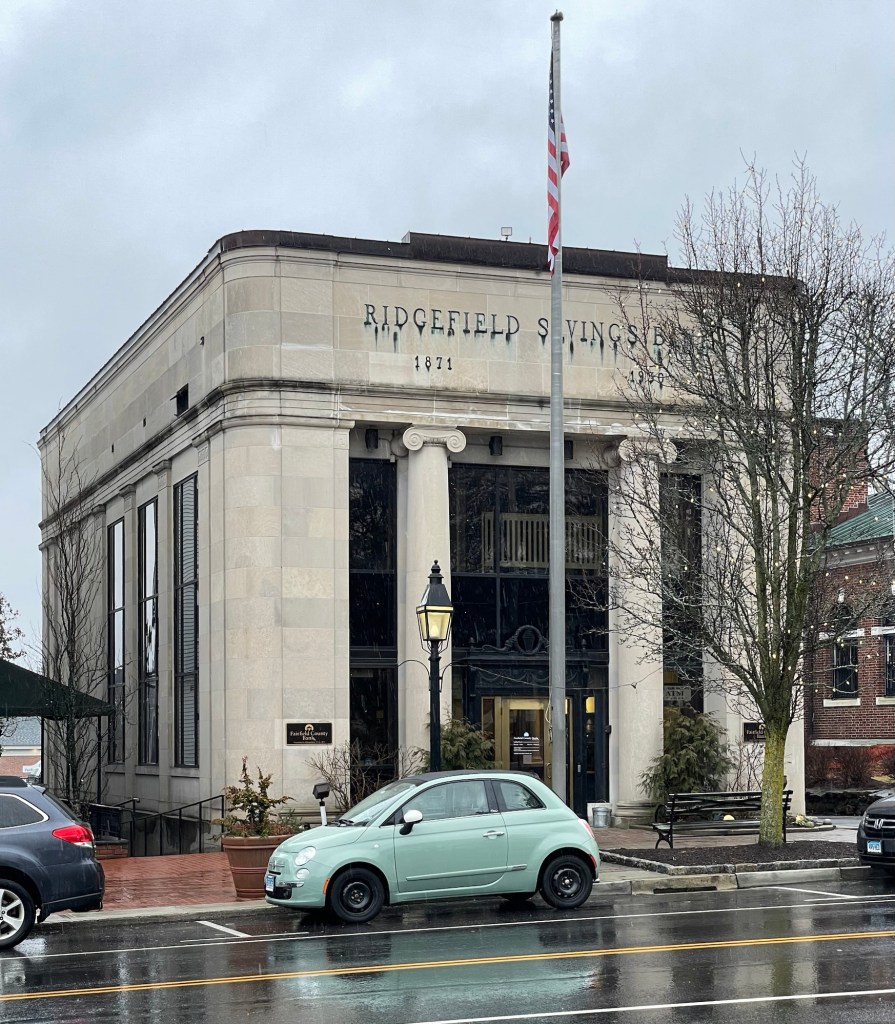
Former Ridgefield Savings Bank Building // 1930

Historically, bank buildings were built with architecture at the forefront to show members and prospective investors that their company instilled prosperity and longevity. Today, many new bank buildings are cookie-cutter designs and lack ornamentation or intrigue… The interwar Ridgefield Savings Bank on Main Street in Ridgefield, Connecticut, was built in 1930 from plans by architects Ralph Hawes and Ernest Strassie in the Neo-Classical style with Art Deco rounded corners and undecorated planes. Dominated by its Classical Ionic portico the bank building is a lasting commercial landmark on the town’s charming Main Street. It is now occupied by the Fairfield County Bank.