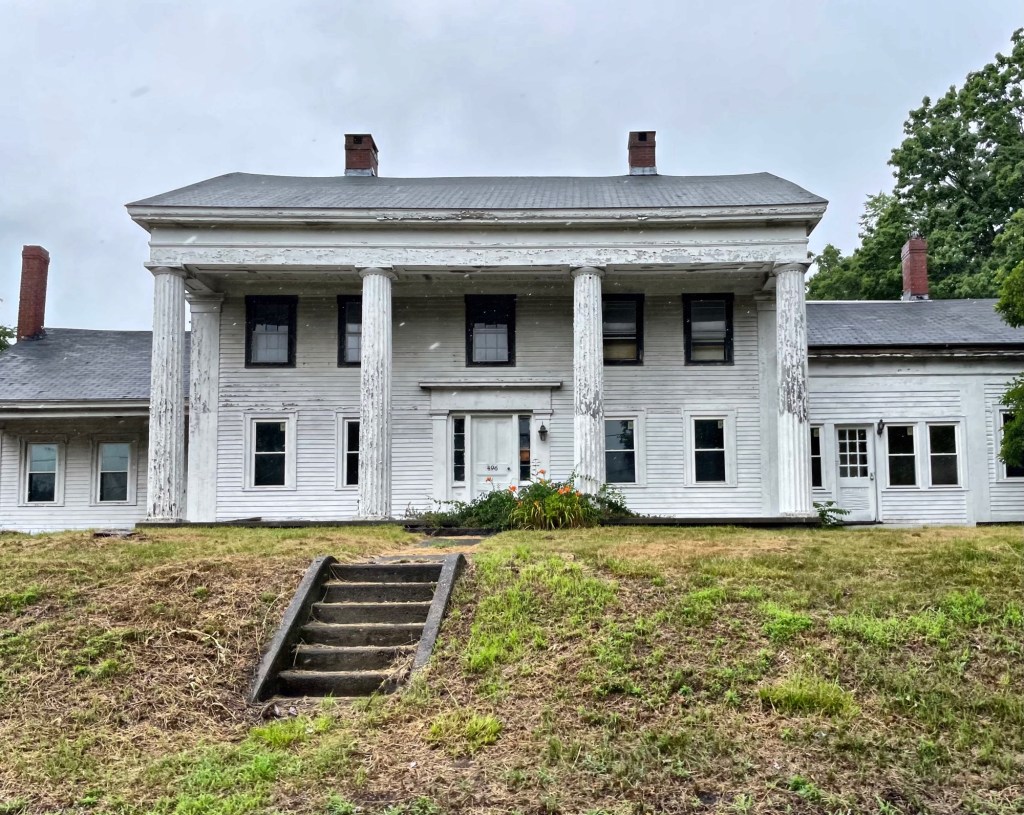
Harris and Sabin Sayles Mansion // c.1845

Located in the Dayville section of Killingly, Connecticut, you can find a row of large mansions built for mill owners and managers from the 19th century. This house dates to the 1840s and by the 1860s, was owned by Harris Sayles (1817-1893) and his brother, Sabin L. Sayles (1827-1891) who together, co-owned and operated a large woolen mill in the town (featured previously). It is not clear if the Sayles brothers lived in the home, but they likely rented it to higher-level employees at the mill as they both had other homes in town. The two-and-a-half story mansion is a great example of the Greek Revival style in the town, with the side gable roof extending over the full-height portico with doric columns. The mansion was built across the street from the village church, also in the same style, but that building was demolished by 2011.
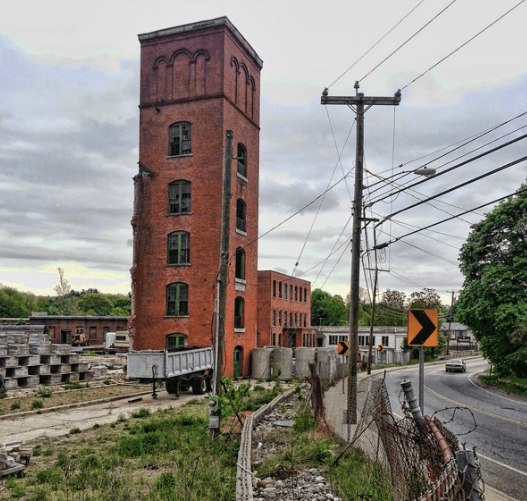
Sayles Mill // 1882-2023

Dayville, a mill village in the town of Killingly, Connecticut, is typical of many similar 19th century villages in the region. Dayville was named after John Day (1756-1838) a Revolutionary War veteran who later owned the water privileges on the Five Mile River. With the opening of the Norwich and Worcester Railroad in 1830, Dayville became a stop along the route and also became a hub for freight transport for other manufacturing villages along the river. In 1858, brothers Harris (1817-1893) and Sabin Lorenzo Sayles (1827-1891) from Rhode Island, purchased a mill site in Dayville and established a woolen manufacturing company. Harris retired in 1879 and Sabin continued the business as the Sabin L. Sayles Company. Sabin had a modern brick mill building constructed here in 1882-1883 which employed 250 people in production of woolen broadcloth. After Sabin’s death, the company was sold and modified numerous times, eventually becoming a metal products plant and later was left vacant. In the 2010s, funding and plans were begun to redevelop the old mill, but that was abandoned after a massive fire in 2023 destroyed the building, leaving just the six-story tower intact.

Photo courtesy of Journeysthrumylens