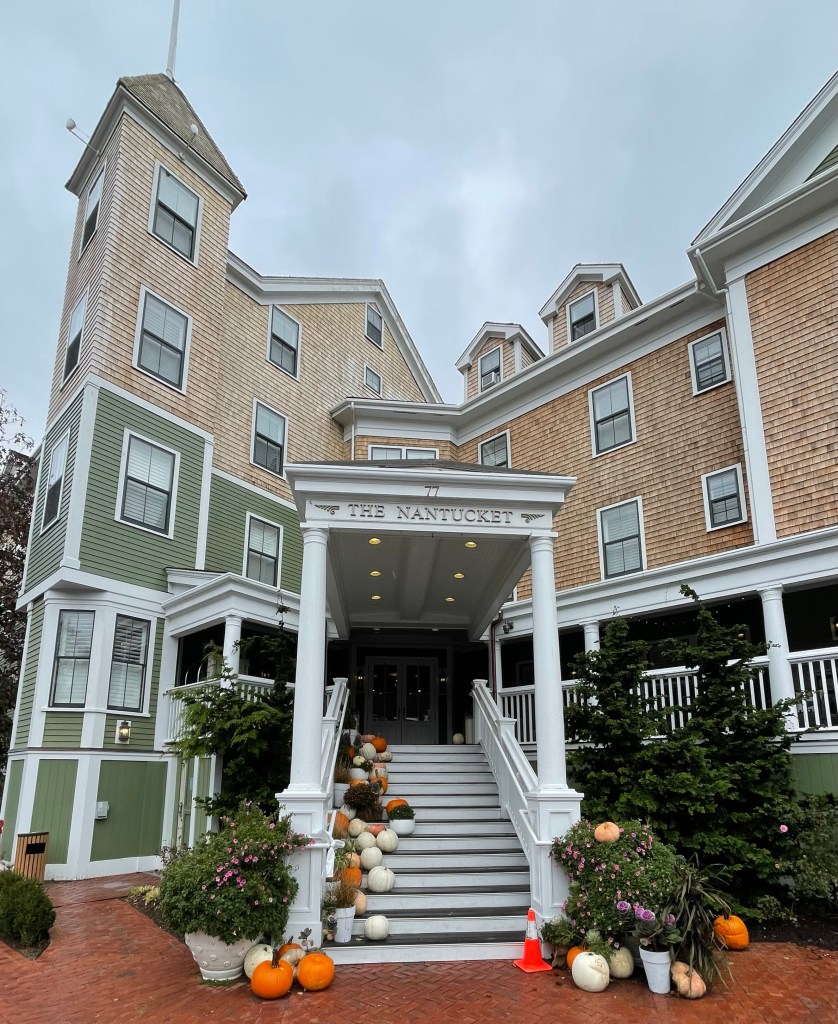
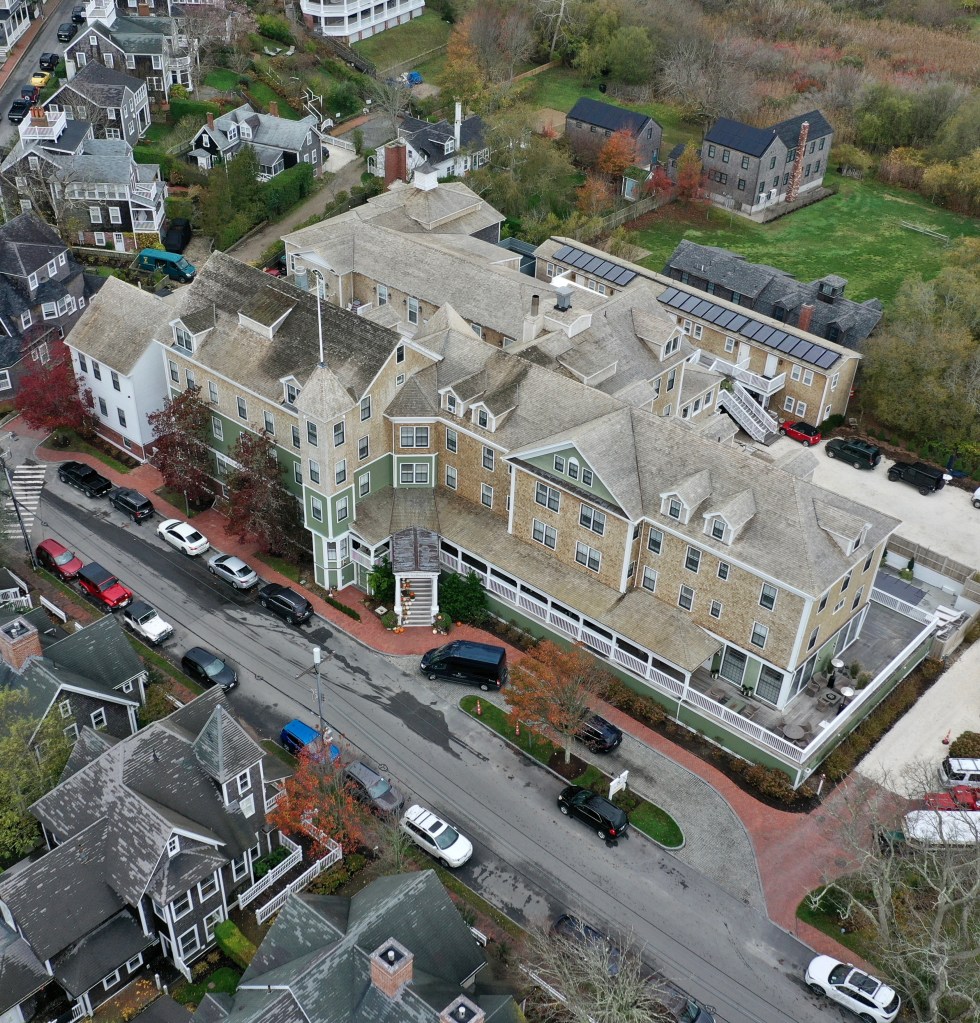
The Nantucket Hotel // 1891

In 1888, Charles F. Folger of Philadelphia purchased the former Elijah Alley house on Easton Street, just north of the main village of Nantucket. Folger hired carpenter Edwin R. Smith to design and build a new grand hotel for summer residents of Nantucket. Originally named the Point Breeze Hotel, the grand resort opened in the summer of 1891. The Queen Anne style hotel contained forty sleeping apartments in the upper floors and was dominated by a corner tower with billiards rooms and a bowling alley in the raised brick basement. Business was booming, and by the early 20th century, Folger expanded the hotel adding the east wing in the Colonial Revival style. In 1925, a fire destroyed the original Point Breeze Hotel, leaving just the East Wing. By this time, the days of the grand, wooden hotels was coming to a close. The Nantucket Institution for Savings acquired the hotel during the Great Depression, until 1936 when Gordon Folger Jr., grandson of the Point Breeze’s original proprietor, purchased the hotel and renamed it after himself, as the Gordon Folger Hotel. By the end of the 20th century, the building sat underutilized, the early 2000s when Little Gem Resorts purchased the hotel, seeking to restore this historic property back to her former glory. The original 1891 hotel was rebuilt in 2012, even down to its iconic corner tower, and the hotel was renamed The Nantucket. The hotel is open year-round and is lavish inside and out, providing you with a sense of home even when on vacation in the middle of the Atlantic!
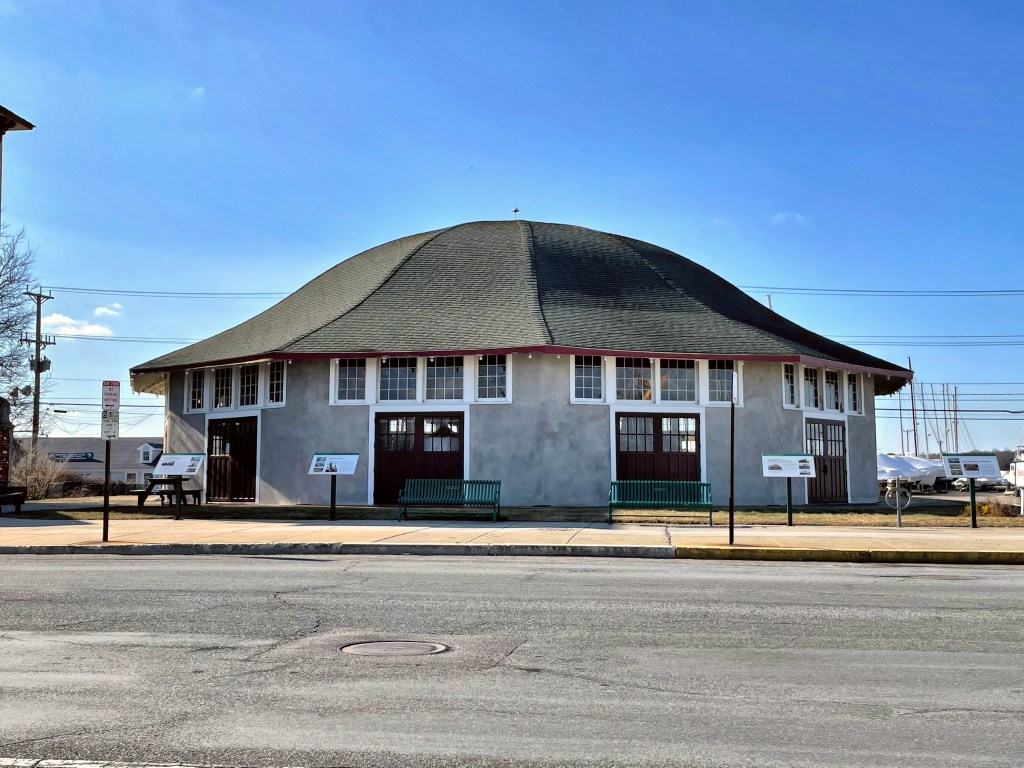
Paragon Park Carousel // 1928

The Paragon Park Carousel at Nantasket Beach in Hull, was built in 1928 for the Paragon Park Amusement Park (featured previously), and is possibly the oldest remaining feature of the old park. When the park was created, many wealthy summer residents clutched their pearls as their quiet, peaceful summers would soon be overrun by those looking for rides and pleasure. From its inception in 1905, Paragon Park placed a carousel at the hub of its amusement attractions, just south of the main entrance gate. While this was just the first of several carousels to be installed in the park, its inclusion in the earliest iteration of Paragon Park shows the importance of the form as an attraction. The current carousel was built in 1928 by the Philadelphia Toboggan Company for Paragon Park, the carousel featured two chariots pulled by two horses each and had four rows of horses (66 in all). One of only 18 four-row carousels ever produced by Philadelphia Toboggan Company it is some forty feet in diameter. Housed in a specially built twelve-sided stucco structure to protect the delicate motor and paint in poor weather. When Paragon Park was sold to developers in 1986, parts of the carousel ride were auctioned off, but most were purchased by a locally organized preservation committee. That same year, it was moved a short distance to its present location to save it from the wrecking ball. It is now operated by the Friends of the Paragon Carousel.

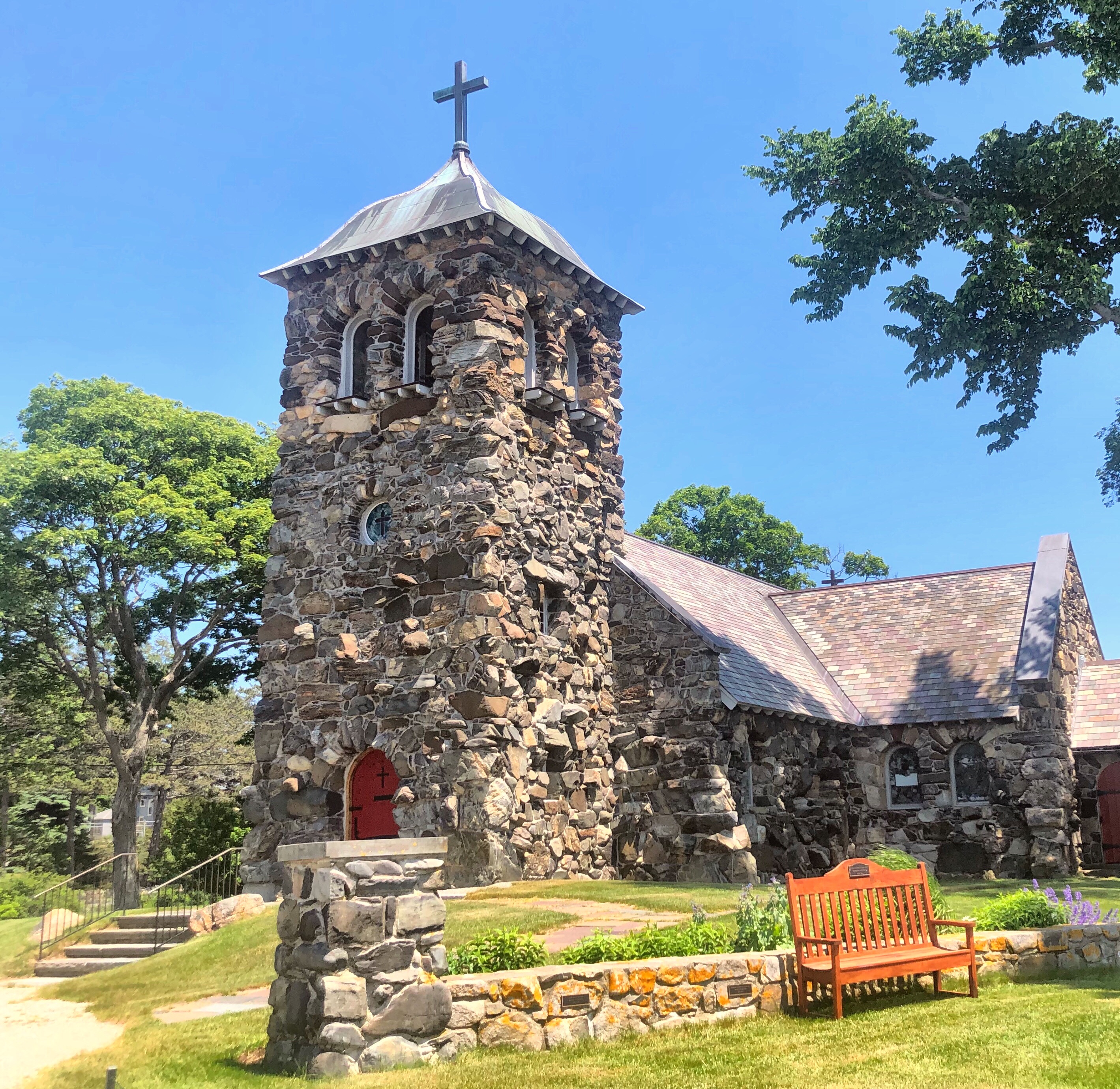
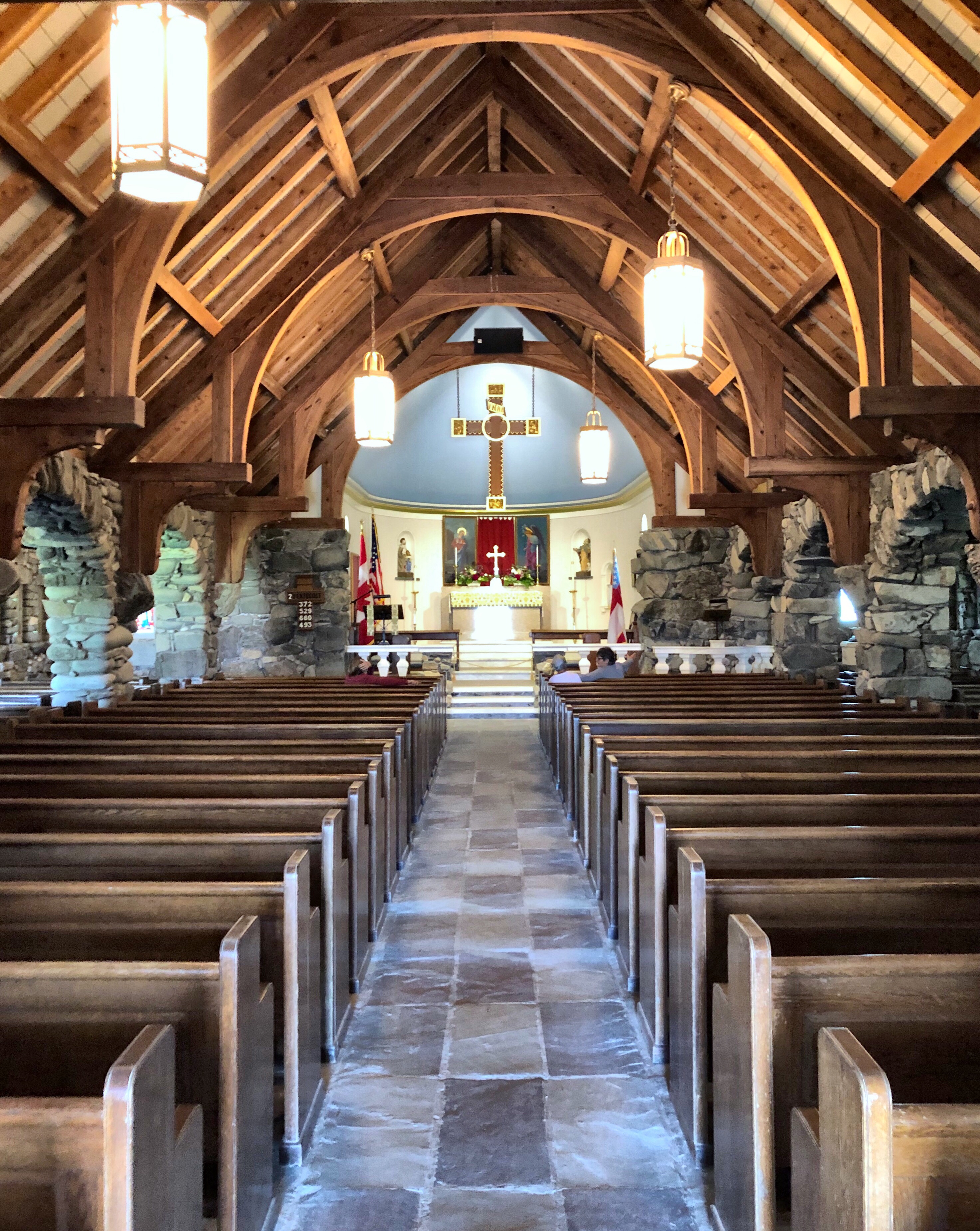
St. Ann’s by-the-Sea Episcopal Church // 1892

Saint Ann’s by-the-Sea Episcopal Church in Kennebunkport is possibly my favorite building in the seaside town. As the Cape Arundel summer colony of Kennebunkport was rapidly developing in the 1880s, summer residents needed a place to worship and sought an appropriate location close to their mansions. Boston architect Henry Paston Clark sketched up some conceptual drawings for a stone chapel pro-bono as he already had active commissions in the town and summered there himself. Funds were raised and the current site was donated by the Kennebunkport Seashore Company, who developed the neighborhood. The cornerstone was laid on August 22, 1887. Five years later construction was completed, and the church was debt-free. The large sea-washed stones were hoisted and dragged to the church site during the winter of 1886-1887, and work on the building began May 27, 1887. The same sea-washed stones that grace the building’s exterior were also used for the interior of the church and sacristy. The roof over the central part of the church (the nave) is framed with hard pine hammer beam trusses and the floor is cleft slate.

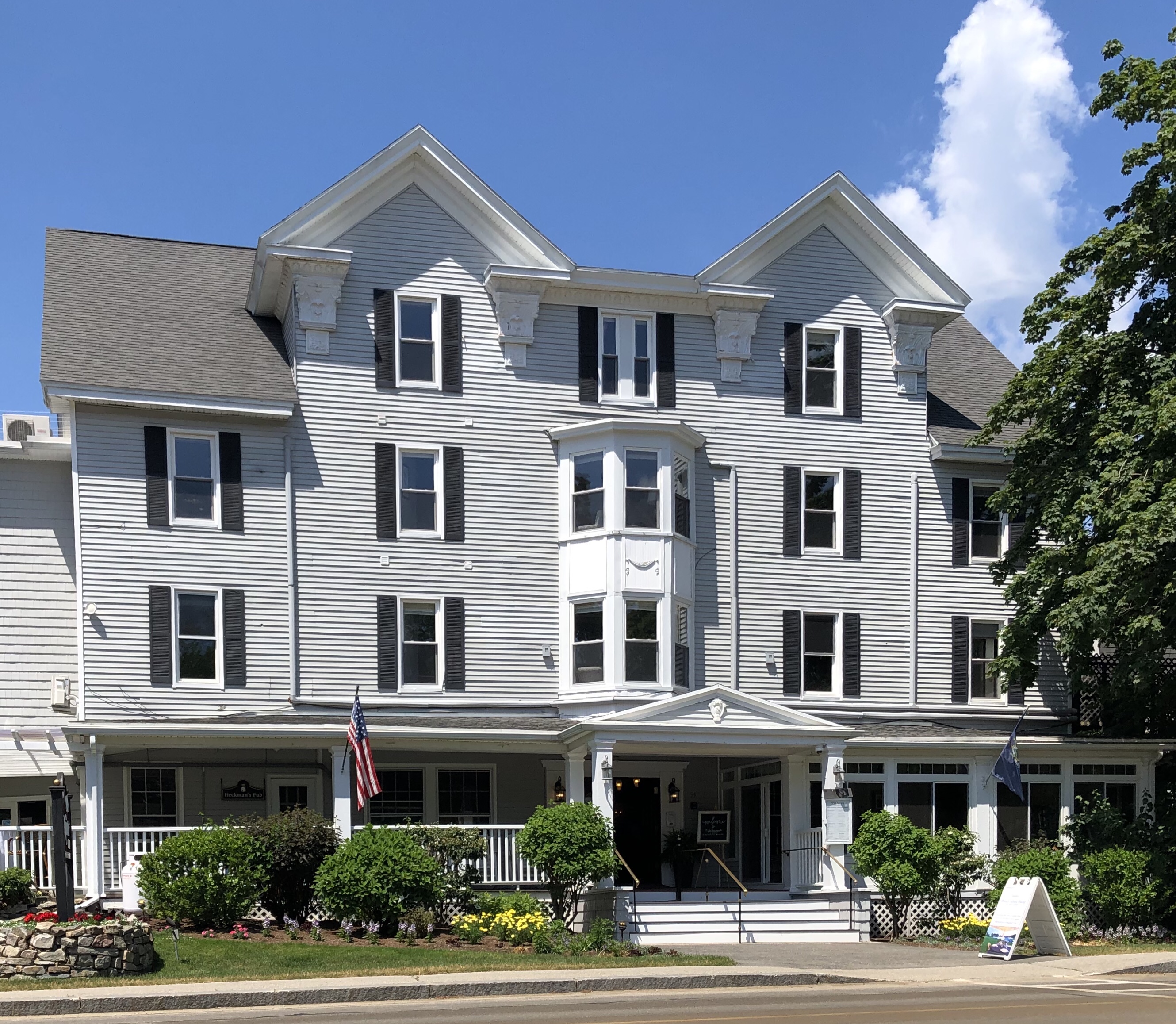
Nonantum Resort // 1884

In the late 1800s, many coastal New England communities – including Kennebunkport – became summer resort towns and colonies for upper and middle class families. To accommodate families, who would arrive to these small towns by the train-load, many wealthy citizens constructed luxury hotels which offered longer term stays compared to what we think of hotels today.

The Nonantum Resort in Kennebunkport was named from a Native American word meaning ‘blessing’ or ‘prayer’, but has become synonymous with ‘family’, the word was chosen as the building was believed to have been constructed on land where Native Americans traded with early settlers. Opened on the Fourth of July in 1884, the hotel was constructed for Captain Henry Heckman, the original owner. The building was a fairly modest, late Italianate design until alterations and additions in the 1890s added a Colonial Revival motif, with pilasters capped with Corinthian capitals and cartouches; however, many features have been removed.