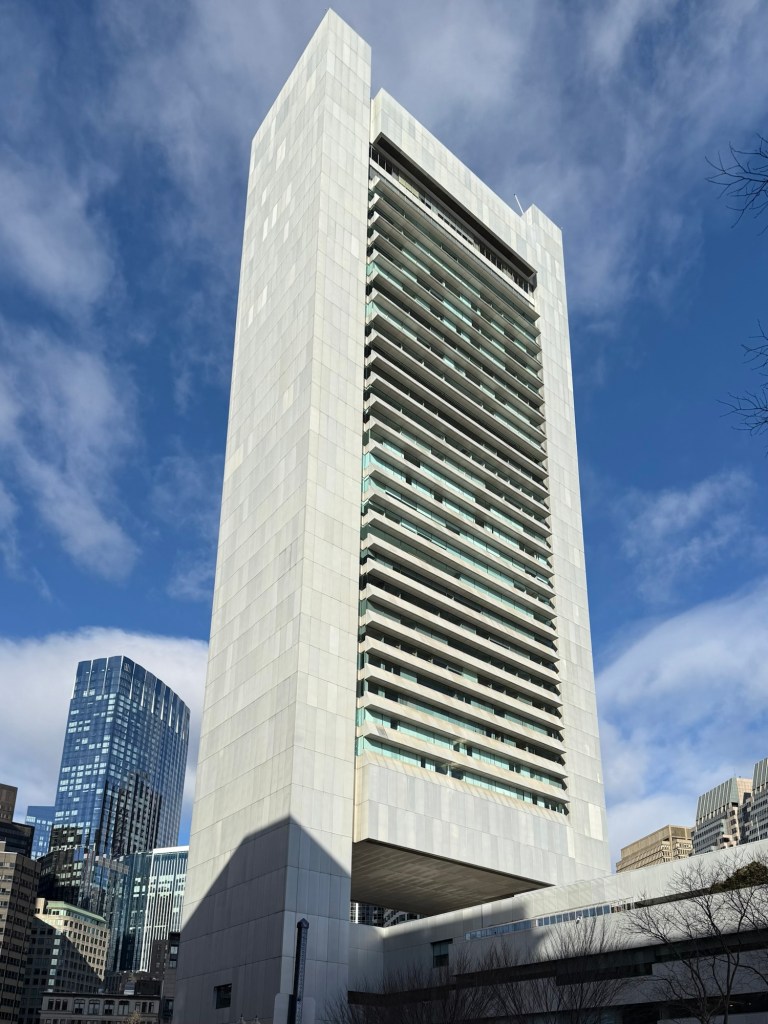
Established by Congress in 1913, the Federal Reserve System is the nation’s quasi-public central bank. Its primary functions are to set monetary policy, supervise and regulate banking institutions, maintain a stable financial system, and provide financial services to the U.S. government, the public, and domestic and international financial institutions. Organized in 1914, the Federal Reserve Bank of Boston is one of 12 district banks across the country and serves the six New England states. Construction for the Boston Reserve’s Renaissance revival bank was begun in 1920 and finished in 1922, but was outgrown in the second half of the 20th century. The original building would be landmarked and is now known as the Langham, a luxury hotel. Planning began on a newer office and a site was acquired on waterfront land cleared from Urban Renewal in the late 1960s. The current building was constructed between 1972 and
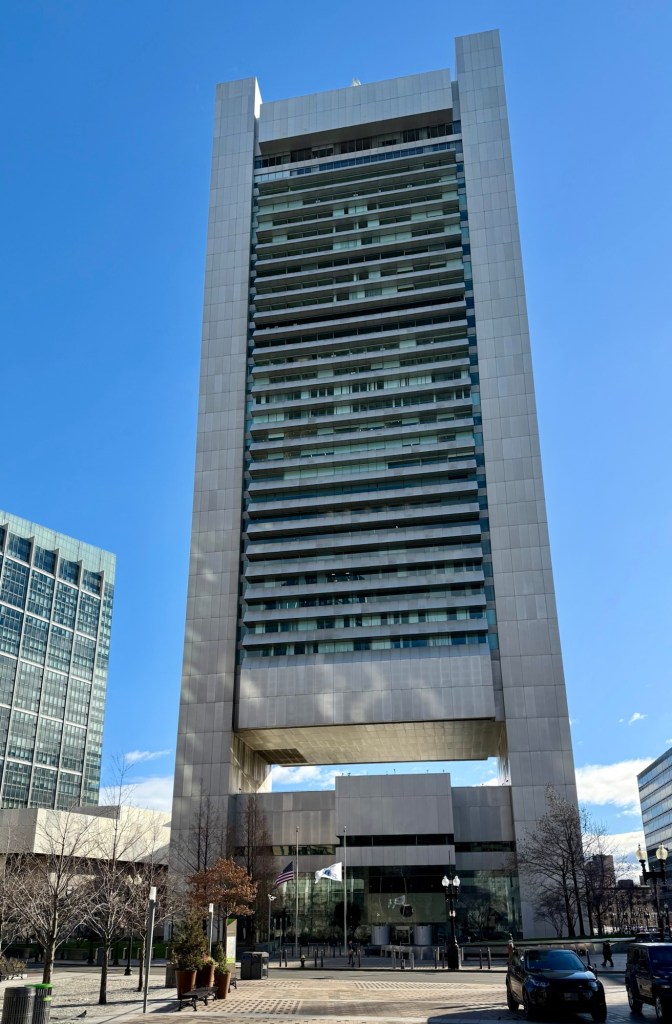
1974, and occupied by the bank in 1977. Designed by the firm Hugh Stubbins & Associates, the complex occupies a full city block, with the 32-story tower and a 4-story section serving as the bulk of the mass. A 600-ton major steel structure called a “truss” marks the beginning of the tower’s offices above the breezeway. The exterior is natural anodized aluminum, which acts as a curtain wall and weatherproof facing. The aluminum spandrels or “eye-brows” shade the building interior from the sun in the summertime and allow more sunlight in the winter months. Love it or hate it, this building is extremely significant architecturally for its Modern design and materiality, and for its engineering. It has become a visual landmark and anchor into Boston’s dense Downtown.

 Buildings of New England