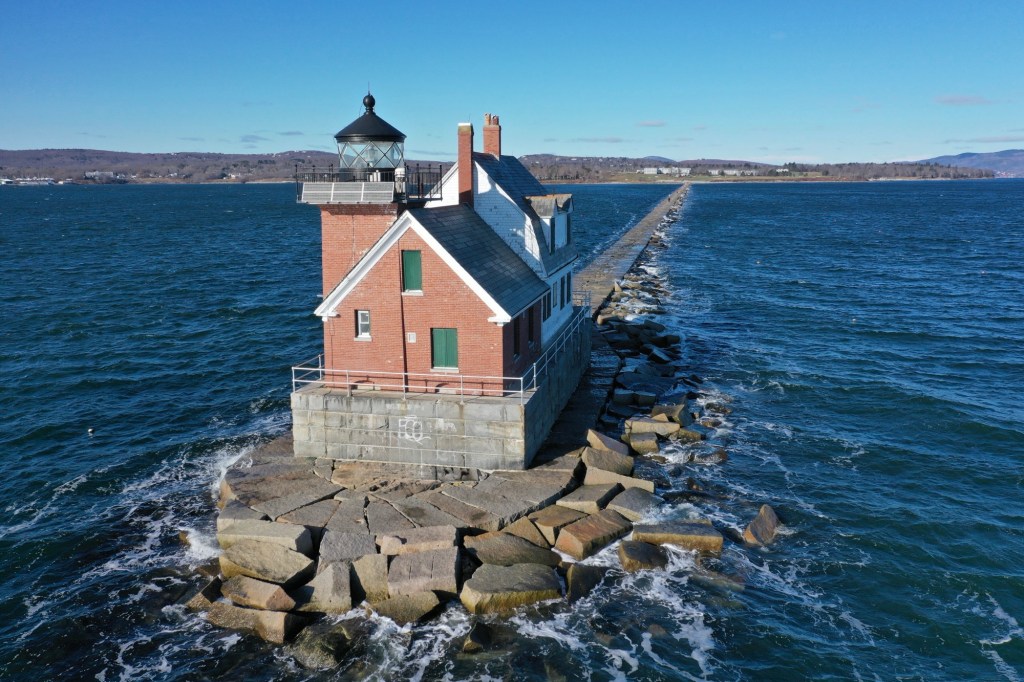
Rockland Harbor Breakwater Light // 1902

The Rockland Harbor Breakwater and Lighthouse is arguably the most iconic structure in the coastal town of Rockland, Maine. As Rockland was a major port and harbor, relying on the transportation of lime and shipbuilding for its economy, protecting the harbor was of paramount importance. Major storms in the 1850s highlighted the need for improved harbor protection, but federal appropriations for a breakwater were not approved until 1880. Between 1880 and 1900 the United States Army Corps of Engineers, under a series of Congressional appropriations, built the breakwater, a 4,364 foot long wall in the harbor built of locally quarried blocks of granite. It is truly a feat of engineering! The lighthouse standing at its end was added in 1902. The iconic breakwater is accessible by those who brave the crashing waves and distance to the end of the nearly mile-long walk out to the lighthouse. The structure is today maintained by volunteers and the City of Rockland.
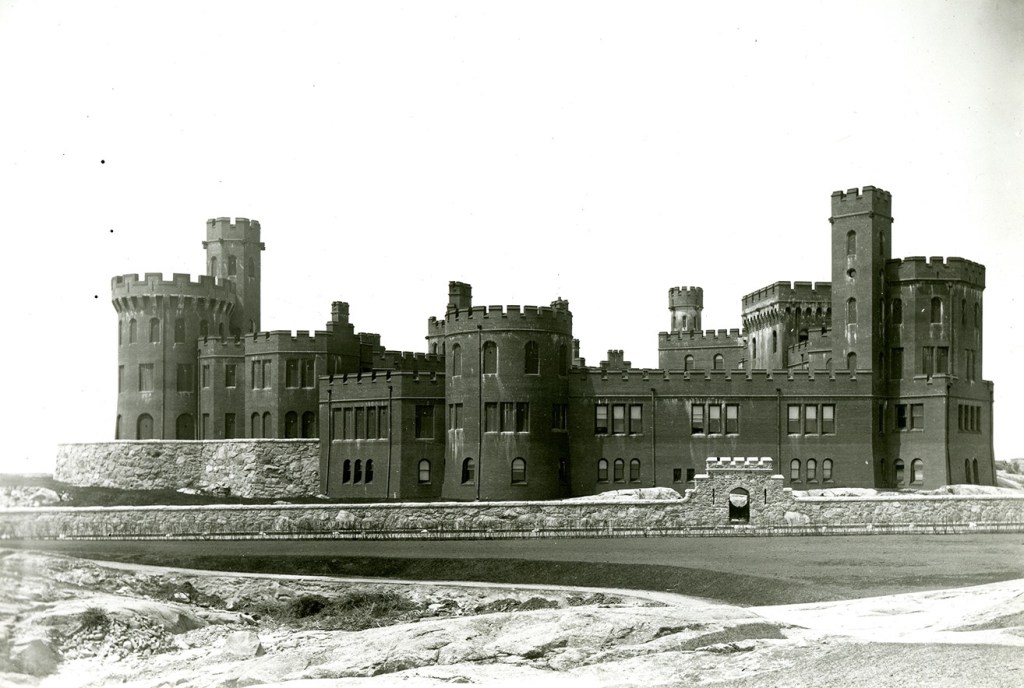
“Breakwater” – Charles W. Lippitt Mansion // 1899-1924

Photo courtesy of Providence Public Library

Rhode Island is home to some amazing old homes, but “Breakwater”, the Charles W. Lippitt Mansion was NOT one of them! Former Governor, Charles Warren Lippitt (1846-1924), the son of Governor Henry Lippitt, wanted to be a member of Gilded Age society in Newport, after spending his time in Providence all year, so he had this absolute fortress built. Poor taste did not run in the family, as his father’s Providence mansion was very tasteful (featured on here previously). Breakwater was built on the southern tip of Newport, ironically across the street from Edith Wharton’s tastefully designed cottage, Land’s End (also featured on here recently). Wharton used the term “White Elephants” to describe the influx of massive, masonry mansions that replaced the traditional wooden cottages, similar to what she observed with the Vanderbilt estate, The Breakers. It is understood now why Edith Wharton abruptly moved when this monster of a house was built right next door! Architect Robert H. Robinson designed the fortress – erh I mean house…- and it remained on the site only until Lippitts death in 1924, when the castle was demolished by his son to make the property more marketable for sale. The property was purchased in 1926 by John Russell Pope, an architect, designed his own Tudor style home, “The Waves” (featured on here previously) atop the ruins of the previous estate. MUCH better!