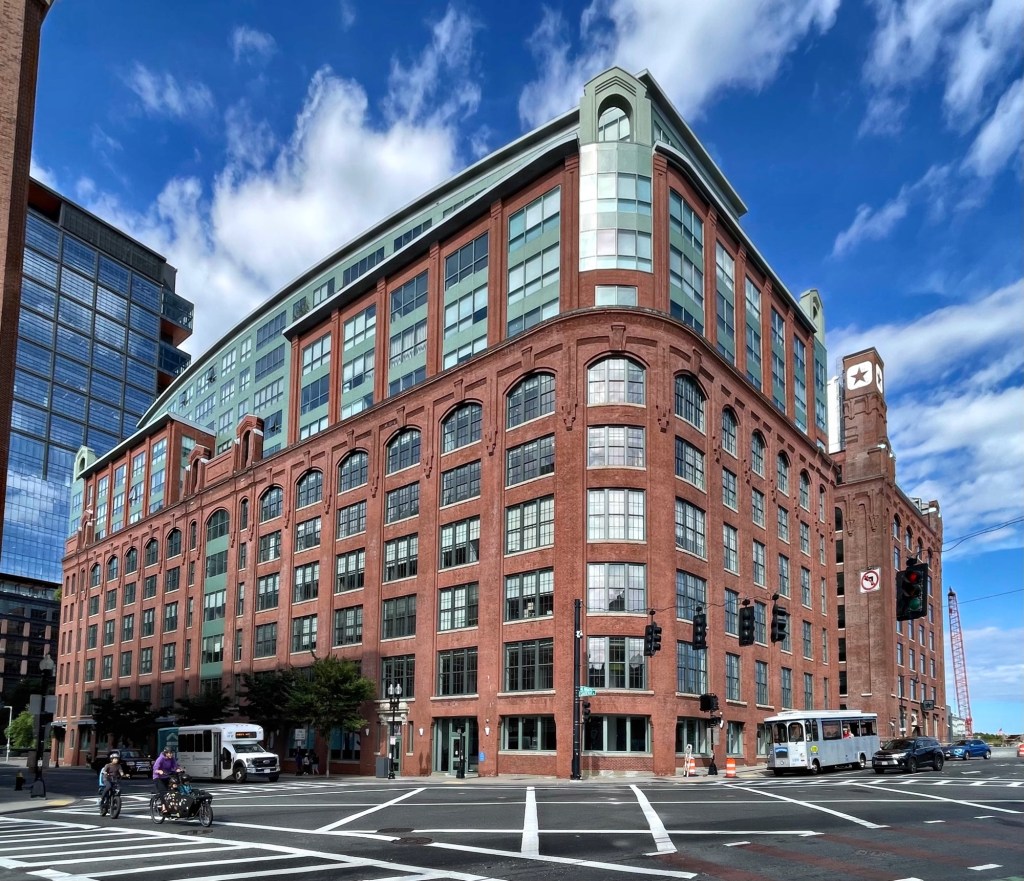
Originally constructed in 1906 for the Austin Biscuit Company, this building on Causeway Street serves as both a gateway into Boston from the north and as an excellent example of adaptive reuse with thoughtful additions. The massive structure, which was originally two separate but connected buildings are a significant example of the panel brick construction with Romanesque detailing. Part-owner of the site, Edmund Dwight Codman hired his brother, architect Stephen Russell Hurd Codman (1867-1944) and business partner Constant-Desire Despradelle (1862-1912) to design the building which was immediately rented out to the Austin Biscuit Company and the American Glue Company. When opened, the Boston Daily Globe wrote that it was “…a large new building of a thousand windows, a building which on fine days is flooded with sunshine and good air”. By the late 1900s, the building was altered and suffering from deferred maintenance, with an unknown fate. Luckily by 2001, the local architectural firm of Finegold Alexander, was hired to re-envision the building. They converted the two connected buildings into a unified mixed-use residential condominium and retail/office complex. The adaptive reuse of this building provided for 108 dwelling units in the top six floors (in the addition), offices on floors two through six, retail space on the first floor and garage parking in the basement. This is one of my favorite success stories in Boston architecture and historic preservation!
 Buildings of New England