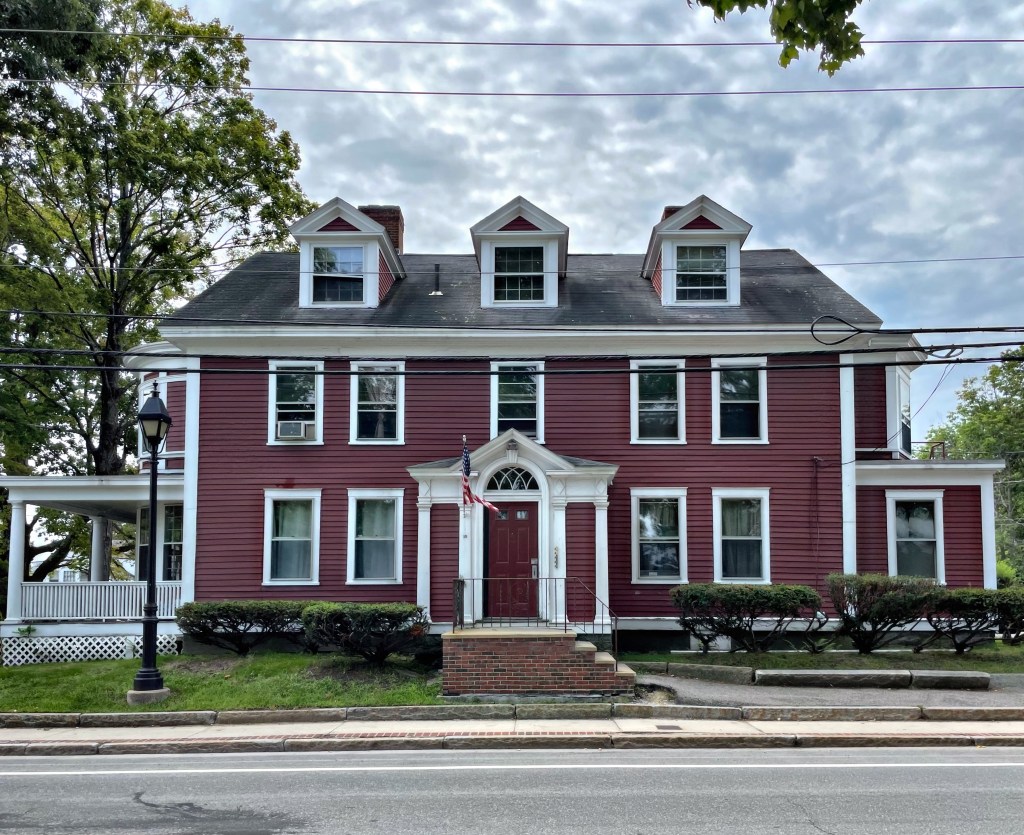
“Red Tower” // 1780 & 1895

One of the most interesting homes in Durham, NH, sits right on Main Street, and while lacks much of its original grandeur, the house still has a story to tell. When mining engineer, Hamilton Smith met and married Alice Congreve while working in London, the couple envisioned and planned for a sprawling gentleman’s farm in New England to retire to. In 1895, the couple purchased the 1780 Rev. Blydenburgh home on Main Street, a large Federal style mansion. When Alice and Hamilton retired to the Red Tower in 1895, they set about renovating the estate into a jewel of the Gilded Age. They added a three-story tower to the rear of the home, large additions and Colonial Revival alterations, and they purchased large land holdings behind the house for a working farm. On the farmland, they built a carriage house, creamery, and men’s and women’s accessory buildings (a billiards building and tea house, respectively). Hamilton could only enjoy the home for a couple years until his death in 1900. His widow created the family cemetery at the farthest extent of the property and built the stunning Smith Memorial Chapel (last post). In the 1940s, much of the property was sold off and developed for a residential neighborhood for UNH faculty, and the Red Tower mansion was converted to an apartment house for students.
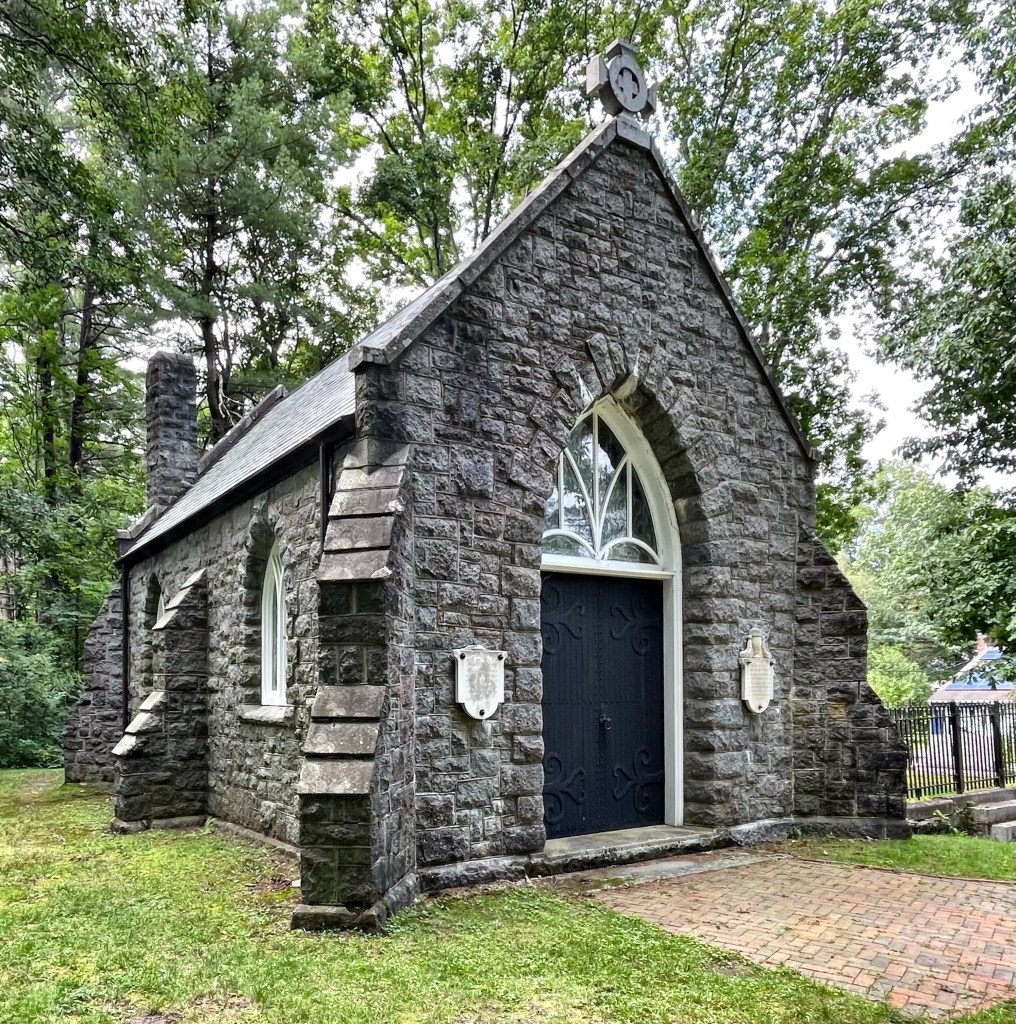
Smith Memorial Chapel // 1900

The Smith Memorial Chapel, located in Durham, NH, was built for and named after Hamilton Smith by his wife, Alice Congreve, in 1900. From their marriage in 1886, Hamilton and Alice Smith lived in England for ten years, where Hamilton worked and lived in mining operations in South Africa. He had a home in New York and by the end of 1895, Hamilton acquired property in Durham to create a country estate (next post). On the Fourth of July in 1900, Hamilton and a family friend went boating downriver on the Oyster River, in Durham along with his two dogs Hana and Joy. While attempting to free the boat after it ran aground, he suffered a fatal heart attack at just 59 years old. Almost immediately, his widow Alice funded a memorial chapel to her late husband on the family cemetery. The Gothic Revival chapel features amazing lancet stained glass windows and stone buttresses resembling old English chapels. Also on the grounds of the cemetery are the burials of Mr. and Mrs. Smith and their beloved dogs, marked by small gravestones. The property, including the small cemetery in which both family members and pets are interred, remained in the family until 1979, when it was donated to the town.

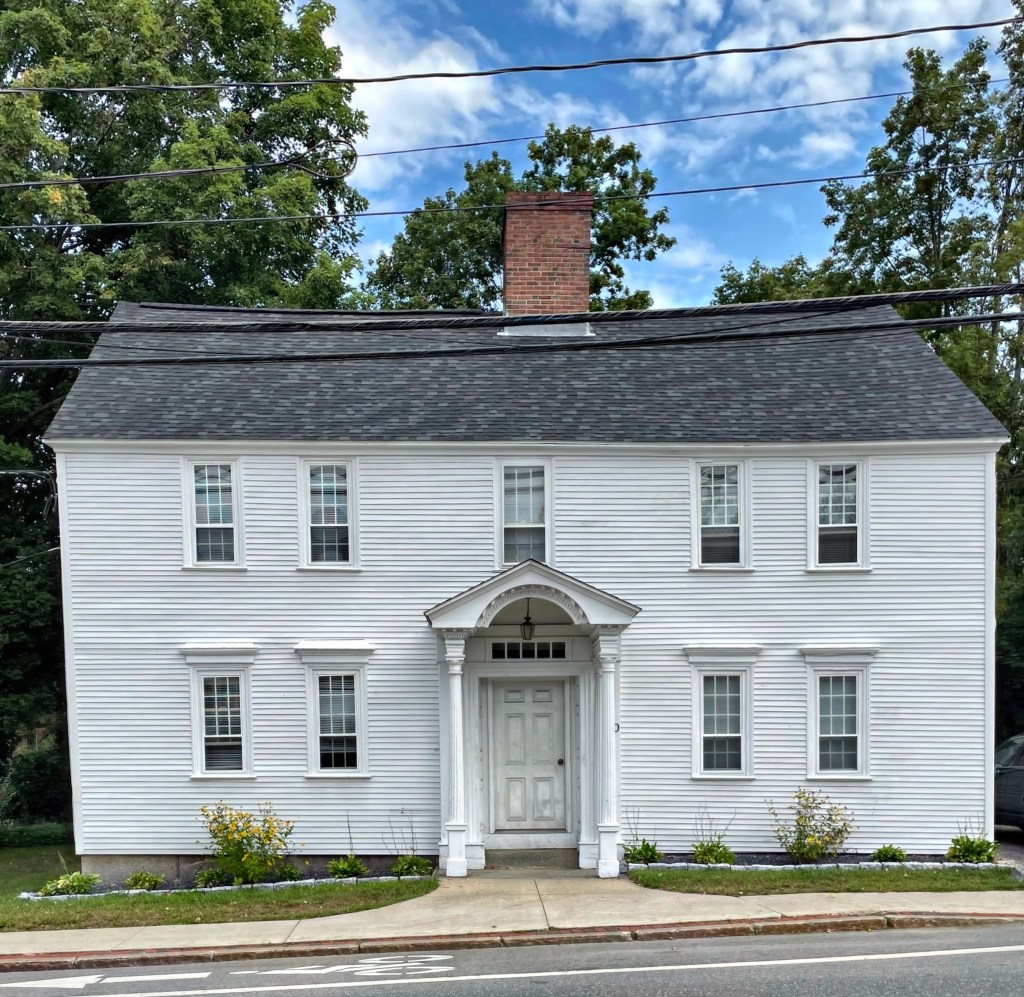
Ebenezer Smith House // c.1785

This home in Durham, NH, was built around 1785 and is among the oldest downtown. The late-Georgian/Federal house was constructed for Ebenezer Smith the year of his marriage to wife, Mehitable. When Ebenezer was 17 years old, he pursued the study of law in the office of John Sullivan, afterwards General John Sullivan, until the breaking out of the war when he followed his mentor to the field, becoming and remaining his aide-de-camp until peace was declared. Upon the conclusion of the war, he resumed his studies, was admitted to the bar and subsequently became a prominent jurist and attorney in Durham. General Lafayette stayed in the Smith house upon his tour of the United States in 1824-5.

Ballard-Hoitt House // 1790

In 1790, Joshua Ballard built this house on a prominent triangular lot on the turnpike connecting New Hampshire’s largest city at the time (Portsmouth) with the future Capital (Concord). The main door is flanked by fluted pilasters and surmounted by a pediment with dentils and strong proportions. The old tavern was purchased in the late 1800s by Charles A. Hoitt, a granger and selectman in town. As with many old homes on Main Street in town, the house was converted to apartments with a small commercial space at the ground floor.

Captain Richardson Tavern // c.1785

The Richardson Tavern on Main Street in Durham, NH, was built shortly after the conclusion of the Revolutionary War by Captain Joseph Richardson (1756-1824). The tavern was sited on a rise, providing views of Mill Pond in the distance. The tavern provided meeting spaces for town officials and juries to meet and discuss important city matters before the construction of the first purpose-built town hall just a block away. The Federal style tavern was “modernized” in the early 20th century with Colonial Revival dormers and eventually was converted into apartments as the ever-growing University of New Hampshire brought more students into town.