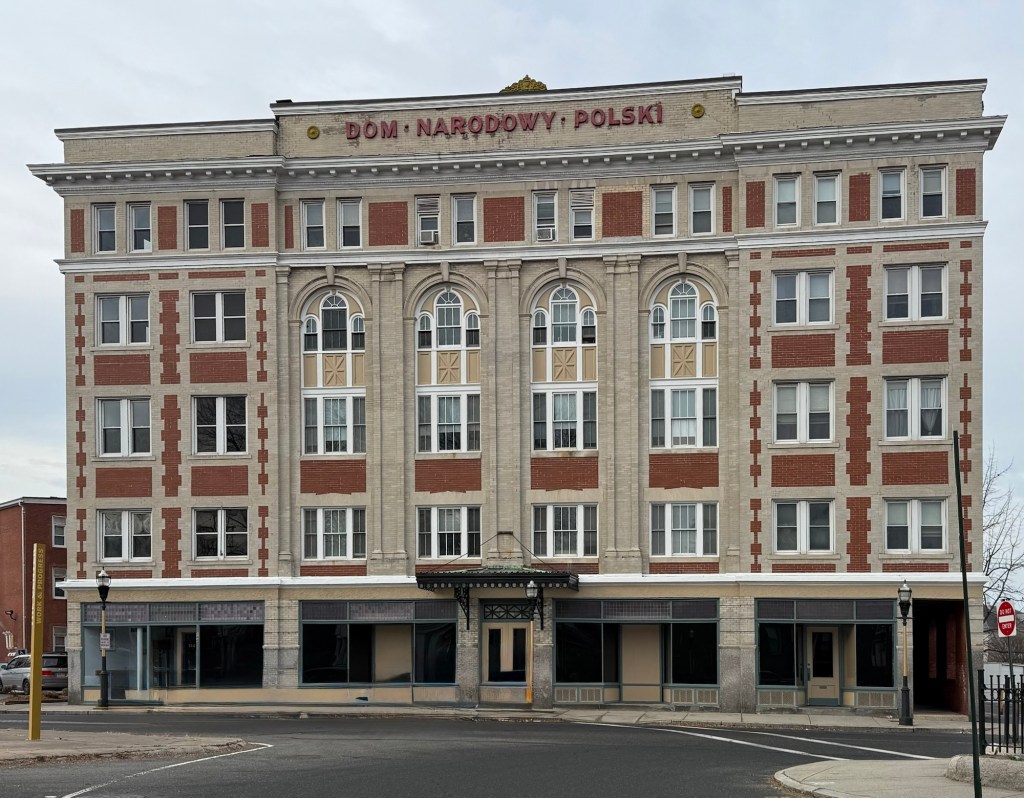
Polish National Home of Chicopee // 1914

The Polish National Home in Chicopee, Massachusetts, was organized in 1910 as a fraternal service organization catering to the needs of the local Polish immigrant and Polish-American communities. The organization was founded at a time where Polish immigrants were settling in Chicopee, finding work at local factories. The Polish population of Chicopee surged in the late 19th into the early 20th centuries from just 200 residents in 1885 to over 9,000 in 1914, the year this building was completed. One of the other goals for the Polish National Home was to provide class space for new immigrants to take classes in the english language and learn to read and write, to become eligible for U.S. citizenship. The club eventually would build this five-story structure on Cabot Street, architecturally rivaling any other building in town. The building was designed by architect Bruno Wozny, a German-born architect who settled in Springfield and ran his own practice. Spaces inside the building included retail stores, a meeting hall, small meeting rooms, and apartments for some recently arrived immigrants and their families. The adjacent building was designed by local architect George Dion, as a bowling alley and billiard hall. After WWII, the building was converted almost entirely to residential use, which remains today.

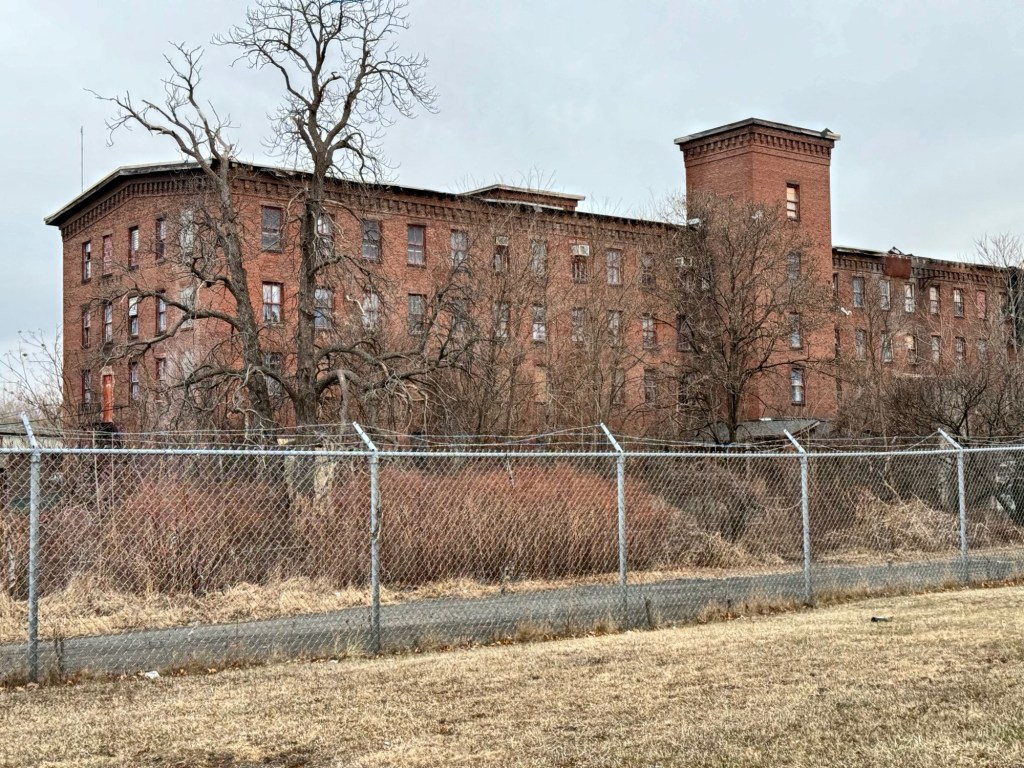
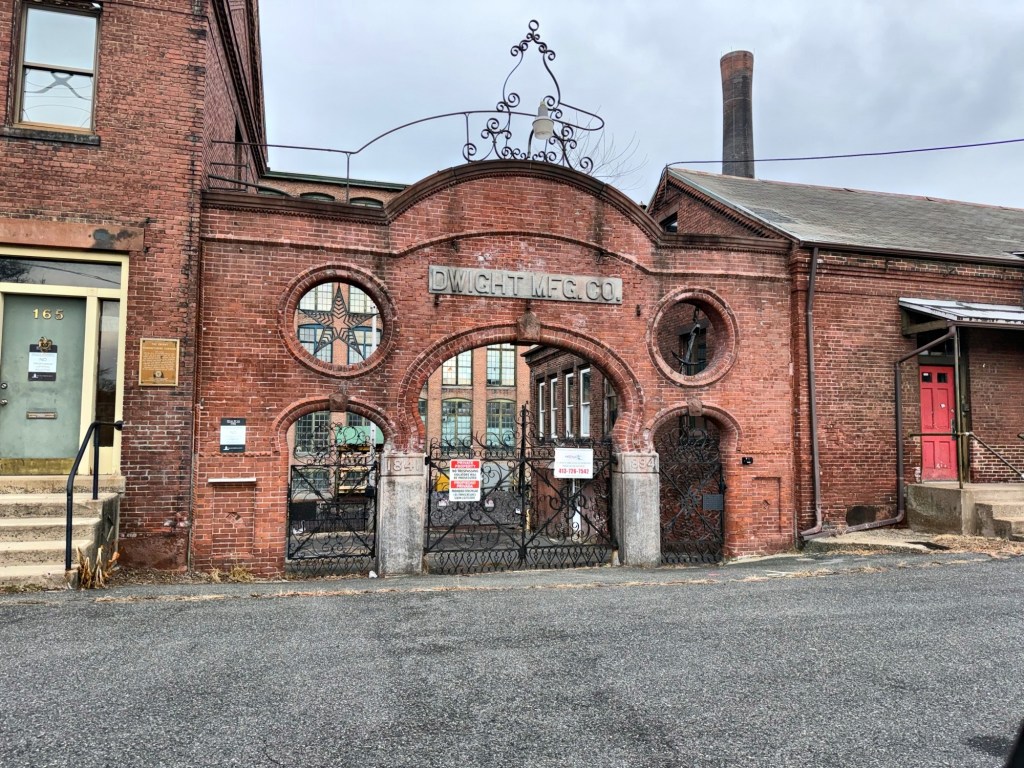
Dwight Manufacturing Company Complex // 1841+

The Dwight Manufacturing Company is named for Edmund Dwight (1780-1849) of Boston, an industrialist who envisioned an industrial town on the Chicopee River. Dwight, having a country home in Chicopee, had begun a venture with his brother, Jonathan, at Chicopee Falls creating the Chicopee Manufacturing Company, to produce cotton cloth. Due to the company’s immediate success, the Dwights along with other investors formed the Springfield Canal Company in 1831, with the goal to create the “new Lowell”, an industrial community in what is now Chicopee Center. In 1856, the Dwight Mills purchased some earlier mill complexes, creating the Dwight Manufacturing Company and consolidating all their cotton cloth manufacturing into one organization. In addition to the mills, the Company also built employee housing
along Depot and Dwight Streets, a stone’s throw from the mills. The creation of employee housing allowed the Company to attract new employees in particular women and children, nearly all immigrants, who could be housed together. My favorite part of the complex is the entrance gate, built in 1894, connecting the Office and Cloth Building. It is amazing to think of all of the people who passed through this portal, working long hours for a better life. Overtime as production methods changed and technology evolved, nearly all the original mills would be replaced or retrofitted. Despite the changes, the Company could not remain profitable and shut down production in 1927 and ultimately selling the land and equipment in 1930. Some smaller manufacturing has since occupied some of these buildings, but they remain largely (if not entirely) vacant, awaiting a new life.

Baldwin-Geleg House // c.1810

This perfect country home was built around 1810, likely for Eli Baldwin (1782-1832) and sits in the Iron Works Village of Brookfield, CT. Eli and his wife Lucy had 10 children at the home before Eli died at just 52 years old. Lucy lived at the home until the family sold the house and she moved into the home of one of her children. In the early 20th century, the property was purchased by Andrew Gereg, who immigrated to Connecticut from Hungary. It remained in the Geleg family until the 1980s. The story is one of the “American Dream” where today, it seems less attainable as 90% of the children born in 1940 ended up in higher ranks of the income distribution than their parents, only 40% of those born in 1980 have done so. This is paired with the limiting of immigration into the country compared to the early 20th century, a symptom of xenophobia, which has impacted immigrants here for centuries. Anyways, here is a well-preserved, historic house!