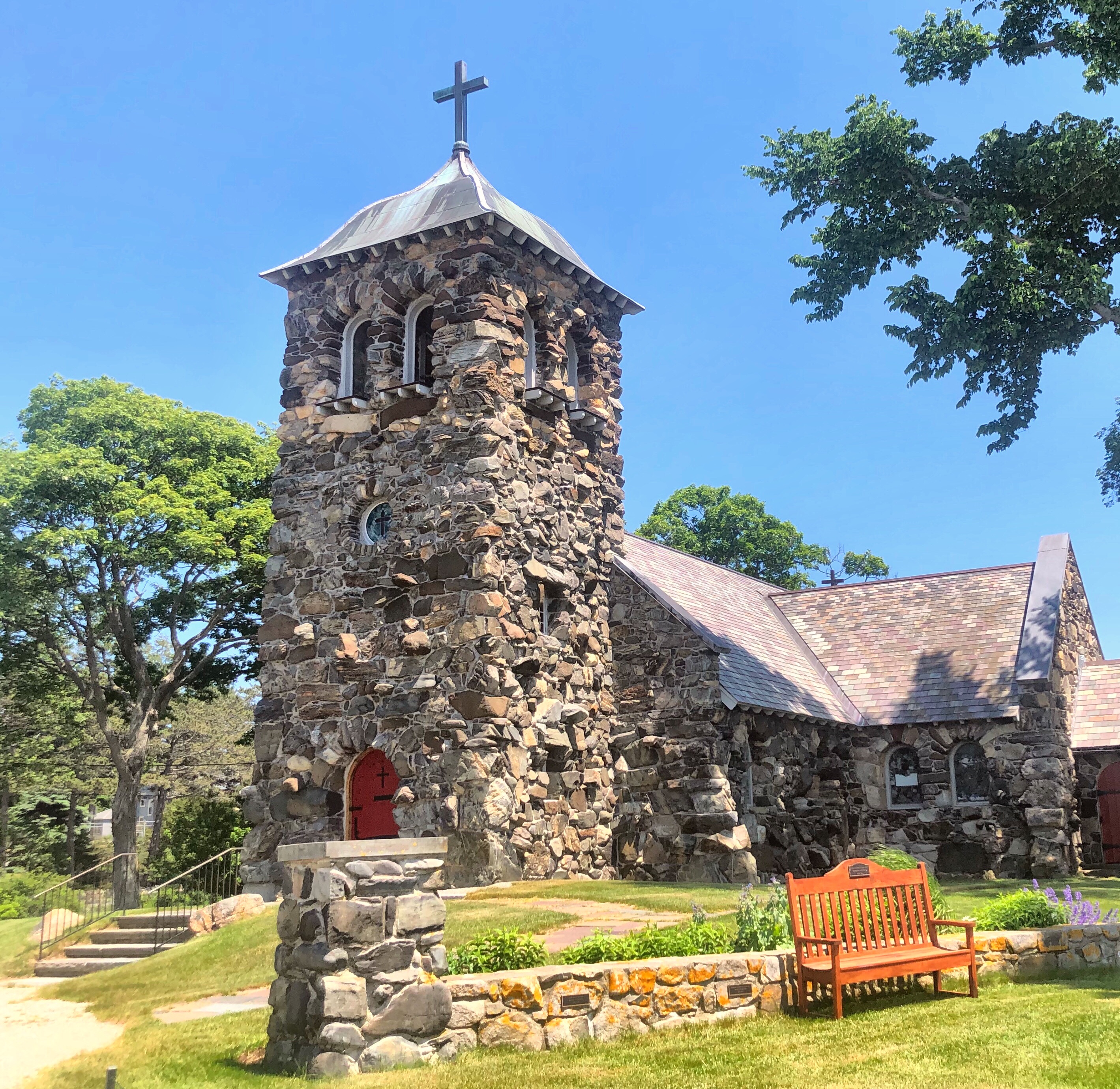
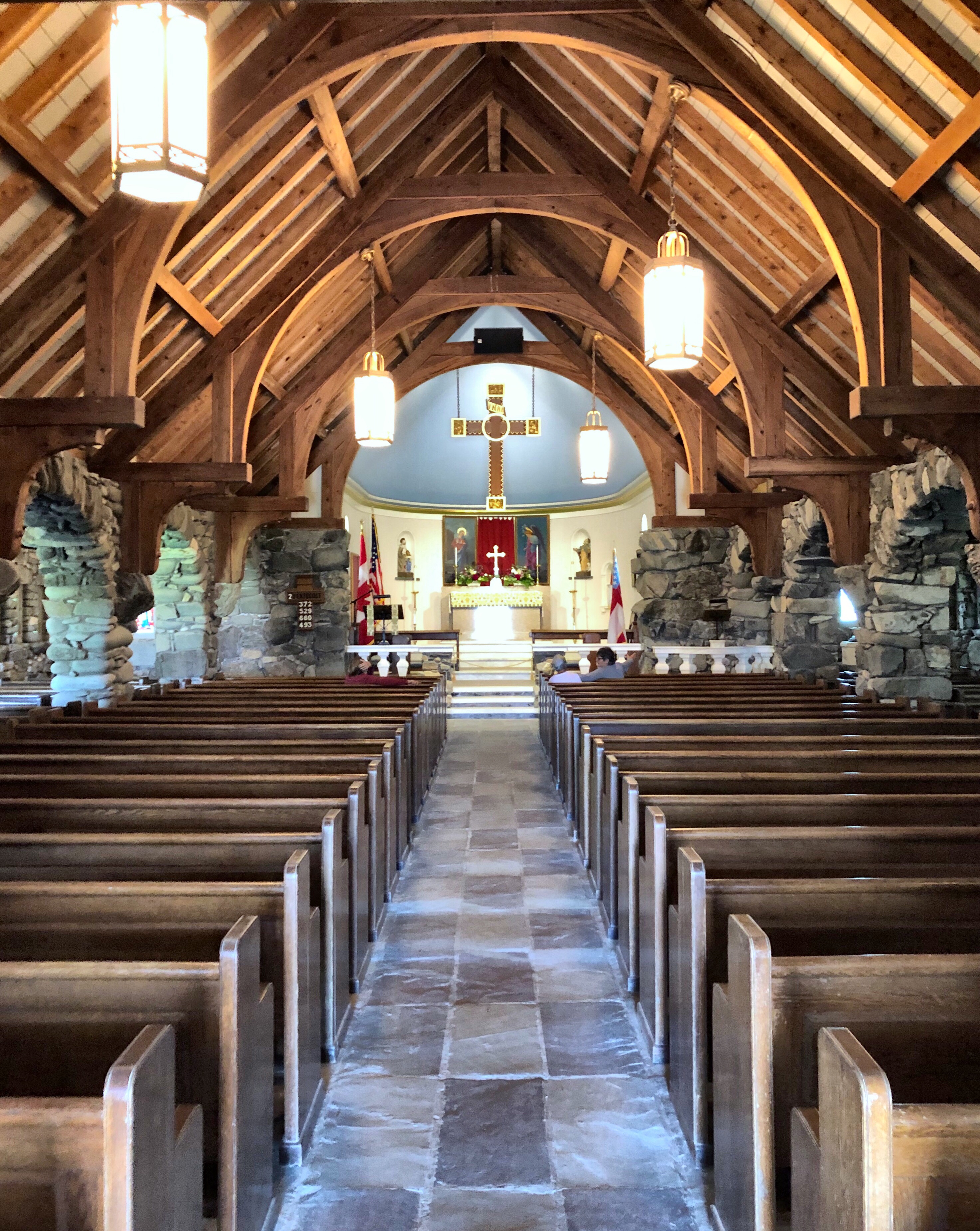
Saint Ann’s by-the-Sea Episcopal Church in Kennebunkport is possibly my favorite building in the seaside town. As the Cape Arundel summer colony of Kennebunkport was rapidly developing in the 1880s, summer residents needed a place to worship and sought an appropriate location close to their mansions. Boston architect Henry Paston Clark sketched up some conceptual drawings for a stone chapel pro-bono as he already had active commissions in the town and summered there himself. Funds were raised and the current site was donated by the Kennebunkport Seashore Company, who developed the neighborhood. The cornerstone was laid on August 22, 1887. Five years later construction was completed, and the church was debt-free. The large sea-washed stones were hoisted and dragged to the church site during the winter of 1886-1887, and work on the building began May 27, 1887. The same sea-washed stones that grace the building’s exterior were also used for the interior of the church and sacristy. The roof over the central part of the church (the nave) is framed with hard pine hammer beam trusses and the floor is cleft slate.

 Buildings of New England