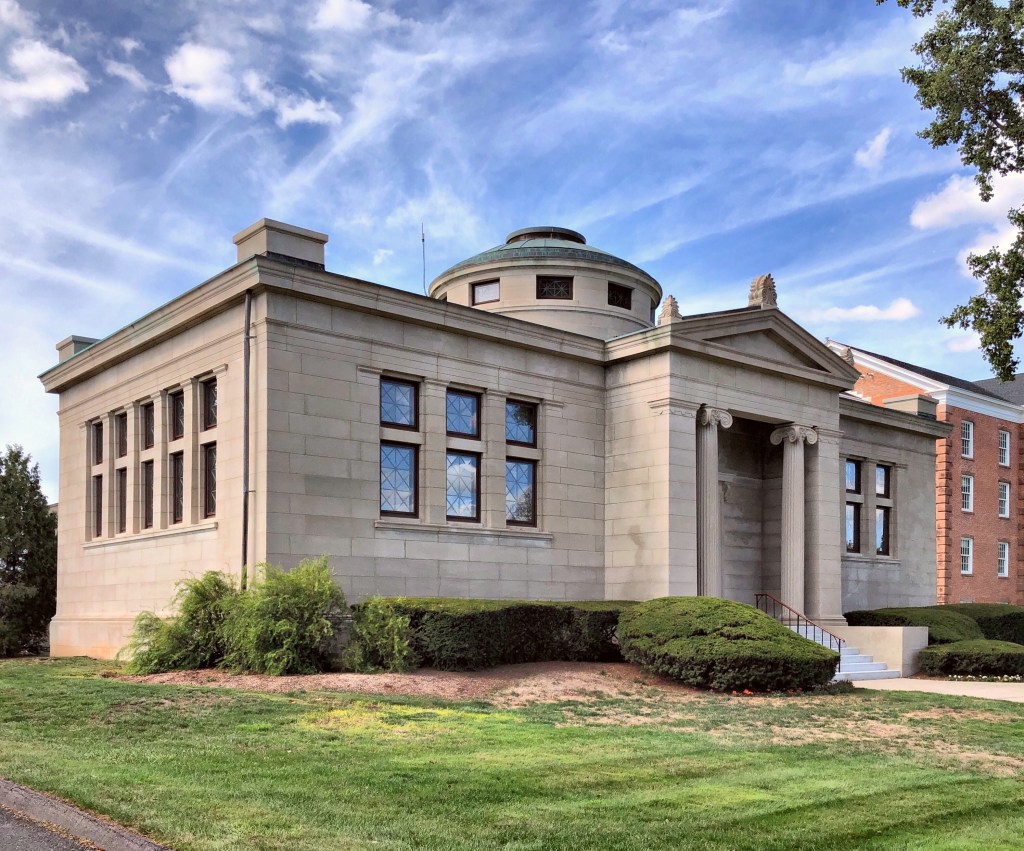
Gifted to the town of Pomfret by Ira Abbott, the Abbott Memorial Library is one of the most stunning little libraries in the State of Vermont. Given to his hometown as a memorial to his parents by Ira Abbott, who was at that time a State Supreme Court justice in the territory of New Mexico. Its architect, Henry M. Francis, used diverse materials — brick, granite, fieldstone, red birch, and pre-stressed concrete, to design the eclectic building. Capped with a red slate roof with terra cotta ridge tiles, the building stands out as one of the most unique buildings in the state and has been extremely well-maintained through its public-privately funded Commission.
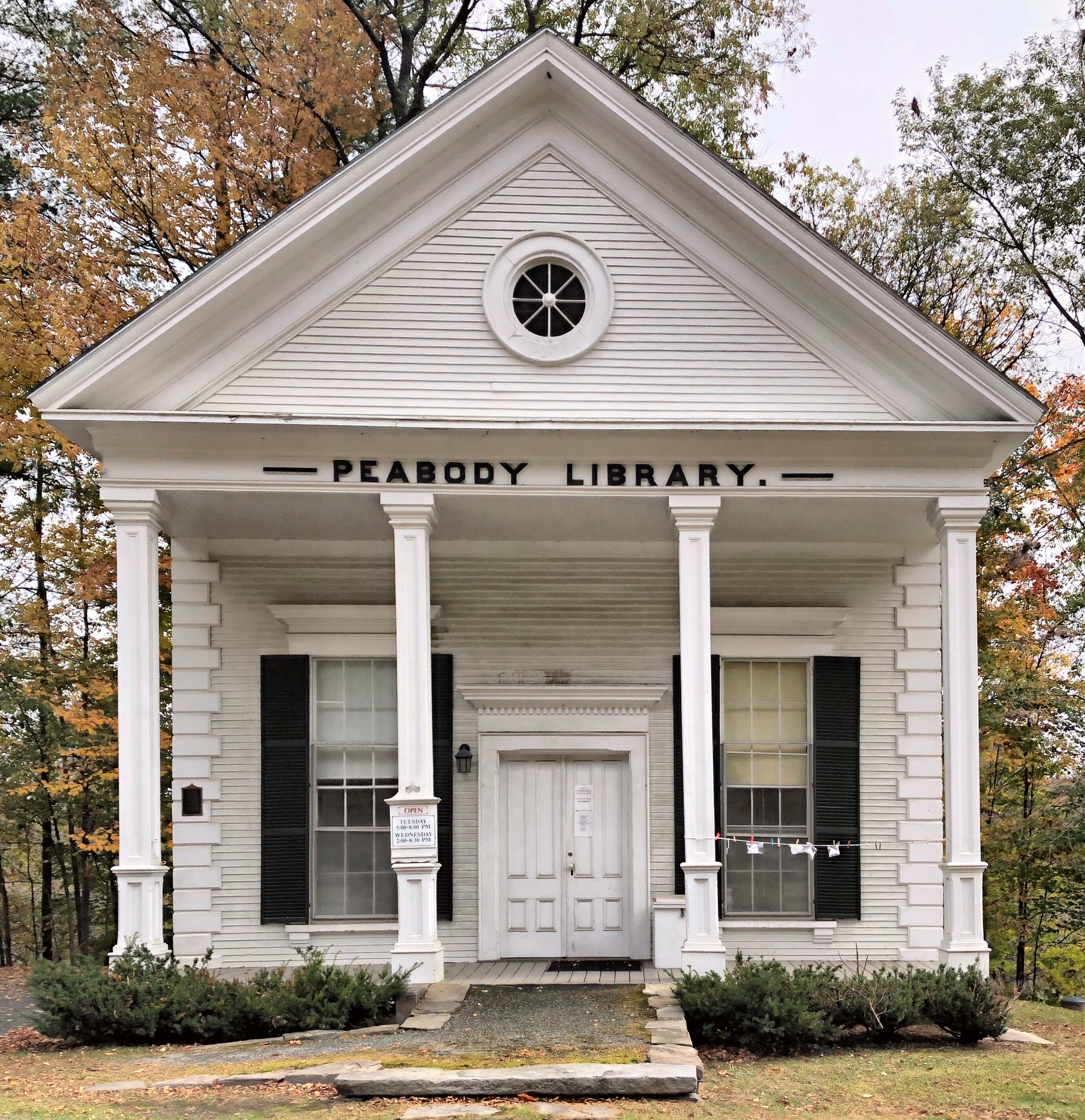
Located in the Post Mills Village of Thetford, Vermont, the Peabody Library is one of the cutest library buildings ever! The library was a gift to the community of Post Mills by George Peabody, one of the first great American philanthropists. Peabody spent some time in Post Mills as a teenager, where his maternal grandfather lived. Peabody’s grant of $5,000 paid for purchase of the land, construction of the building, and acquisition of 1,100 volumes. He also donated funds for other libraries including the Peabody Institute Library in Danvers. The library exhibits a unique blend of characteristics from both the Greek Revival and Italianate Revival styles, being an outstanding representative of the mid nineteenth-century transition in architectural fashion. Oh to see inside this little library!
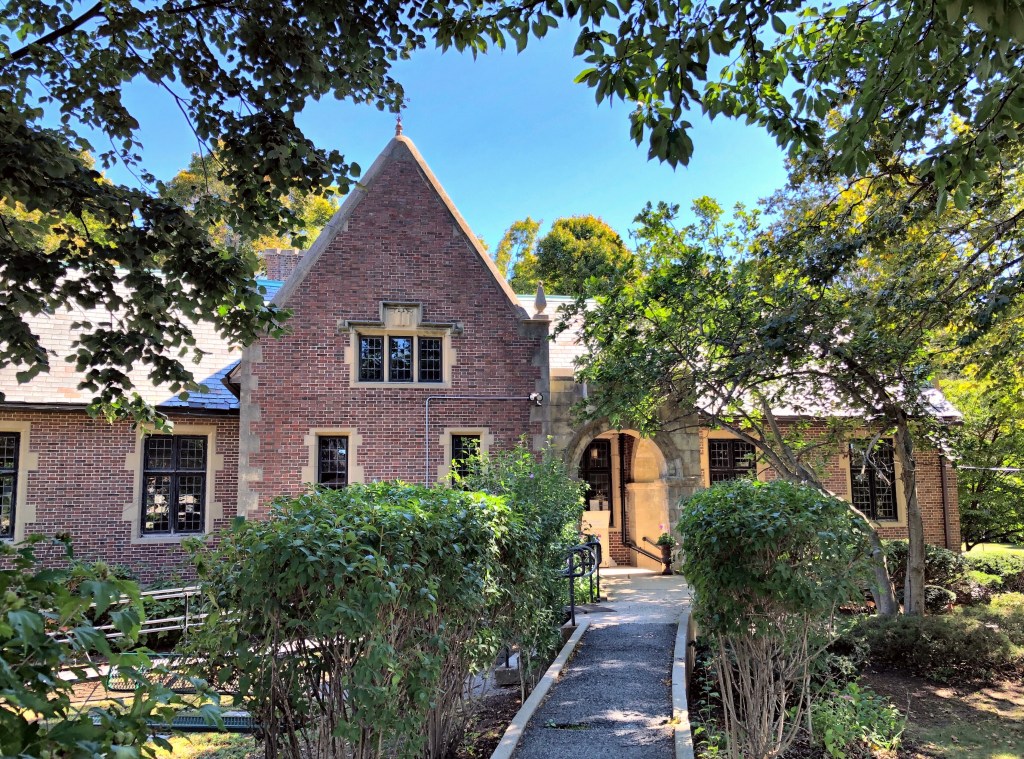
The Waban Branch Library was designed by Gifford LeClear of the architectural firm Densmore, LeClear & Robbins in the Tudor Revival style in 1929. The village of Waban, in the aims of constructing a new public library for the established suburban neighborhood, gathered over $63,000 for the designing, construction and furnishing of the new branch library in Newton. The building is constructed of brick and faced with limestone at the entrance, stone trim exhibits some carvings of books and other library-oriented objects, the building topped by a slate roof.
Between 1900 and 1970, the town of Suffield doubled its population, and the 1899 public library was outgrown. The city gathered funds to construct a new library, knowing that the endowment for the day-to-day operations of the library by Sidney Kent, in memory of his parents, would transfer to a new building as long as the name carried with it. The town hired Warren Platner, an architect, interior designer and furniture designer, based out of New Haven. Platner designed the Modern library with a concrete frame, faced with pink stone and white painted brick above, surrounds a central garden court. The flat coffered concrete roof and overhanging concrete project outwards over the terraced exterior courtyards. The interior is on five floor levels connected by gradual ramps with no stairs inside (at least at the time of construction). The town proposed a plan to demolish the library in 2008, replacing it with a larger library, but it was voted down by residents, saving (what is believed to be) the only free-standing Platner building remaining in the country.
In 1897, Sidney A. Kent, a Suffield native, graduate of Suffield Academy and successful Chicago businessman sought to build a $35,000 library as a memorial to his parents in his home town. Land was purchased from the academy, demolishing a significant academic building, and the new Kent Memorial Library erected. Kent hired architectural giant Daniel Burnham (architect of the famous Flatiron Building in Manhattan) who also designed Kent’s home in Chicago. It sat on the site of land purchased by the first Kent ancestor in Suffield. Sidney Kent furnished nearly 7000 books and periodicals and left an endowment of $25,000. The building was dedicated on November l, 1899. It was eventually outgrown and a new building was constructed across the street.
This mansion in North Adams, MA was built in 1865 for Sanford Blackinton. Blackinton was said to be the first millionaire in North Adams, and his mansion was the most elaborate home ever built in the city. His mill produced woolen goods during the Civil War including cloth for the Union forces. After the Civil War, many factory owners no longer lived amongst their workers, as they formerly had done, but instead built luxurious mansions in other neighborhoods, away from their factories. These large residences were designed in extravagant modern styles to impress the public and reflect the stature of their owners. European materials were even imported to grace these homes, such as the Italian marble fireplaces in the Blackinton Mansion.
Sanford Blackinton built his mansion in the hopes that it would become the ancestral home for his descendants. However, after the death of his widow (their four children died by the 1870s), the mansion was put up for sale in 1896, and was bought by North Adams’s first mayor, A.C. Houghton. He in turn donated the mansion, along with $10,000 for renovations, to the city, to be used as a public library and as a meeting place for the local historical society. He requested that the building be known as the Andrew Jackson Houghton Memorial after his late brother. The home, designed by architect Marcus Fayette Cummings, is a high-style Second Empire mansion with a prominent tower, constructed of red brick with brownstone trim.
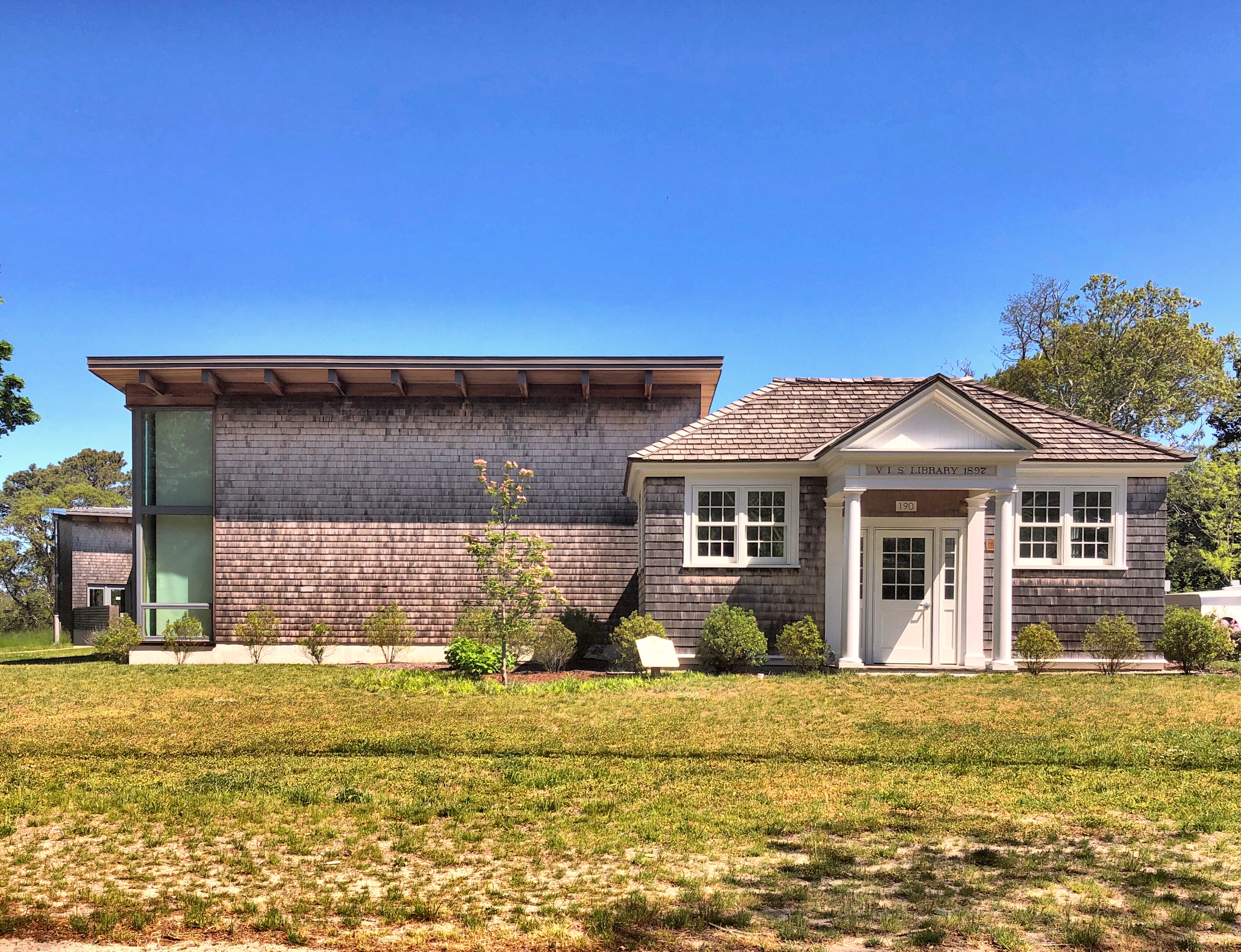
Built in 1897, the ever-charming Eastham Public Library has served the town for over 100 years, constantly adapting and growing to meet the needs of the community. Originally constructed as a one-room hipped-roof shingled library building, the tiny space was appropriate for the town of just 500 people in 1900. By the 1960s, the rear ell was replaced with a large addition, effectively quadrupling the square footage of the library, but keeping the original structure intact. The 1960s addition was eventually deemed insufficient and was replaced in 2016 with the gorgeous modern addition by Oudens-Ello Architecture of Boston. The addition compliments the quaint one-room original structure with the use of materials, yet clearly distinguishes itself as 21st century design.



 Buildings of New England