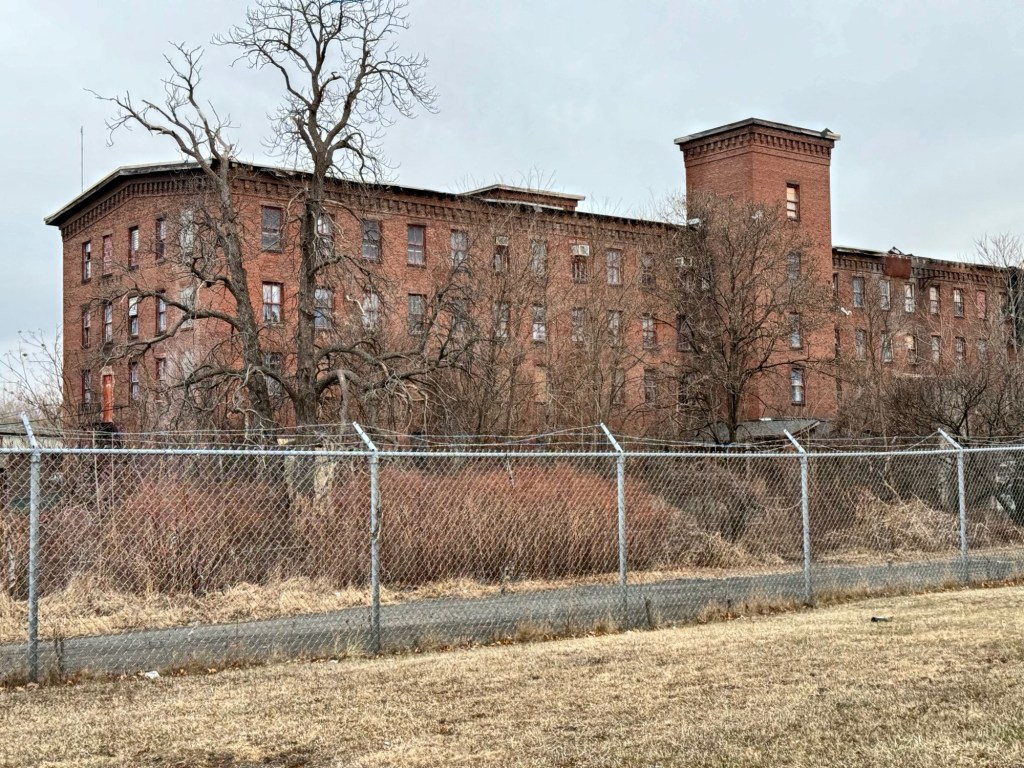
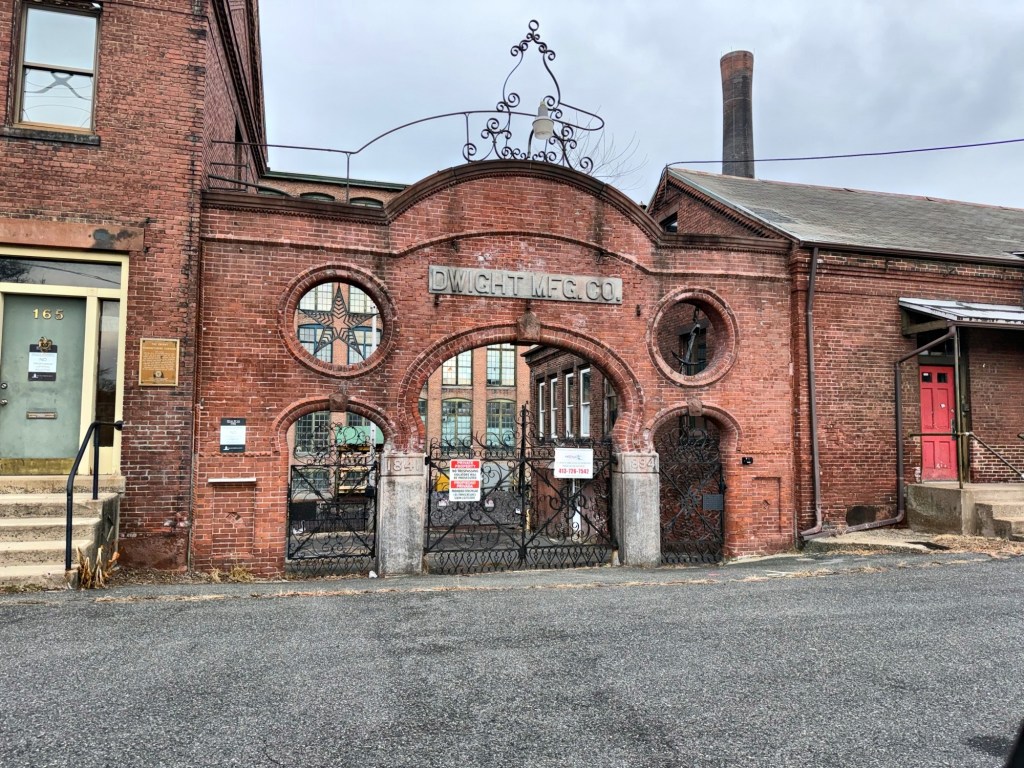
Dwight Manufacturing Company Complex // 1841+

The Dwight Manufacturing Company is named for Edmund Dwight (1780-1849) of Boston, an industrialist who envisioned an industrial town on the Chicopee River. Dwight, having a country home in Chicopee, had begun a venture with his brother, Jonathan, at Chicopee Falls creating the Chicopee Manufacturing Company, to produce cotton cloth. Due to the company’s immediate success, the Dwights along with other investors formed the Springfield Canal Company in 1831, with the goal to create the “new Lowell”, an industrial community in what is now Chicopee Center. In 1856, the Dwight Mills purchased some earlier mill complexes, creating the Dwight Manufacturing Company and consolidating all their cotton cloth manufacturing into one organization. In addition to the mills, the Company also built employee housing
along Depot and Dwight Streets, a stone’s throw from the mills. The creation of employee housing allowed the Company to attract new employees in particular women and children, nearly all immigrants, who could be housed together. My favorite part of the complex is the entrance gate, built in 1894, connecting the Office and Cloth Building. It is amazing to think of all of the people who passed through this portal, working long hours for a better life. Overtime as production methods changed and technology evolved, nearly all the original mills would be replaced or retrofitted. Despite the changes, the Company could not remain profitable and shut down production in 1927 and ultimately selling the land and equipment in 1930. Some smaller manufacturing has since occupied some of these buildings, but they remain largely (if not entirely) vacant, awaiting a new life.
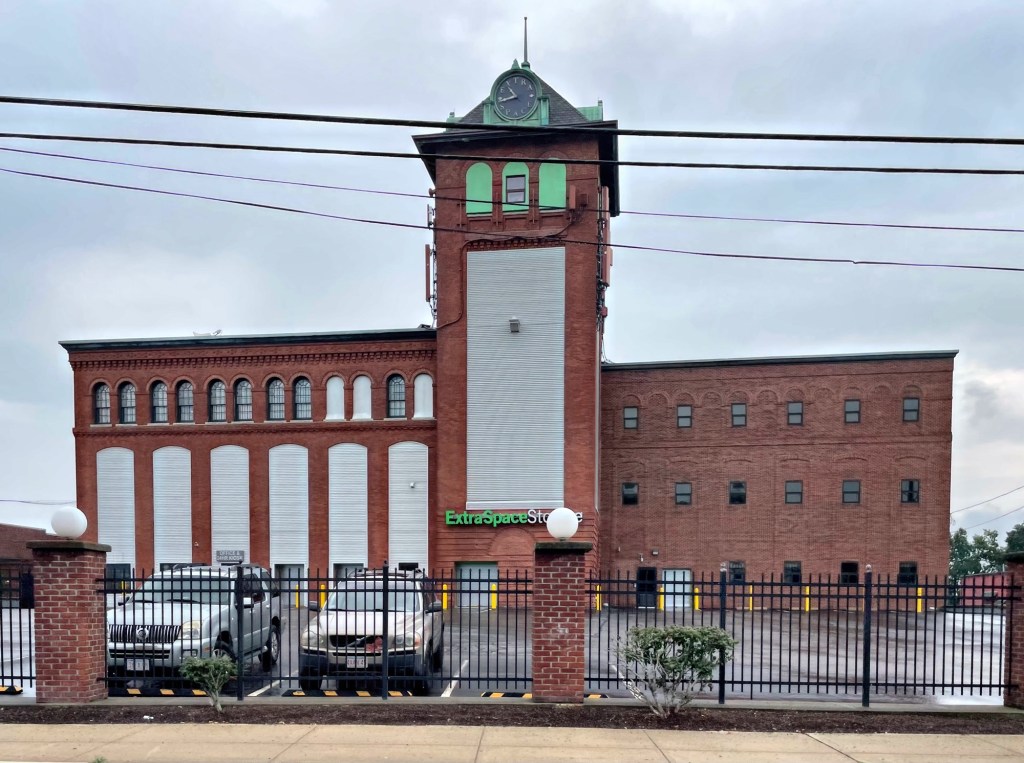
Norwood Press Complex // 1897

Now that is an interesting example of adaptive use… What do you think of this?

The Norwood Press was formed in 1894 by several companies which consolidated to form a company that covered all aspects of the book-making process. AII three companies had been located in Boston, but were lured to Norwood by free land offered by the local Business Association along with tax incentives that were too good to pass up. The underutilized land was quickly redeveloped in the 1890s with the several-building complex built on Washington Street in Norwood, Massachusetts with the largest building (pictured) constructed in 1897. By 1904,the press room of this plant was one of the largest in the U.S.,producing nearly seven million volumes ranging from 100 to 1,600 pages each. By 1917, the Norwood Press employed 600 workers in town! The Romanesque Revival style brick factory stands out for its five-story clocktower with (now enclosed) arches and corbelling. The Norwood Press closed after WWII and the plant was purchased by the Northrup Company. Today, the warehouse is under new ownership and is used as a storage facility, with many of the windows enclosed for the storage units.

Lapham Woolen Mill // 1879

I have gotten a lot of requests recently to feature an old New England mill town, and I wanted to highlight a lesser-known one, so here is Millbury, Massachusetts! This gorgeous mill building was constructed between 1879-1919, impacted by over forty years of growth and design. The Lapham Woolen Mill is the largest and most intact 19th century industrial building in Millbury and sits in the middle of Bramanville, an industrial village in the town, off Singletary Brook, a branch of the Blackstone River. The Lapham Woolen Mill was built on the location of the former Burbank paper mills, which were in operation in Bramanville between 1775-1836. The Lapham Woolen Mill was started in the mid-1870s by Mowry A. Lapham, who oversaw the company’s growth after the Civil War, manufacturing clothing and other woolen goods. After Mowry’s death, the company’s pollution into the brook got the best of them and they disbanded, selling it. The mill was then purchased by Josiah and Edward Mayo, and their business partner Thomas Curtis. The group renamed the existing business the Mayo Woolen Company. The complex was occupied by Steelcraft Inc., a manufacturer of medical supplies, until recently. The building’s future was threatened until 2020, when a proposal to restore the old mill, and add new housing on the site was proposed. Fingers and toes are crossed to see this gorgeous building restored!