Socony-Mobil Building // 1956

One of the unsung heroes of Modernist architecture in New York City is one of my personal favorites, the Socony-Mobil Building at 150 E 42nd Street in Manhattan. Completed in 1956 from plans by Wallace Harrison of the iconic firm of Harrison & Abramowitz, the development stands out amongst the competing masonry buildings and glass skyscrapers in the area. At the time of its completion, the Socony–Mobil Building was the first skyscraper to have its exterior wall entirely clad with stainless steel, as well as being the largest air-conditioned building in the world! The base is clad with opaque blue glass panels framed with stainless steel moldings; above, the tower and wings are clad in over 7,000 embossed stainless steel panels. The firm reviewed over 100 different designs until they settled upon the four raised relief panels: a rosette-like motif for above and below the windows; a large and small rosette to flank the windows, and two variants displaying a design of interlocking pyramids. The panels were likely designed by or inspired by Oskar Nitzchke (1900-91), a German-born designer who worked at the firm and worked on the similar style Alcoa Building (1953) in Pittsburgh. The building was developed as a speculative project, but the largest tenant, the Socony-Mobil Oil Company, later renamed Mobil, helped to give way to the naming rights. The building was landmarked by the City of New York in 2003.

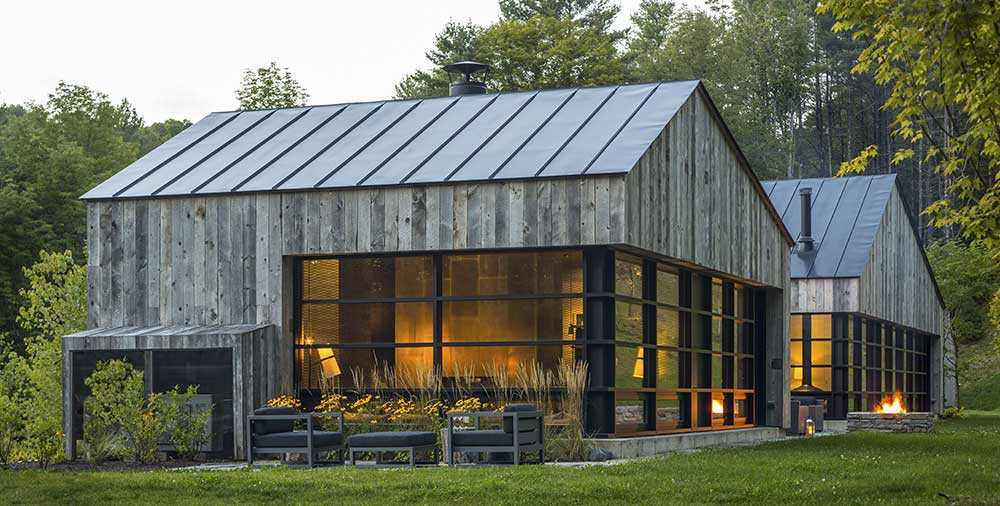
Woodshed // 2017

“Woodshed”. Image by Jim Westphalen.

In researching historic buildings in the tiny Vermont town of Pomfret, I was stunned to find images of this stunning Modern design in the town. Designed by the Birdseye Design Firm based out of Richmond, VT, “Woodshed” was completed by 2017 and serves as both a guest house and entertainment space for the main residence down the road. From the firm’s website, “The project is conceptually inspired by the vernacular woodshed, a familiar and iconic element in the Vermont landscape. The residence is composed of two asymmetric gable roof forms, akin to the traditional woodshed, connected by a central entryway”. The common thought on new construction is typically bland and “cookie-cutter” McMansions or boxy apartments, but this project is a testament to thoughtful Modern design found in even the smallest towns in the region!

New Kent Memorial Library // 1972

Between 1900 and 1970, the town of Suffield doubled its population, and the 1899 public library was outgrown. The city gathered funds to construct a new library, knowing that the endowment for the day-to-day operations of the library by Sidney Kent, in memory of his parents, would transfer to a new building as long as the name carried with it. The town hired Warren Platner, an architect, interior designer and furniture designer, based out of New Haven. Platner designed the Modern library with a concrete frame, faced with pink stone and white painted brick above, surrounds a central garden court. The flat coffered concrete roof and overhanging concrete project outwards over the terraced exterior courtyards. The interior is on five floor levels connected by gradual ramps with no stairs inside (at least at the time of construction). The town proposed a plan to demolish the library in 2008, replacing it with a larger library, but it was voted down by residents, saving (what is believed to be) the only free-standing Platner building remaining in the country.

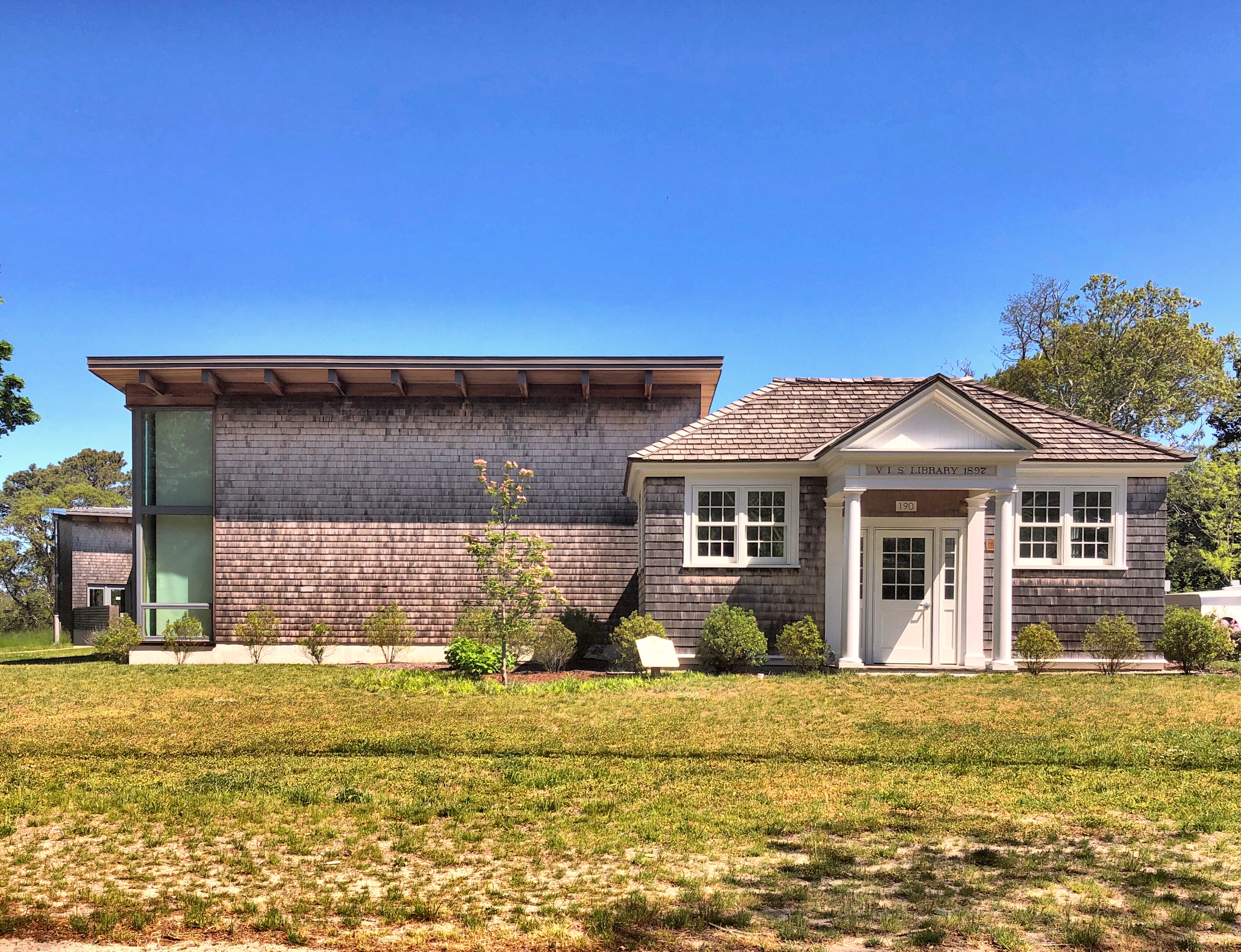
Eastham Public Library // 1897

Built in 1897, the ever-charming Eastham Public Library has served the town for over 100 years, constantly adapting and growing to meet the needs of the community. Originally constructed as a one-room hipped-roof shingled library building, the tiny space was appropriate for the town of just 500 people in 1900. By the 1960s, the rear ell was replaced with a large addition, effectively quadrupling the square footage of the library, but keeping the original structure intact. The 1960s addition was eventually deemed insufficient and was replaced in 2016 with the gorgeous modern addition by Oudens-Ello Architecture of Boston. The addition compliments the quaint one-room original structure with the use of materials, yet clearly distinguishes itself as 21st century design.