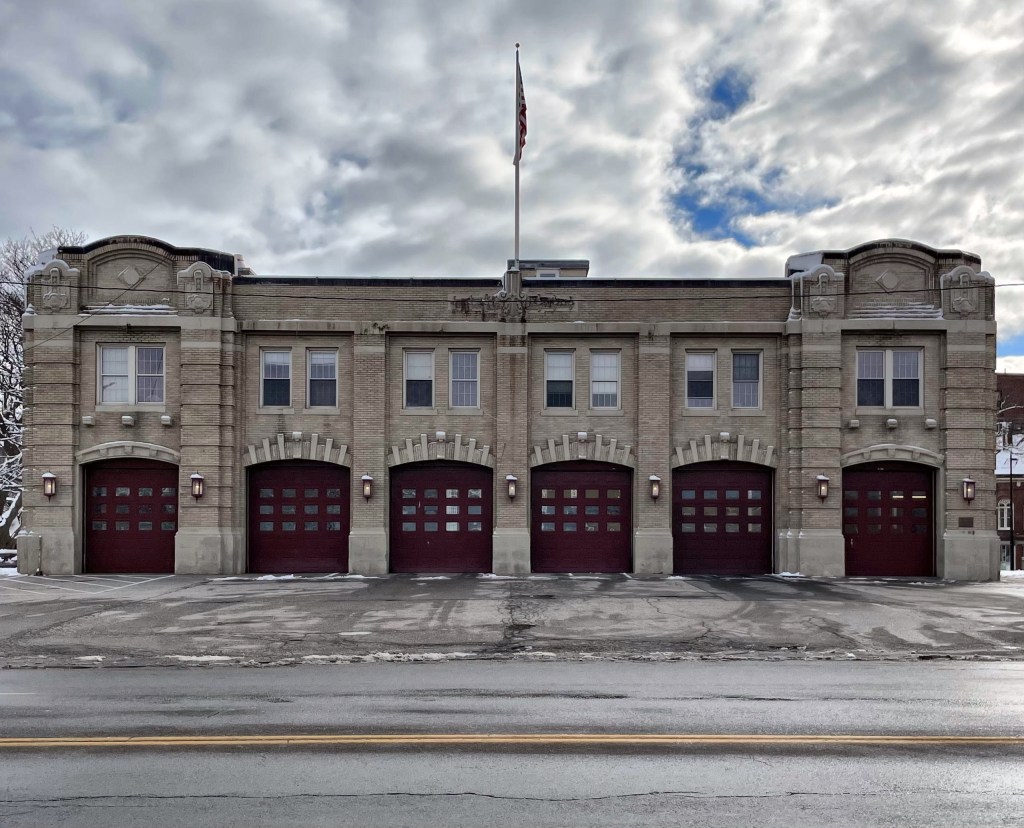
Portland Central Fire Station // 1924

The Central Fire Station in Portland, Maine was built in 1924 and designed by William R. Miller & Raymond J. Mayo, architects located at 465 Congress. Lester I. Beal, a draftsman employed by Miller & Mayo, participated in the design. It was erected to contain the administrative offices of the Portland Fire Department, as well as to house fire engines and other apparatus of the inner city district. Portland has one of the oldest fire departments in the nation, 1768, when Falmouth appointed fire wardens to look for fires at night and alert the residents. In 1786, the citizens of Falmouth formed a separate town in Falmouth Neck and named it Portland, after the isle off the coast of Dorset, England. After the Great Fire of 1866 destroyed much of Downtown Portland, a new central station was built in 1867. The structure was deemed obsolete with new, large ladder trucks replacing smaller engines. The entire downtown block was demolished for the current Central Fire Station for the present building. The small building is at the center of a large lot, which is likely a candidate for redevelopment in the future (after some adjacent surface parking lots are developed).
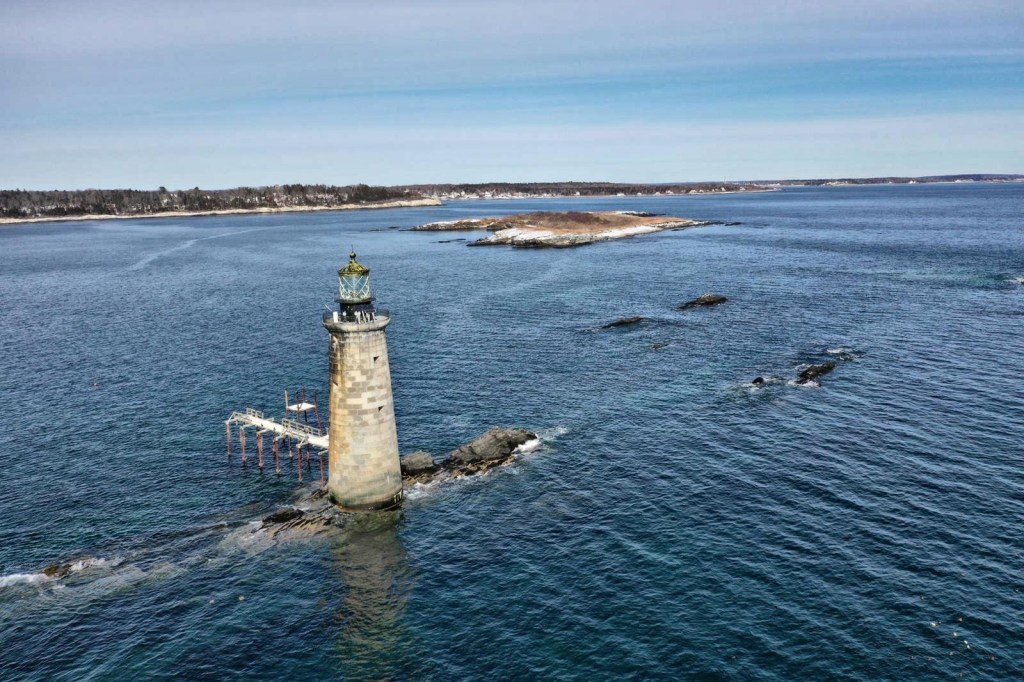
Ram Island Ledge Lighthouse // 1905

Ram Island, about a mile offshore from Portland Head near the entrance to Portland Harbor in Maine, is surrounded by dangerous ledges. For as long as ships have been navigating Portland Harbor, they have crashed into the rocky shore, losing supplies and lives. Because of this, a Congressional act on June 28, 1902, authorized the construction of a lighthouse and fog signal on Ram Island Ledge, to work together with the Portland Head Light to guide ships through the treacherous channel. The next year, the federal government purchased Ram Ledge from two Cape Elizabeth families for $500, to erect a new lighthouse. Before the lighthouse could be constructed, at least two ships, the Glenrosa and the Cora & Lillian schooner sunk in the bay. As the ledge was underwater for much of the year, a stone tower was required. Granite from Vinalhaven was shipped in and a crew of 25 men built the tower which was complete in 1905. The iconic double flash of light has guided sailors ever since. The lighthouse was manned by multiple keepers until the late 1958, when an underwater power cable was laid between Portland Head and Ram Island Ledge, allowing the ledge lighthouse to be automated. In 2008, the structure was deemed “excess to the needs of the United States Coast Guard” and auctioned off. After a bidding war, a local doctor from Maine purchased it for an estimated $190,000.

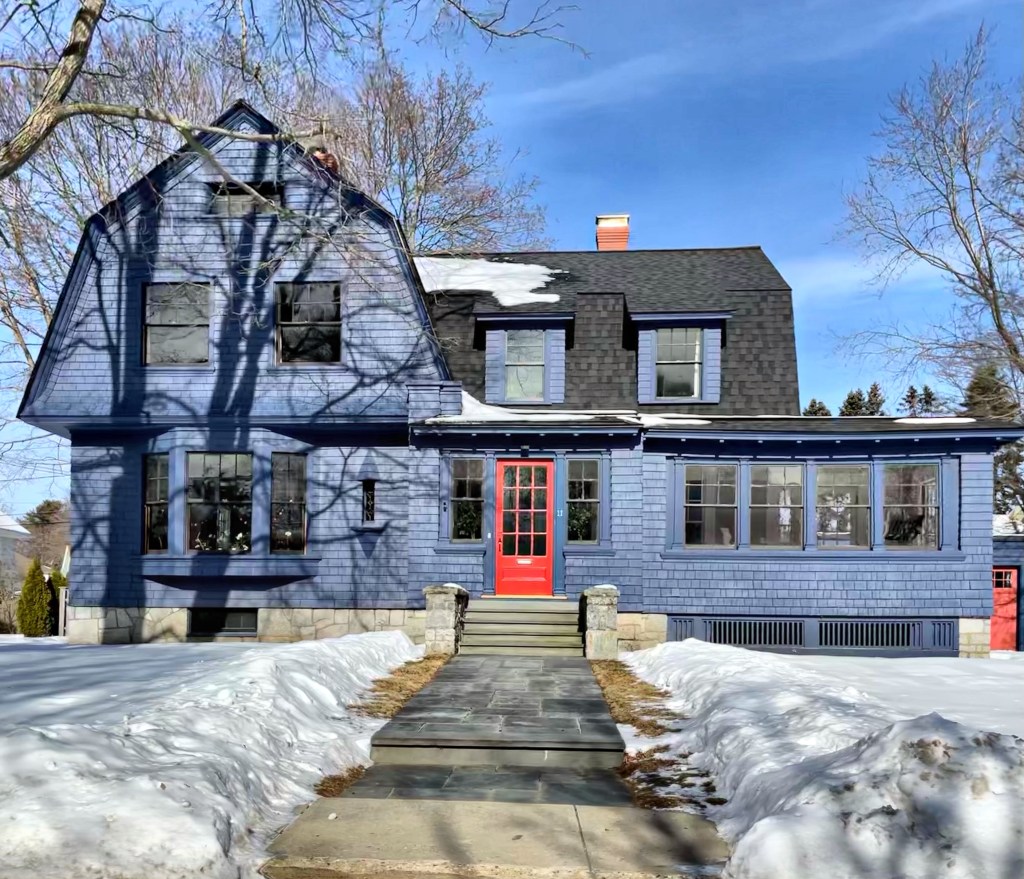
David Calhoun House // 1915

I normally am not a fan of dark houses, but I really like this one, but some of the amazing detail is harder to see due to the singular, dark paint color. This home in Cape Elizabeth was built in 1915, during the housing boom in the early 20th century when the formerly sleepy farming town saw massive development as it became a summer resort and bedroom community of Portland. Owner David A. Calhoun hired the Portland firm of Miller & Mayo to design this home, and they pulled out all the stops for a modest budget. Calhoun moved to Maine in the 1880s and became a founding member of the plumbing and heating firm of Willey & Calhoun, quickly making a name for himself. The two-story home has a shingled exterior, a cross-gambrel roof and a shed dormer on the front facade. The main entry door is flanked on either side by small windows. The house is a great blending of Colonial Revival and Shingle styles.