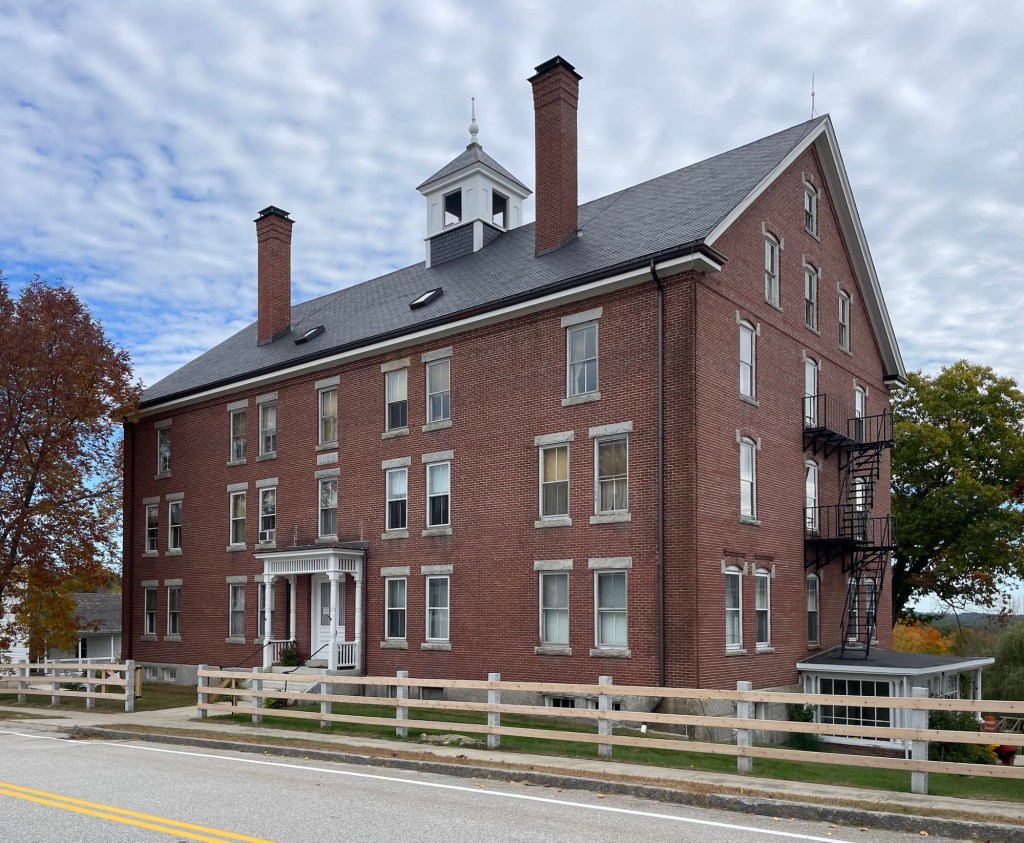
Located across the street from the Sabbathday Lake Shaker Meeting House in New Gloucester, Maine, this large, three and one-half story brick building has historically housed many of the active Shakers in the community. Built in 1883-4, the central dwelling house contains a self-contained town of rooms, including sleeping rooms, a chapel, music room, kitchen, and dining facilities. The building features granite lintels and sills and a square cupola at the roof. The building was designed by the Portland architects Francis H. Fassett and John Calvin Stevens.
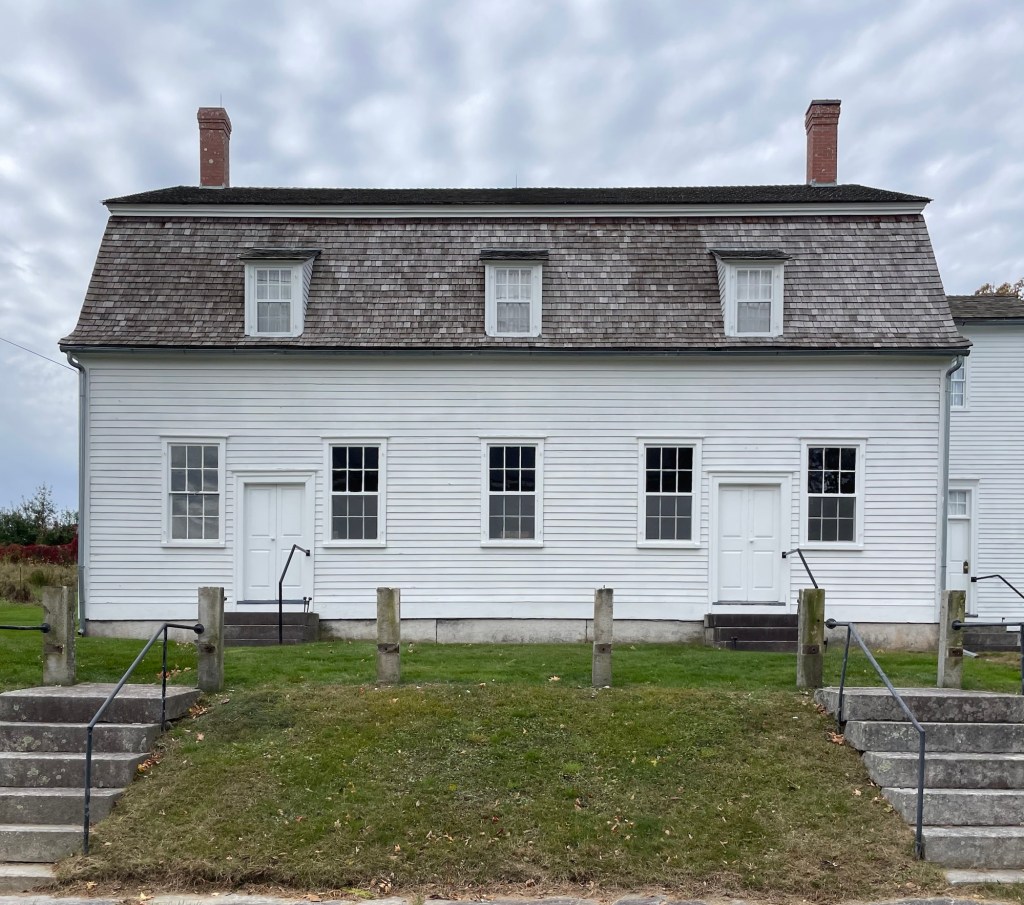
The last active Shaker community in the world can be found in New Gloucester, Maine. The Shakers migrated to Colonial America in 1774 in pursuit of religious freedom and developed from the religious group called the Quakers, which originated in the 17th century. Both groups believed that everybody could find God within him or herself, rather than through clergy or rituals, but the Shakers tended to be more emotional and demonstrative in their worship. Shakers also believed that their lives should be dedicated to pursuing perfection, continuously confessing their sins, and attempting a cessation of sinning, including sex and marriage. They built 19 communal settlements (so far I have featured two: Enfield Shaker Village and Canterbury Shaker Village) that attracted some 20,000 converts over the next century and maintained their numbers through conversion and adoption of orphans, numbers which have dropped to just three active members in 2024! The Sabbathday Lake community was established in 1782 and grew to a size of 1,900 acres with 26 large buildings by 1850. This building, the Shaker’s meetinghouse, was built in 1794 with all materials and labor supplied by the community. The small but significant structure remains a landmark in the community and is occasionally open for tours.
The only brick building in the Canterbury Shaker Village, the Trustees’ Office, built in 1831, served as the office of the Lead Ministry and also housed a U.S. Post Office for the community beginning in October 1848. The building was made of bricks manufactured by a local family. The building was designed as the hub of the Canterbury Shaker’s considerable commercial enterprises. It housed only those Shakers who had the authority to conduct Village business, and they often hosted guests and clients who arrived from distant places, and met with townspeople and local officials to discuss civic matters impacting the community. Due to the community-facing nature of the building, the community spared no expense inside and out.
This large, shingled horse barn at Canterbury Shaker Village in New Hampshire, was built in 1819 and measures 60 x 40 feet. The massive barn structure showcases the significance of horses and agriculture for the rural community, which lived off the land.
Everybody poops, even the Shakers. While not the sexiest building or topic, I couldn’t help but share this mid-19th century privy (outhouse) located in the Canterbury Shaker Village. The small clapboard privy measures just 6.5 x 13 feet and has two chambers, which face outward overlooking the apple orchard, making it a great place to do your business!
Constructed in 1811 as a guest house for the Canterbury Shakers, this beautiful structure follows the Georgian, center-hall residential floor plan constructed in the Federal period. Shaker records indicate that in 1849, the building was converted to an infirmary and the next year, the roof was tinned and the portico over the front door, called a “jet” by the Shakers, was added. After 1892, the first floor housed the nurses’ quarters, pharmacy, nurses’ sitting room and office and the dentist’s office. Upstairs, the patients’ rooms were fitted with lavatories and running water. The attic was used to store medical supplies and as a mortuary. All for the growing Shaker community here. Following the death of the last nurse in 1937, the building ceased to be used as an infirmary and was used as living quarters for sisters.
The Canterbury Shaker Village was one of two Shaker communities existing in present-day New Hampshire (the other being Enfield Shaker Village, featured previously on here). In 1782 Israel Chauncey and Ebeneezer Cooley from the Mount Lebanon village of Shakers traveled to Canterbury and converted several prominent figures of the community by convincing some of the Christian farmers that the Shaker way was what they had been seeking. Among those converted to the Shakers, the Whitcher, Wiggin and Sanborn families, donated land to house the Canterbury Village community of Shakers and the Canterbury Village was founded in 1792, led by Father Job Bishop. The village expanded over time, and in 1803 there were 159 members in three families. Nearly fifty years later in 1850, the site contained 3,000 acres with a community of 300 housed in 100 buildings!
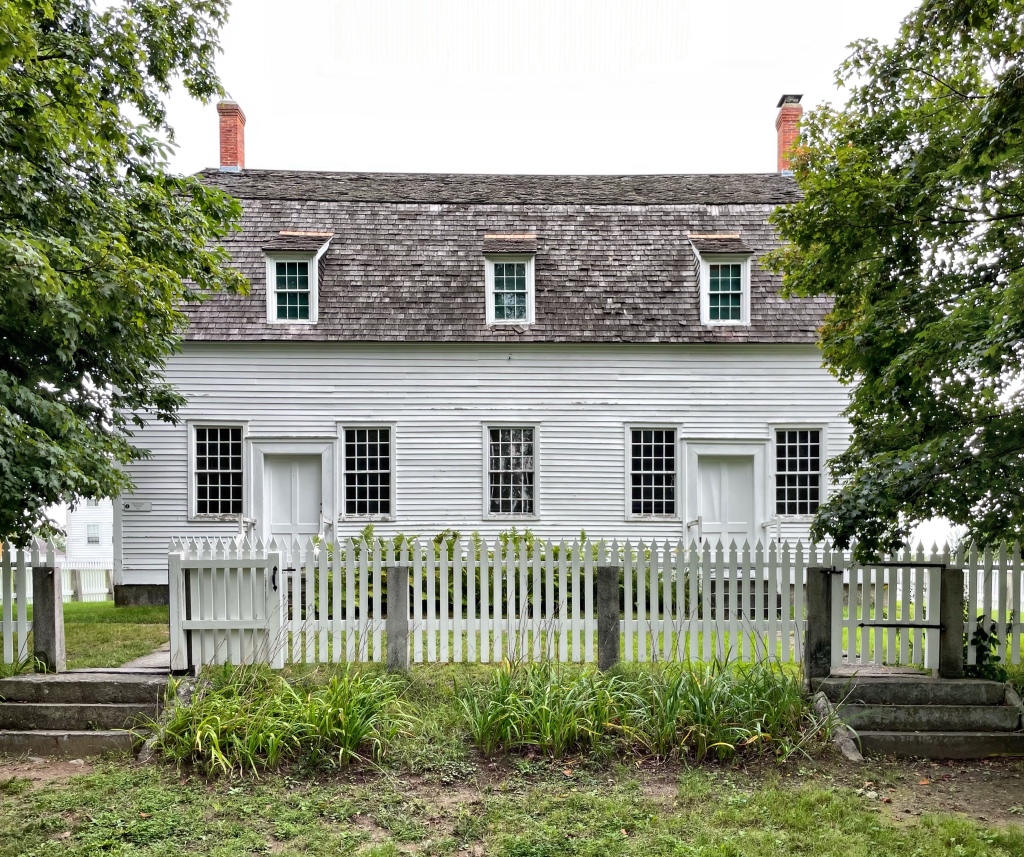
The first building of the Canterbury Village was the Meeting House. The Gambrel roofed building was constructed by members in reverent silence and supervised by Moses Johnson (1752-1842) who served as master builder of seven Shaker meetinghouses all over the Northeast. Inside, there were two stairways, one for men and one for women, located in the northwest and southwest corners of the building, each easily accessed by separate entrances, which led brothers and sisters from the first floor meeting room to the second story sleeping lofts.
In 1992, Canterbury Shaker Village closed, leaving only Sabbathday Lake Shaker Village open as a functioning community. There are apparently only two active Shakers left in the country, both at Sabbathday Lake in Maine. Many other villages like Canterbury, have been converted to museums, which give historians and the general public a great insight into how these places have functioned.


 Buildings of New England