
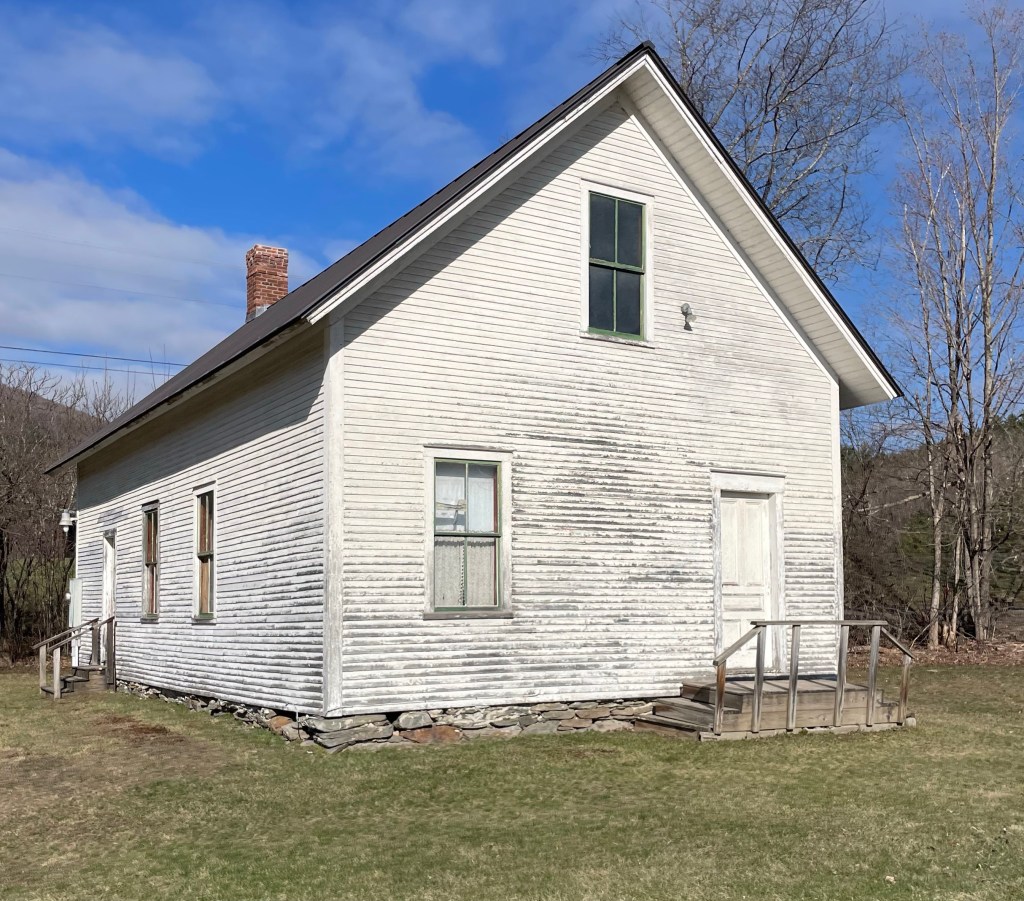
This is the first church ever built in Duxbury, Vermont. On December 18, 1854, at the South Duxbury schoolhouse, representatives from six denominations in the newly formed town, gathered to form the First Union Society of Duxbury. The participants were: the Congregationalists, Universalists, Free Will Baptists, Protestant Methodists, Episcopalian Methodists, and the Adventists. Twenty-five names appear on the original subscription list, indicating the pledged money or materials that each would contribute to the construction of the church. Samuel Cook Turner was contracted to build the church, with pews inside purchased by individual families to help fund the construction. The building is vernacular and modest due to the rural character of the congregations and town’s location, but it has a more Classically inspired door enframement. In 1890, funds were gathered for a church hall, which sits nextdoor. The meeting hall would serve as the meeting space for a temperance organization known as the “Independent Order of the Good Templar”. The church hall appears to have some deferred maintenance, but both buildings together share an early history of a rural and often overlooked small Vermont town.

 Buildings of New England