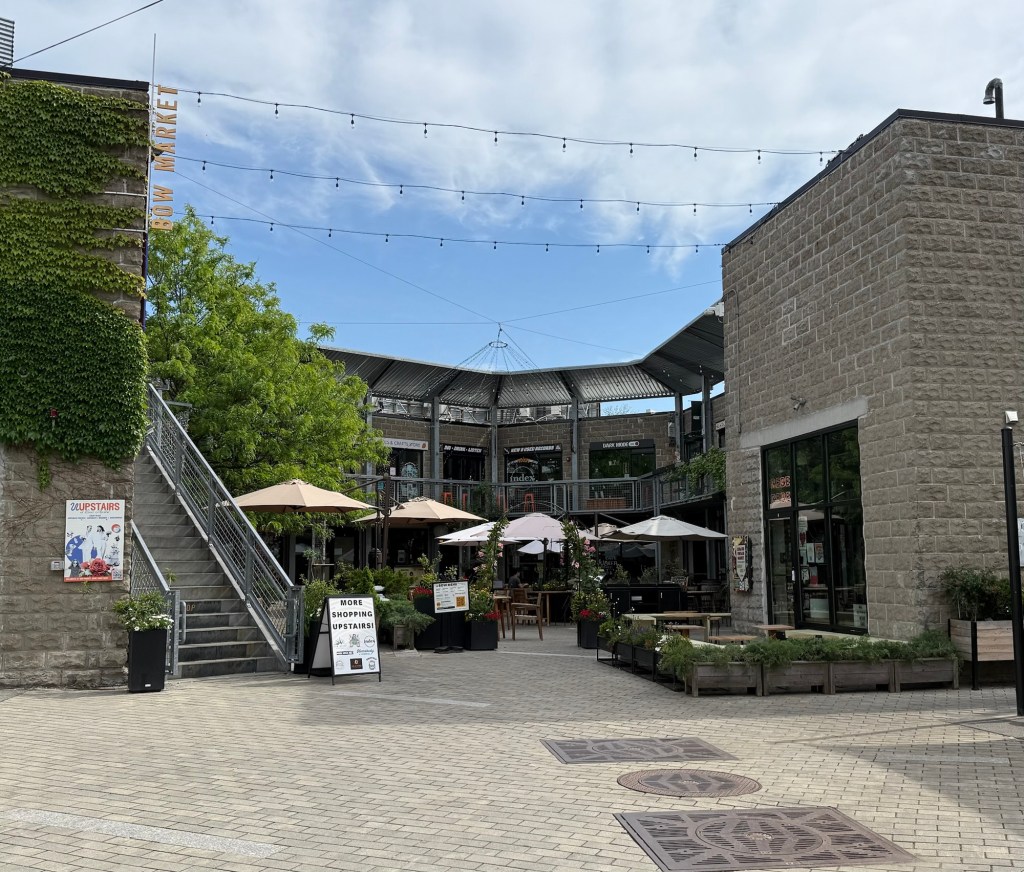
Bow Market // 2018

One of the best and most successful examples of adaptive reuse in the Boston area has to be Bow Market in Somerville’s Union Square commercial district. Tucked away behind buildings on the busy streets, a former concrete block storage facility was reimagined as a vibrant, European style marketplace of local vendors and businesses. The project was envisioned by business partners Matthew Boyes-Watson and Zach Baum, who worked with Matthew’s father, architect Mark Boyes-Watson, to renovate the storage building to create storefronts. The team worked with landscape architects, Merritt Chase, to make the public courtyard more enticing, which each micro-commercial space opening onto the landscaped communal courtyard. Design elements include seat walls constructed from recycled granite from the renovation of the Longfellow Bridge and reclaimed wooden beams from a ship building facility in Hingham. If you haven’t been to Bow Market yet, you must. This project is exactly what good urban planning and design is all about!
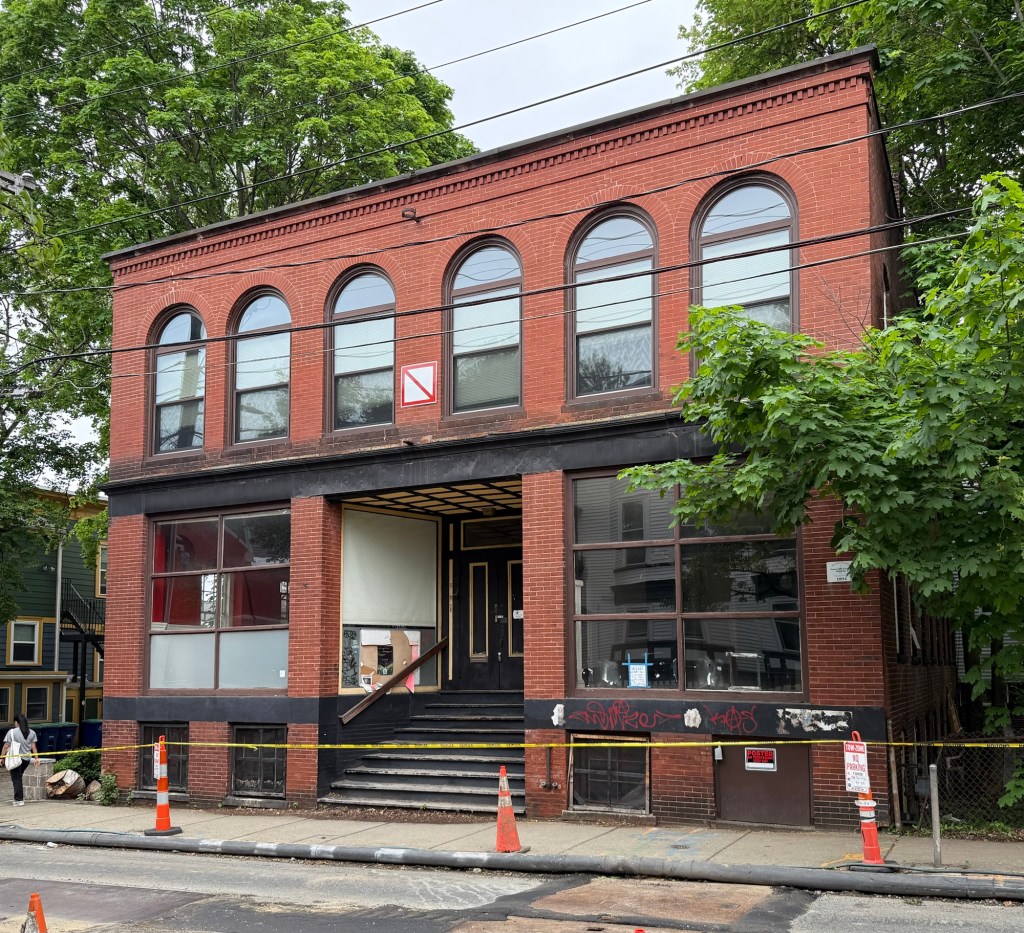
Somerville Journal Building // 1894

The Somerville Journal was a local paper founded in 1870. The paper was originally published and printed in an office in Boston, but moved to Somerville by the late 1870s. After about 15 years of renting space in a commercial building in Somerville’s Union Square, the paper purchased a lot nearby and began planning for its first purpose-built building for their company. This structure on Walnut Street was built in 1894 to house a new generation of printing equipment and increased production for its growing market, along with the estimated 50 employees at the time. The building was designed by William H. Gerrish (1865-1915), an engineer. Romanesque Revival in style with the arched second-story windows, the building along with its plate glass storefronts, have been an important landmark in the Union Square area for over 130 years. The Somerville Journal vacated the building in the 1950s and the building was used as a photo developing and printing studio. During the 1970s the building was used as a youth recreation center for the city of Somerville. It has been used as artist studios since the 1970s and today, appears to be vacant. Does anyone know what the plans are for this building?

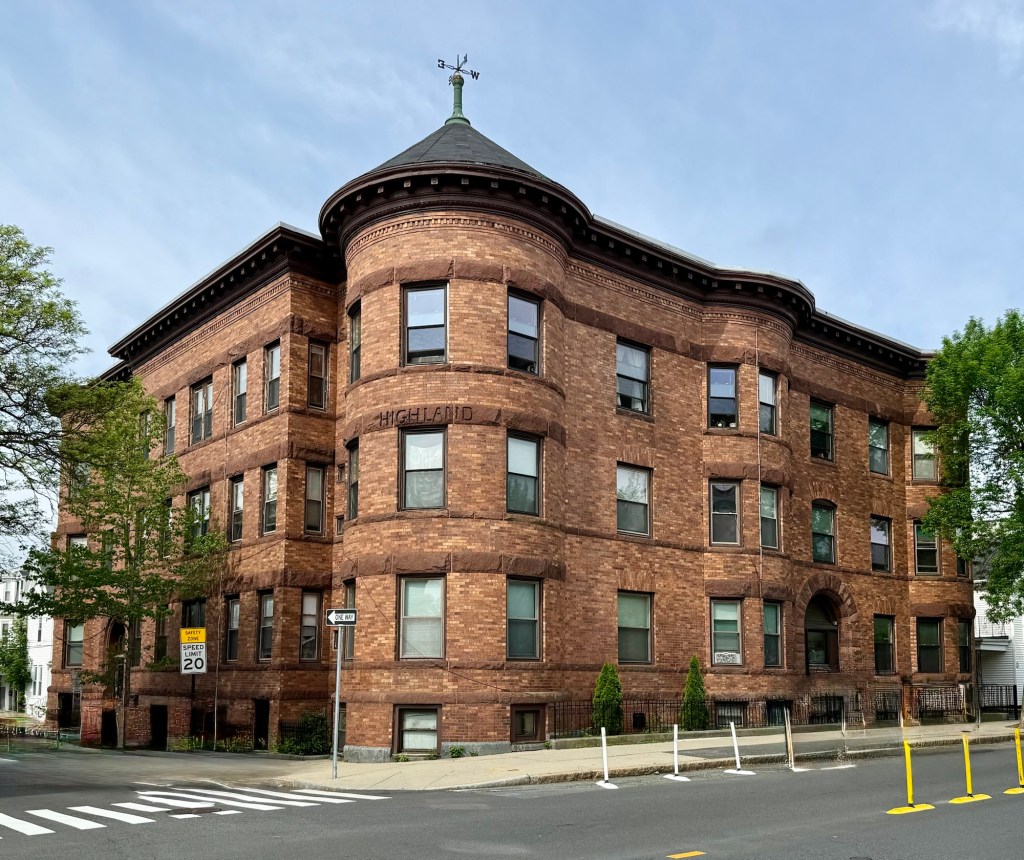
The Highland Apartments // 1892

The Highland Apartments, on Highland Avenue in Somerville, is one of the city’s most architecturally distinguished and significant late 19th century apartment buildings. Richardsonian Romanesque in style, the building is constructed of brick with brownstone trimmings, a rounded corner tower with conical roof, and Romanesque arched entrances. The building even retains its name, “Highland”, carved in brownstone at the corner. The building contained 12 units, all with multiple windows and views of the adjacent park or ever-growing Boston from its hilltop location. The architect, Samuel Dudley Kelley, was a noted designer of apartment buildings at the time. The Highland remains an important, preserved example of late 19th century multi-family housing, and showcases how far we have fallen when designing such structures today.