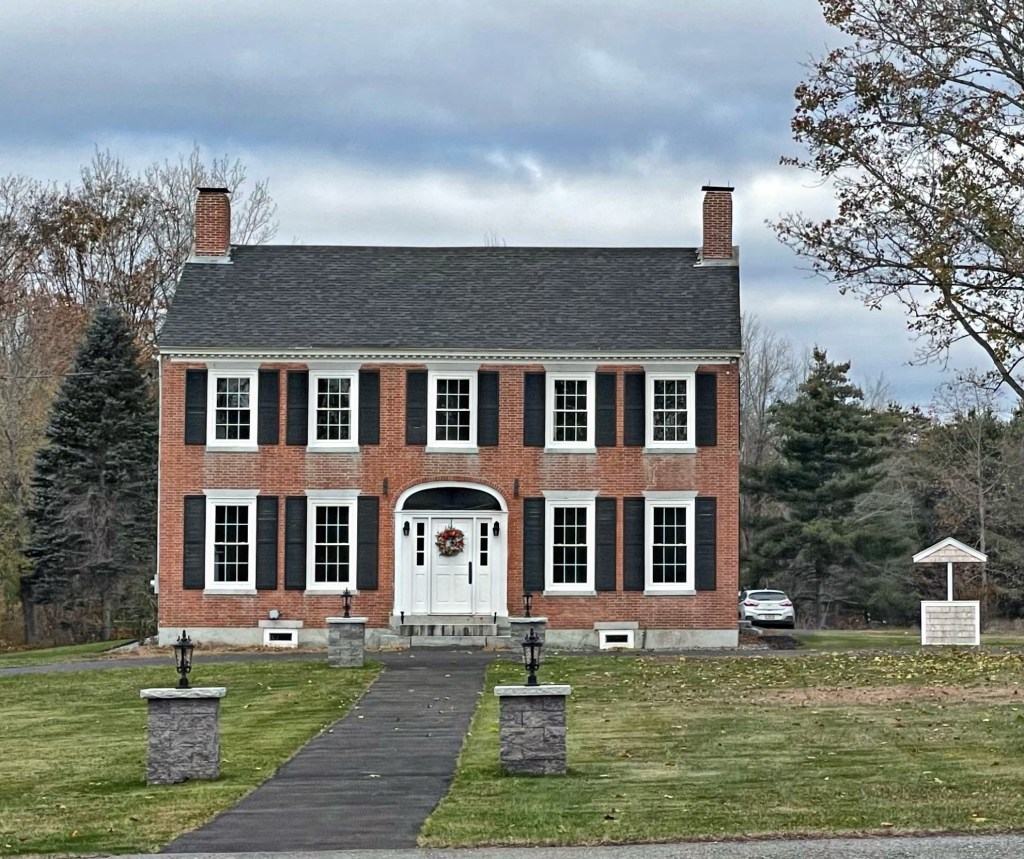
Hezekiah Chase House // c.1820

In 1782, Stephen Chase (1740-1821) settled in present-day Unity, Maine, and built the first frame house there to establish a community. After Stephen’s death, his son, Hezekiah Chase (1774-1848) built this brick, Federal period home for his family, moving his father’s wood-frame house and adding it onto the rear, which remains there to this day. Hezekiah was a judge and was involved in town affairs ever since it was established. The bricks were made locally and were of fine quality. Hezekiah’s son George C. Chase (1844-1919) was raised here. He attended Bates College in its second class, and eventually became a professor of English there. In 1894 he became the second president of Bates College and oversaw a period of significant growth at the college. Chase became known as “The Great Builder” at the college. The old Chase House was listed on the National Register of Historic Places both for its architectural merit and its history and significance to the town and region.
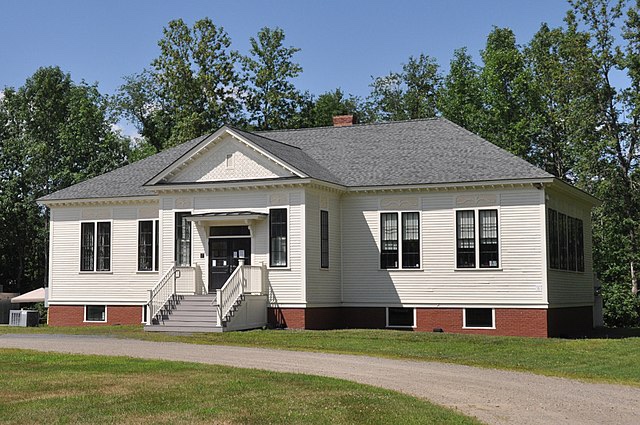
Unity Village School // 1898

The town of Unity, Maine, was incorporated in 1804, and for most of the 19th century had small district schools for the education of its children. In 1894, the state enacted legislation that encouraged the consolidation of school districts in order to improve quality and building standards. The town, whose population and student enrollment had been declining, voted in 1898 to build this school, which effectively replaced four of its eight district schools. The Colonial Revival style schoolhouse was built by Joseph Sawyer of Fairfield, Maine. The Village School remained the town’s largest primary school until 1953, when increasing enrollment and school overcrowding prompted the decision to build a new elementary school.

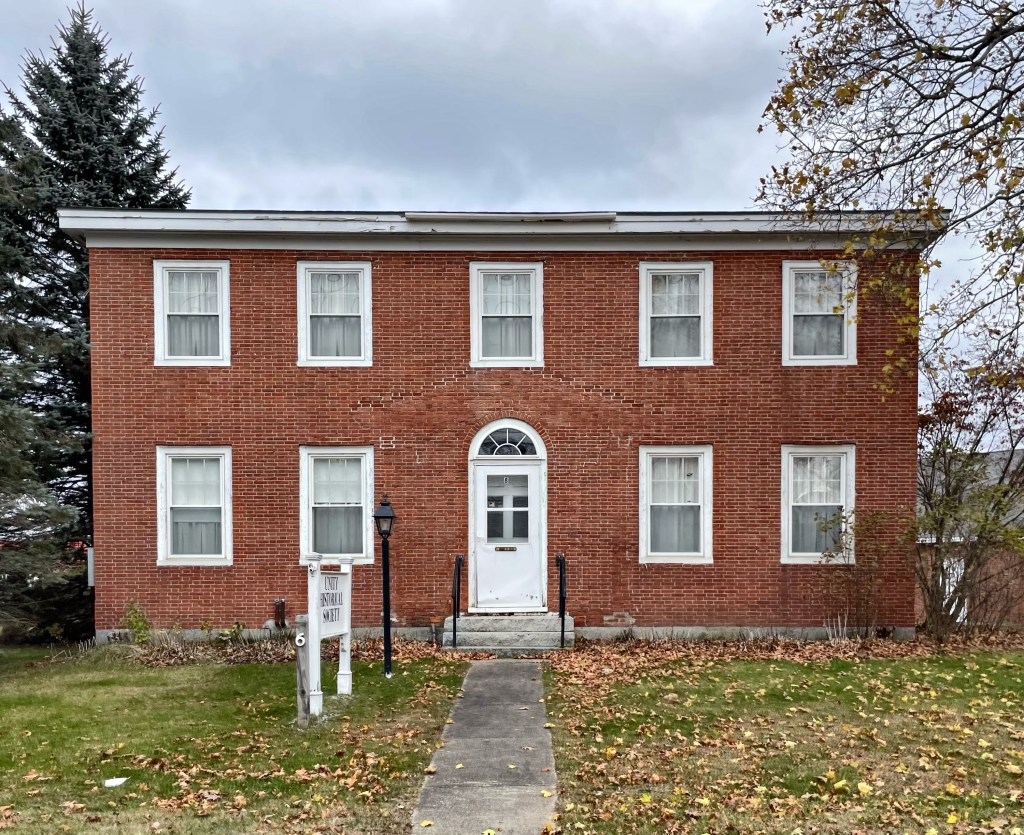
Lemuel Bartlett House // c.1813

When originally settled by Quakers, the town of Unity, Maine, was known as “Twenty-Five Mile Pond Plantation”. The name came from its being located on a pond, twenty-five miles from Fort Halifax in Winslow (creative, right?) The name was changed to Unity upon incorporation as a town in 1804. The town grew steadily through the first few decades of the 19th century and some wealthier residents began building homes. Lemuel Bartlett (1762-1834) built this house around 1813, which is a great, vernacular example of a Federal style residence in rural, central Maine. Lemuel was born in Plymouth, Massachusetts and fought against the British during the Revolution. After the war, he settled in present-day Unity around 1780 and became one of the original proprietors and land-owners here. He worked as a mason and farmer, and likely built this house himself. The property is now occupied by the Unity Historical Society.