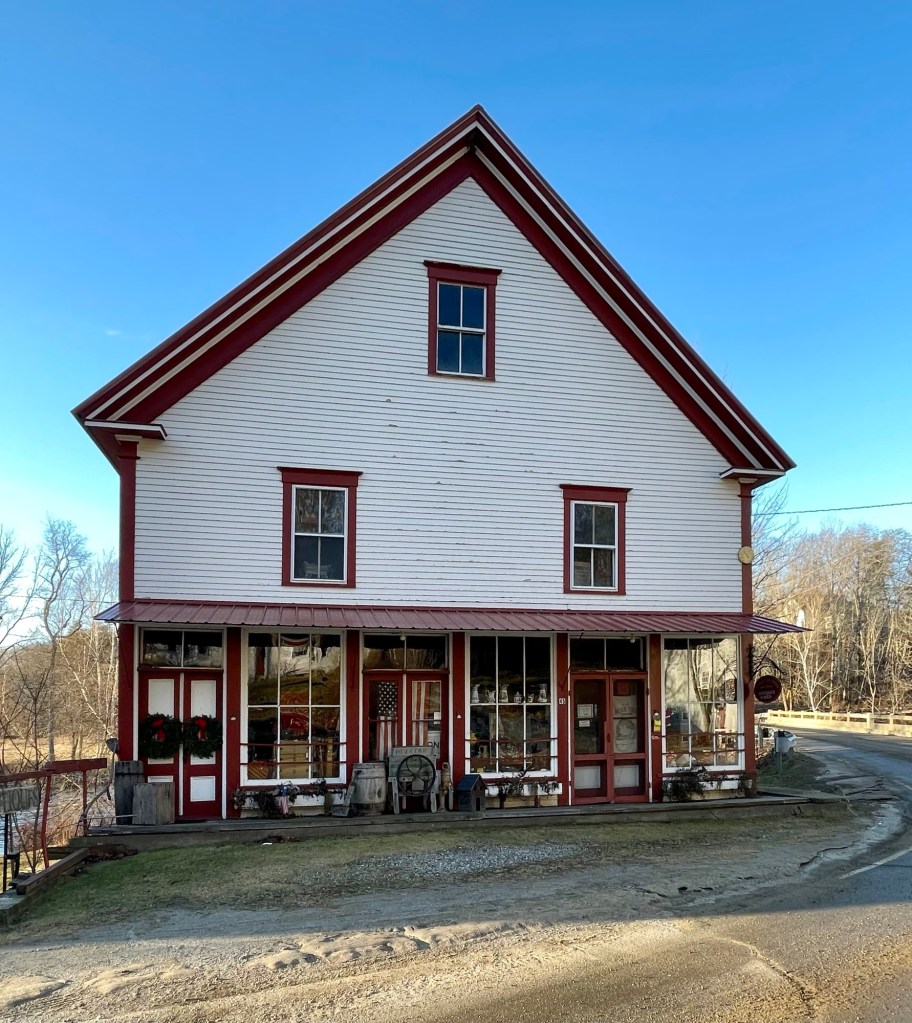
Every village needs a general store, and the store in the Head Tide village of Alna was this vernacular building constructed around 1886. The store was operated for years by John Allen Jewett, who’s ancestors settled in Alna generations before. Jewett sold grain from the building to local farmers and residents and lived across the street in the family home. Vernacular “mom and pop” stores like this are becoming more rare, but they are among the most charming in New England. Be sure to shop local and support small businesses when you can!
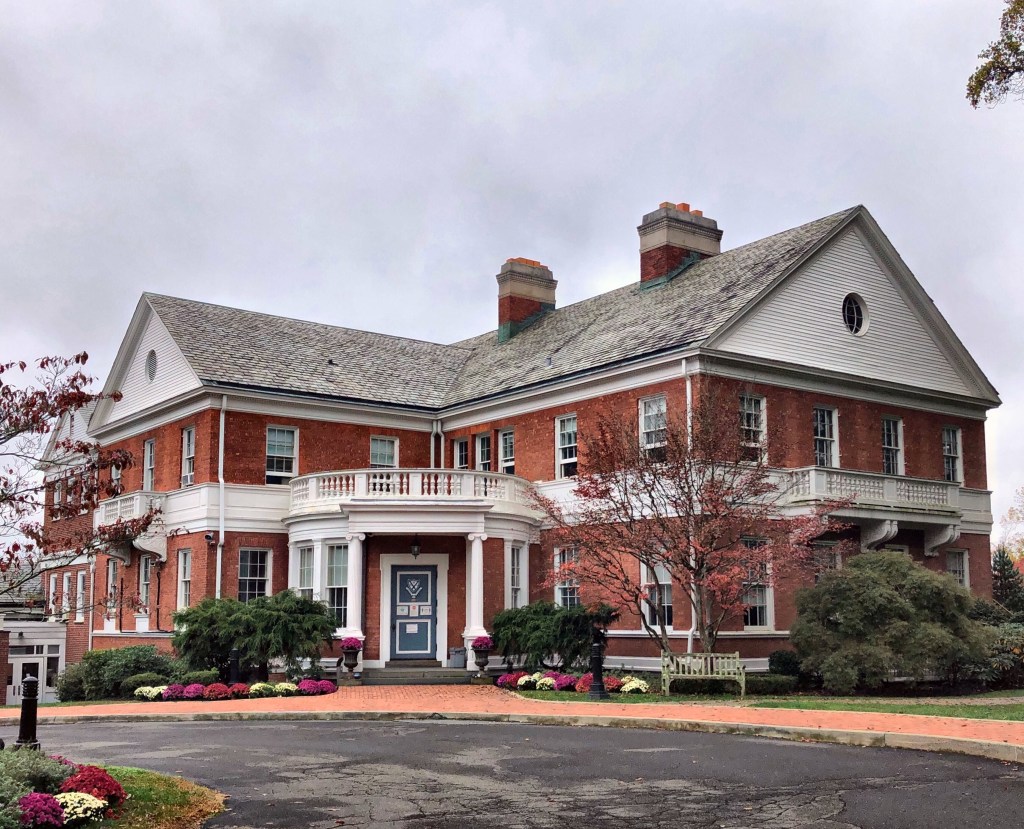
In Fairfield, Connecticut, land owned by Timothy Dwight, a minister and eighth President of Yale, a large farm once stood. The year after he was appointed to his position at Yale, he sold his farm Verna Farm, in 1796 to Isaac Bronson. The farm was eventually inherited by his grandson, Frederic Bronson. Dwight’s eighteenth-century house was eventually torn down in 1891 by Frederic’s son, Frederic Bronson, a wealthy New York City lawyer and socialite, who was included in Ward McAllister‘s “Four Hundred“, purported to be an index of New York’s best families, published in The New York Times. In 1892, Bronson hired starchitect Richard Morris Hunt, one of the greatest American architects of all time, to design a new country estate here. In 1933, the Bronson estate was acquired by W. A. Morschhauser, who had the house remodeled and made smaller in 1900; removing the third story and reducing the number of rooms from 42 to 13! Since 1949, the property has been occupied by the Fairfield Country Day School. The windmill as part of the estate was eventually gifted to the Town of Fairfield.
 Buildings of New England