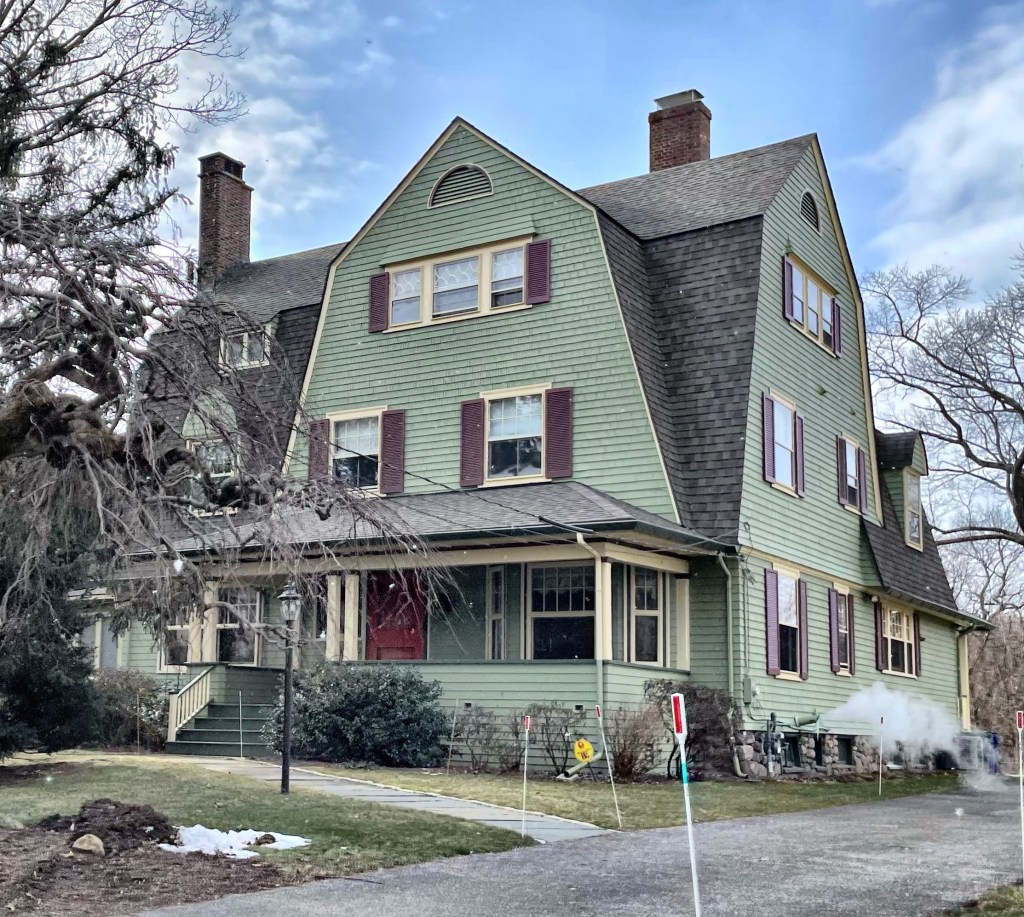
In 1895, Waban Village was in the middle of its massive development period, when half of the homes in the neighborhood were built within 10 years. One of the earliest in this neighborhood was this investment property by John E. Parry, a businessman and major developer. This house appears to have been rented at first, but was listed as vacant for some time in the city directories. Eventually it was purchased and has been lovingly maintained to this day. The design is a regional take on the transitional Shingle and Colonial Revival styles, this one with a really unique cross gambrel roof.
Some really interesting history and architecture with this one! Located in Waban Village in Newton, Mass., this gorgeous Mission Revival style house is one of a few in the style in the Boston area. The Mission Revival style was popularized on the West Coast in California in the late 19th century. Rather than continuing to adopt imported East Coast architectural styles, these California architects recognized the value of their own historic surroundings, where the Spanish Colonial mission heritage of California and the Southwest, the beautiful mission chapels, with stucco walls, red tile roofs, and bell towers led to the new revival. The style never took off in New England, which followed its own Georgian and Federal Revival styles, emulating historic Colonial-era homes here. This Newton home was built around 1908 for Lawrence W. Luellen, an attorney and inventor, who made a big invention, disposable paper cups! It is true. Lawrence Luellen wanted to do away with the ubiquitous “tin dippers” he saw in public buildings and railway stations after realizing all that sharing might be transferring disease. In 1907, he took out a patent and create a new, clean and individual drinking cup. After his invention went global, he sold his Newton home and moved to New Jersey, inventing…cup dispensers!