Point Allerton Artillery Fire Control Tower // 1942

Those who have visited the tip of the coastal Boston suburb of Hull, Massachusetts, will recognize this tall tower, but may not have known its intended purpose. This is the Point Allerton Artillery Fire Control Tower, built atop the highest point in the town, to serve as part of the Coastal Defenses built around the World Wars. Several fire-control stations were built at Point Allerton going back to 1907, but this seven-story concrete tower is the last to remain here. This tower was built around 1942, as the US Government grew increasingly serious about the potential for war, with new batteries and surveillance bases built all along the coast, many of which remain to this day. Fort Revere, a remnant of the coastal defenses, remains in Hull, nearby. This 7-story fire control tower is the center of Point Allerton, and by virtue of its base elevation (124 feet), had its top observation level at 179 feet above sea level, making this the tallest observation point in the Boston harbor defenses. The tower was later deaccessioned by the government and is owned and maintained lovingly by a private homeowner on their land. The tower is luckily preserved for future generations to learn about this lesser-known part of Boston-area history.
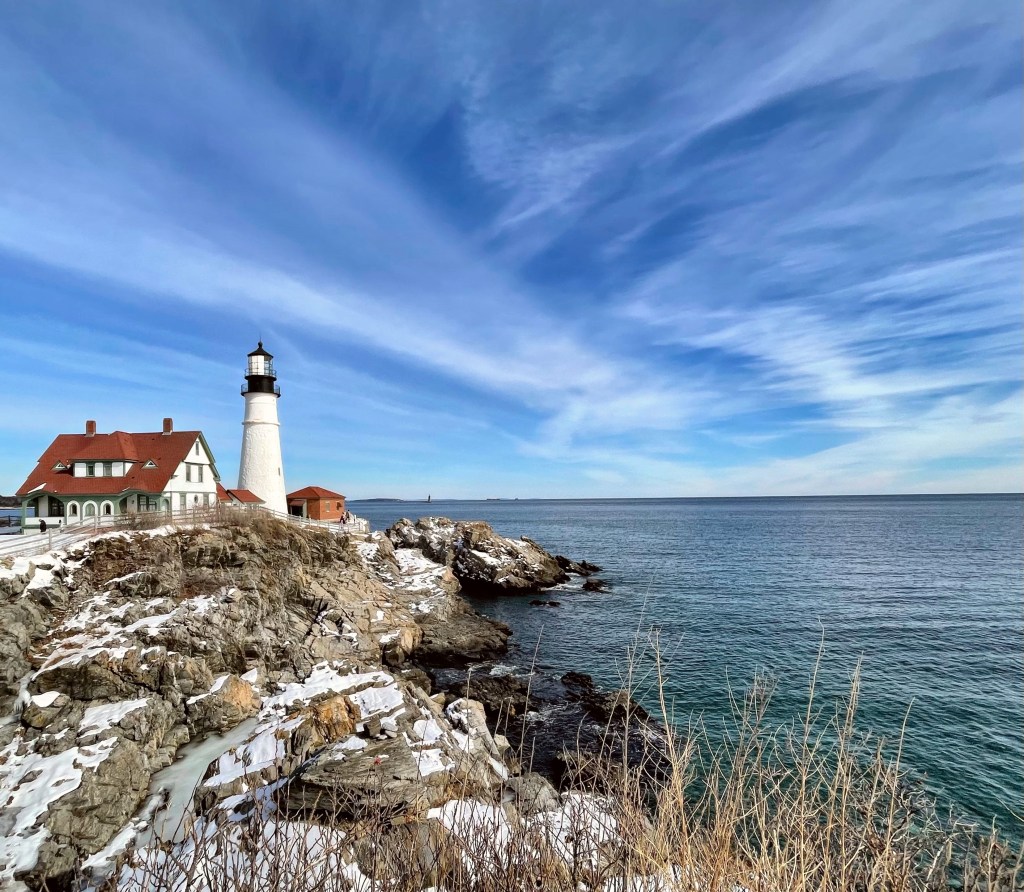
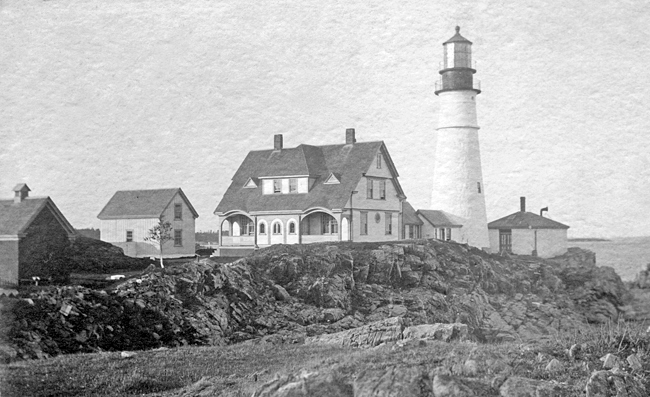
Portland Head Light // 1791

When I think of Maine, I think of rocky coastline, lobster, and lighthouses. Located in Cape Elizabeth, just south of Portland, you will find the Portland Head Light, an obscenely beautiful lighthouse, which has provided a beacon to sailors for centuries (and more recently Instagrammers). In 1787, while Maine was still part of the state of Massachusetts, President George Washington engaged two masons and instructed them to take charge of the construction of a lighthouse on Portland Head. Washington reminded them that the early government was poor, and said that the materials used to build the lighthouse should be taken from the fields and shores surrounding the site. The original plans called for the tower to be 58 feet tall, but when the masons were finished, they climbed to the top of the tower and realized that it would not be visible beyond the land to the south. When the masons were ordered to increase the height another twenty feet for visibility reasons, one quit, leaving a single man to finish the lighthouse and a small dwelling. It was completed, and the light, powered by sixteen whale-oil lamps, first shone on January 10, 1791, following its dedication by Marquis de Lafayette. Over the next century, many issues plagued the building and light-keepers, from cold winters and rogue waves icing over the pathways, to a poorly constructed top of the lighthouse, which was re-constructed due to safety concerns. In 1891, the station’s old stone light-keeper’s house was demolished, and upon its foundation a two-story wood double dwelling was constructed. A square brick oil house was also built at the same time along with a flight of steps at the landing. Portland Head Lighthouse was extinguished from June 1942 through June 1945 to avoid aiding German submarines, which did not work as planned. In 1945, the USS Eagle PE-56 just miles off the coast, was sunk by a German submarine (though previously thought to have been sunk by a boiler explosion), only 13 of the 62 crew survived. The lighthouse is now owned by the town, but the US Coast Guard retains control of the light and fog signals.